0
0


DHAKA: Bangladesh's parliament Sunday amended a law to allow the prosecution of the country's largest Islamic party Jamaat-i-Islami for war crimes in a move that could pave the way to it being banned.
News of the move was greeted by loud cheers from tens of thousands of protesters in central Dhaka who have been demanding a ban on Jamaat, whose leaders are on trial for war crimes allegedly committed in the 1971 war of independence from Pakistan.
Law minister Shafique Ahmed told AFP that under the new law, “any organisation including Jamaat can be prosecuted” by a special court for war crimes and if found guilty “it can be banned” from politics.
Previously only individuals could be prosecuted for war crimes.
“It's one step towards banning Jamaat,” deputy law minister Qamrul Islam told AFP.
The move comes after Prime Minister Sheikh Hasina on Saturday indicated that she would back a ban on Jamaat, whose members are suspected in the murder of an anti-Islamist blogger, as it had “no right to be in politics in Bangladesh”.
Demonstrations championed by online activists have seen thousands take to the streets for the last two weeks demanding the execution of Jamaat leaders accused of genocide, murder and rape during the 1971 war.
Rival protests by Islamists demanding a halt to the trials of Jamaat leaders have turned violent, leaving 13 people dead.
Clashes between police and Islamists have intensified since last week after a senior Jamaat leader was sentenced to life imprisonment for mass murder.
Jamaat and the main opposition Bangladesh Nationalist Party have said the trials are based on bogus charges and are part of a wider political vendetta.
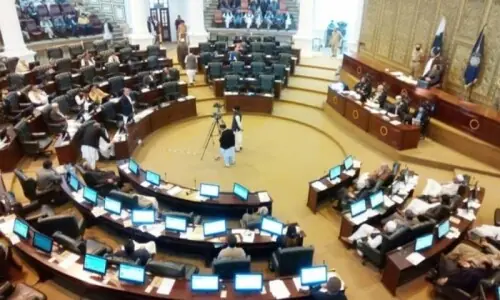
Both parties boycotted parliament, which passed the amended law less than a week after it was approved by the cabinet.
The government rejects the accusations and says the trials are needed to heal wounds from the nine-month war in which it says three million people were killed, many by pro-Pakistani militias whose members allegedly included Jamaat officials.
Parliament also amended war crime laws to ensure the Jamaat leaders can be swiftly executed if convicted and the verdict challenged if the sentence is less than death.
It set a 60-day limit for the supreme court to dispose of appeals.