ISLAMABAD: Minister for Interior Rehman Malik on Monday said that an ‘invisible force’ was engaged in disrupting peace in Karachi and Quetta on sectarian basis, but it would not succeed in its negative plans against the country.
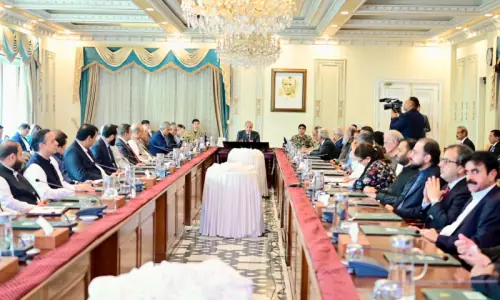
Speaking to media representatives after a meeting with religious ulema (clerics) belonging to different schools of thoughts, Malik said that there was no sectarian clash in the two cities but ‘some enemies of the country’ were trying to give it a sectarian colour.
The law enforcement agencies are gathering information and soon the names of those, who are indulged in such negative activities, will be revealed, he added.
He said that the basic objective of meeting ulema was to formulate a strategy to control law and order situation, especially during Muslim holy month of Muharram.
Announcing the decisions taken during the meeting, Maulana Hanif Jalandhari said that all the ulema will play a positive role for the promotion of religious harmony during Muharram and will avoid hurting sentiments of people belonging to different schools of thought.
He said that there was a consensus among the ulema that the terrorists were the enemies of Islam, humanity and Pakistan.
He said the meeting also appealed to the print and electronic media not to publish or telecast provocative reports and statements, and also avoid issuing disheartening material.
He said the meeting decided that a religious solidarity committee, having members from all the sects, will be constituted.
The meeting condemned the killing of students of a Madrassa (seminary) in Karachi.
It was also decided that the government would provide security to the Madaris and mosques in the country. Raids on Madaris would be avoided and if required, those should be conducted in consultation with the Madrassa administrator, said the interior minister.
The meeting expressed concerns over the situation in Karachi and agreed that the government should take action against the perpetrators irrespective of their political affiliation.
The meeting also asked the parliament to pass the anti-terrorism act as early as possible.
The meeting was also attended by Mufti Muneeb-ur-Rehman, Syed Niaz Hussain Naqvi, Muhammad Yasin Zafar, Abdul Malik, Dr Atta-ur-Rehman and Hafiz Syed Qutab.
Meanwhile, at least six more people lost their lives and four were wounded in violent incidents in Karachi earlier on Monday.