0
0

ISLAMABAD, Oct 25: Pakistan jumped on Thursday into a war of words between Afghanistan and the United States over the legitimacy of Durand Line as an international border saying it was a “settled issue”.
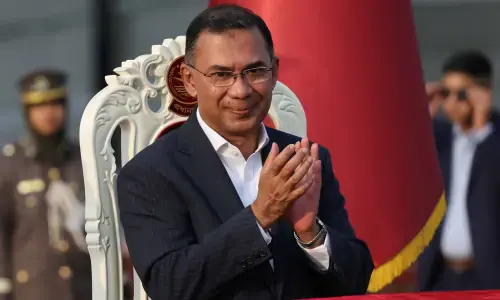
“As far as the official response of the government of Pakistan is concerned, the Durand Line is a closed and settled issue. We regard it as the recognised international border, and the international community also recognises it so,” Foreign Office Spokesman Moazzam Khan said at the weekly media briefing.
The Durand Line came into existence in 1893 through a treaty between Afghan King Amir Abdur Rahman and British Foreign Secretary Mortimer Durand to formalise the boundary between the two countries.
In 1947, Durand Line began to serve as the international border between the newly-created Pakistan and Afghanistan.
While the Durand Line is internationally accepted as the border, Afghans have never accepted it.
US Special Envoy for Afghanistan and Pakistan Marc Grossman ignited a controversy last week when he told an Afghan private television channel that “our policy is that border is the international border”.
There was never any ambiguity about US position over the Durand Line – the 2,640 km long international border between Pakistan and Afghanistan – but its reiteration by Ambassador Grossman at a time when Pakistan-Afghan ties were at a nadir led to serious protests from Afghanistan, which has so far been maintaining an ambivalent position on the matter.
In a rejoinder to Mr Grossman’s statement, the Afghan foreign ministry said it “rejects and considers irrelevant any statement by anyone about the legal status of this line”.
The State Department later reasserted the position taken by Mr Grossman noting: “It was correctly stated by Ambassador Grossman that we see this as the internationally-recognised boundary.”
Pakistan-Afghan ties are currently not in the best shape because of differences over fighting terror and reconciliation.
Mr Khan accepted that there were “some issues and we both want to address those issues, as it is in our common interests to do so. We should handle these issues diplomatically and keep them away from the media”.
He said: “Terrorism is a common threat to us, and the best way to solve our issues is through dialogue and consultation. All channels of communications are available to both sides.”