0
0

PAKISTAN exports around 400,000 tons of chrome ore, earning about $100m annually.
There are vast deposits of Chromium ore in Muslimbagh (formerly Hindubagh), Balochistan, and Besham, Bajaur, Shangla and Malakand in the Khyber-Pakhtunkhwa also have Chromium deposits. Chromium ore is mined and brought into yards located at Moach Goth and Yusuf Goth of Karachi from where it is exported, mainly to China.
Chromium is the main ingredient of stainless steel and makes it corrosion resistant. There are a variety of chromium grades. The grading is done according to the percentage of chromium in the ore body, and classified as low, medium, high, and refractory grades.
Two other aspects of chromium quality are ore size and its chromium to iron ratio (Cr:Fe). Pakistan and Turkey’s chrome is rated amongst the best quality by China because of a good Cr:Fe ratio.
Chrome from Pakistan and Turkey attract higher prices compared to other regions.
However, owing to the international economic slowdown the stainless steel production has declined and the price of chrome has seen a sharp fall.
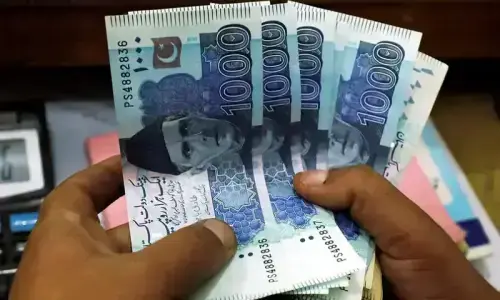
The price of chrome from Pakistan at $375 per ton in January of 2011 is now hovering at $245 per ton in September, while the same grade from South Africa is going for $180 per ton.
The smelters are the end users of chrome ore in China. Chrome ore, on its own, is found as an oxide like all other metallic ores. Smelters reduce the oxide and form what is termed as Ferrochrome.
This is carried out in electric furnaces by melting the chrome ore in presence of coke. Producers blend the expensive Pakistani ore with the cheaper South African type for optimizing cost.
The smelting process is extremely energy intensive and hence the smelters often have their own power generating capacities or are located near sources of cheap and abundant power such as hydro or in a coal producing area. Ferrochrome is used as an alloying additive in the production of stainless steel, which is also generally done in electric furnaces by melting steel scrap in the presence of ferrochrome.
The conversion of chrome ore to ferrochrome is a value addition process that is not happening in Pakistan. Tata’s of India and South Africa are processing chrome and then exporting Ferrochrome. Pakistan exports its chrome ore and imports the ferrochrome for its stainless steel production. The chrome, exported at approximately $200 per ton, is bought back as ferrochrome for $1200 per ton.
After a visit to the mines of Muslimbagh, one can see that the mining techniques being employed are ancient. It is more of a donkey-driven trial and error operation if it can be summarized in a nut shell. A Jirga decides the allotment of a 600x600 feet area (roughly 9 acres). The mine owner hires a Jamadar who then decides the direction of entry and blasts his way in. At times they do not hit any chrome and have to abandon the operation after having gone in for 800 feet at a stretch.
The same area is then taken over by another mine owner who decides to change his alignment again based on the Jamadar’s advice and he hits upon the chrome. Explosives are used to blast the wall, the cavity is supported by wooden props and the chrome is taken out of the mine on donkeys. The progressive miners lay tracks and pull the chrome out on winch driven trolleys operated by a diesel generator. Even mines with chrome have intermittent interruption in veins, carrying chrome, and that is a moment of anxiety. Hats off to the miners, who generate $100m export for Pakistan by a donkey driven operation.
One way of bringing certainty to the mining operation is to conduct a proper geophysical study of the nine-acre plot. At Rs3,000 a point and with a point at 50 ft interval can produce a mesh of 12x12 or 144 points or an investment of an estimated Rs500,000. This will show what are termed as ‘anamolies’ in geophysical science. These are nothing but differences in densities of sub-surface rocks that can clearly delineate the chrome bearing areas and map it. This is the end to Jamadar’s guess work. In order to further evaluate the deposits, a few drill holes and core logging in the delineated area can help in assessing the quality of ore and the extent of the stocks..
These are small-scale operations and their expansion is not suggested, because that will disturb the status quo and the miners in the area will resist any such change. However, some progressive mine owners in the area were very receptive to the idea.
Bringing an element of certainty to the mining operation can greatly help in changing the existing mining practices and offer incentives for the mine owners to adapt modern mining practices to extract the estimated deposit in the quickest possible time. The government, through the Geological Survey of Pakistan, can provide this service. This will greatly enhance the chrome ore export potential.
Dr Faizullah Abbasi is working as managing director of UW Mining and Trading Pakistan.