2
2

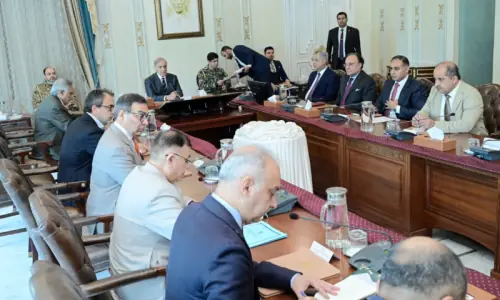
ON the rare occasion, parliament can produce a pleasant surprise by taking on issues of genuine national importance. So it was on Friday that the Senate defence committee held parliament’s first-ever public hearing in which experts from outside the official state apparatus were invited to address three critical areas of national defence and security: the country’s nuclear doctrine, the strategy to counter extremism and the state’s policy on Afghanistan. Friday’s hearing was part of an exercise that will culminate in December or January with the Senate defence committee publishing a report containing recommendations for a new defence and national security strategy. In a country where ‘civil-military imbalance’ is a euphemism for the utter dominance of the army-led security establishment over the civilian political class, the committee’s actions must be lauded for making a genuine attempt to recover the ground the civilians have over the decades surrendered to the army on national security and defence policy.
The basic problem of Pakistan’s national security policies is their over-militarisation, an inevitable outcome when the army decides what the national security priorities are and how to advance those interests and defend against threats. But a viable national security strategy also has economic, social, political and diplomatic planks that have for the most part been ignored by the security establishment. To correct that historical imbalance — an imbalance with deeply damaging consequences for Pakistan’s overall security — the civilians will need to assert themselves and force other aspects of national security to be considered alongside the military aspects. And for that to happen, the first step must be a more open and frank debate about matters that hitherto have remained strictly in the military purview. So in inviting speakers to address issues concerning Pakistan’s nuclear doctrine, its counter-extremism strategy and the policy on Afghanistan, the Senate committee has initiated a historic change that other elements of parliament must reinforce and support.
Equally important is that the Senate defence committee does not limit its scope to policy scrutiny alone. Advancing civilian control over national security and defence policies also entails exercising greater oversight over how the armed forces are run and operated. What is an adequate budget for the armed forces, where the balance should be struck between addressing internal security threats from militancy and external threats from states, how are top-level appointments decided, what equipment needs to be acquired and in what priority — these and many more questions are matters in which civilian input, and eventual control, is necessary. The Senate defence committee has taken the first step; are other civilian agencies ready to do their bit?