0
0

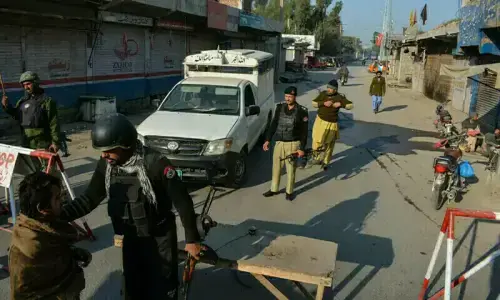
THE daring iftar-time raid on a post at the Israeli border was apparently intended as the prelude to an attack into Israel. But the armoured vehicles the men used were quickly destroyed, one of them just inside Israel’s border. State television blamed Islamist militants, who have been operating with impunity in Gaza. Egypt’s President Mohammed Morsi immediately condemned the attack, pledging to make those responsible “pay for it dearly”; later he added this: “There is no room for appeasing this treason, this aggression and criminality.”
Yet if the attackers entered Egypt from Gaza, as some reports say, Egypt will not be able to solve the problem alone. A range of mostly home-grown Islamist groups in Sinai have targeted Israel and the Israeli tourists visiting Sharm El Sheikh. A pipeline delivering natural gas to Israel has been repeatedly sabotaged, too. But Egyptian military and border installations and personnel are becoming a popular target for militants.
Clearly, a forceful but carefully targeted military response, as promised by Mr Morsi, is in order. But it would be complicated by the 1979 Camp David Accords mandating that Egypt maintain a limited military presence in Sinai. Israel, concerned about instability on its border, has already waived some of those constraints on Egypt’s ability to police [the] area. So Mr Morsi may, if Egypt’s generals cooperate, be able to keep his promise that Egyptian troops “will totally control Sinai”.
But security operations alone will not be enough. The antidote to the scourge of terrorism is usually social and economic development, not more violence. And Sinai is no exception to this rule. For decades Sinai, which has fewer than 500,000 people, has been neglected by officials in Cairo. Little attention and limited resources have been devoted to economic development there, nor have the region’s unique social problems been tackled.
Mr Morsi and his new cabinet face a daunting list of governance challenges across the country. Finding ways to make the Sinai more stable and prosperous, we were reminded on Sunday, must be given a place high on that list. — (Aug 7)