“Is this a dam or disaster?” asked an aggravated Abdul Karim, who runs 10 water mills on Daral River, Kalam, about the Daral River Hydro-power project. “I run 10 watermills and other people have privately installed micro power plants at different places. If water channels dry up, how can we run our businesses?” he asked.
Across the board, there are voices of dissent questioning the Daral Khwar dam and power project. The inhabitants of Bahrain and Kalam are especially concerned as they see their livelihoods at peril.
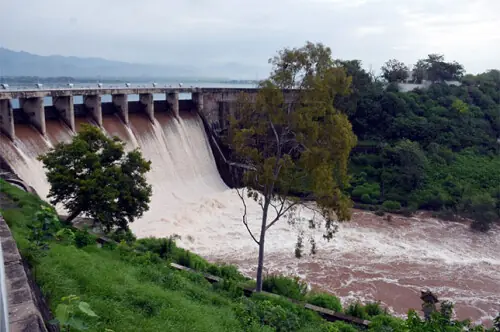
The project has been designed on Daral River, a tributary of Swat River in Bahrain. The river flows through Daral valley dissecting Bahrain into two – and is a lifeline for the people of Bahrain and seven villages in the Daral Valley. Once the project is implemented, it will divert the water of the river into a power tunnel so that it can fall on turbines that will be installed on the Bahrain-Mingora road, one km from the main town of Bahrain.
According to local inhabitants, 30,000 people will be adversely affected, as environment, economy and tourism will be ruined by the change in landscape.
Take Roidad, 70, a farmer whose lifelong source of living has been his field and the water from the roaring Daral River where he has planted crops and reaped their benefits. But now, in the latter half of his life, he is faced with soon-to-occur consequences of development as he expects the liquid life line of his fields to disappear.
“Like me, hundreds of poor farmers with land being irrigated by Daral river will stop growing seasonal crops as the water channels coming from Daral River dry up. Farming is our only source of livelihood and people here are very poor and don’t know any other art or profession. We can’t do anything else,” lamented Roidad.
Power at what cost?
The Daral River Hydro Power Project is part of Khyber Pakhtunkhwa (KP) government’s effort to resolve the acute power crisis in the province. As part of the effort, the KP government has announced 24 mega Hydro Power projects at different sites.On April 30, 2012 the KP government launched the action plan of the Daral River power project but local community expressed reservations about the design of the plan as they saw their lives and livelihood put at stake.
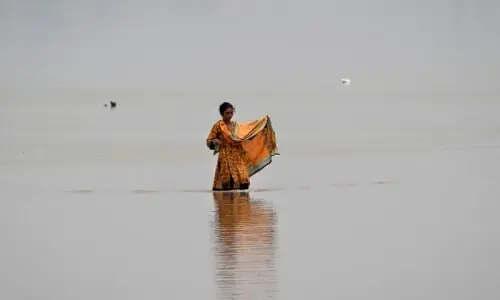
About 15 water channels from Daral River provide irrigation and drinking water to local population living on its both sides. It is a tributary river that flows through Kalam valley and contributes to the beauty of Bahrian, Madyan and Kalam, which are major tourist’s spots in Upper Swat.
“We raised objections to this project back in 2010 and brought it up at several forums to the attention of KP government, but to no avail,” explained Zubair Torwali, local journalist and head of the Institute for Education and Development (IED).The project was designed by Sarhad Hydel Development Organization (SHYDO), a KP government body, and its feasibility report presented to the Asian Development Bank (ADB) for funding. Torwali narrated that initially, “ADB agreed to provide Rs7 billion for the Daral Khwar Power project, but after we sent our complaints, it withdrew the project from its portfolio and refused to fund it in July 2011.”
The reason, according to Torwali, is that the project in its present shape will have severe effects on local economy, tourism and environment. “About 40,000 oak and pine trees will be felled for the site road which will destroy the ecosystem , dry up 15 irrigation water channels and will open up routes to protected forests to be exploited by the timbre mafia,” said Mr. Torwali.
He added that a recent unpublished report by United Nations Food and Agriculture Organization (FAO) on Disaster Risk Reduction (DRR) declared Daral Khwar Power Project a ‘disaster’ for the local population.
While it’s true that dams need to be created and people are affected, the far out affected persons of this project do not even hope for compensation. Haji Abdul Hakim, a farmer from Paswar village, lamented that direct affected persons will be compensated but him and hundreds of others will just face loss.
“Individuals whose land will be used for the power house will be compensated by the government but who will make up my loss when I will lose my agriculture land and only source of income?” he asked.
Torwali, meanwhile, points out that the KP government’s mistake was that it failed to involve the local community- some of the biggest stakeholders of this project – in the conversations where the plans were finalised.
“About 56 hotels and restaurants in Bahrain and 200 hotels in Kalam, in addition to other tourist based businesses, that have already suffered huge losses because of militancy and floods will now bear the brunt of this power project,” said Torwali.
The current demand by local interests is that the project be redesigned to protect them, “If the project is shifted a few kilometers ahead of the river so that Daral River water keeps flowing through Kalam and Bahrain, then all our issues will be resolved,” related Torwali.
On the other side, the KP government claims to have been considerate of all sides.
“Before launching this project, Chief Minister Hoti invited MPA Mr Jaffar, community representatives and elders of the area and held a detailed discussion with them to address all concerns related to environment and compensation.
We secured a NOC from the KP chapter of EPA and the government has not received any notice from the court. It is the stated policy of the KP government that it will partially fund power projects from hydel net profits,” explained KP minister for Information and Culture Mian Iftikhar Hussain.
In his opinion, the issue is not one of design flaws or public interest, rather, he said, “This is an issue between two groups of contractors. There are no problems in the present design of the power project and no refusal by ADB to fund the project, nor a negative report by the FAO on record.”
“The power project will prove a boon, not a bane for the locals,” he concluded.