0
0

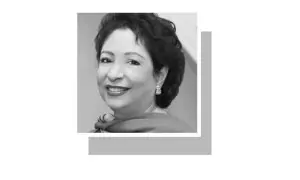
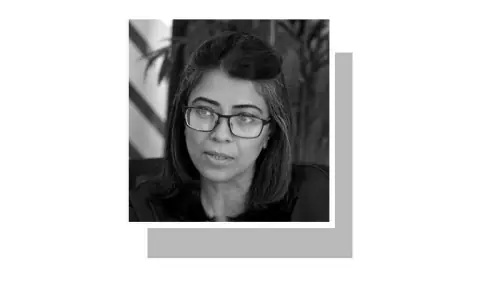
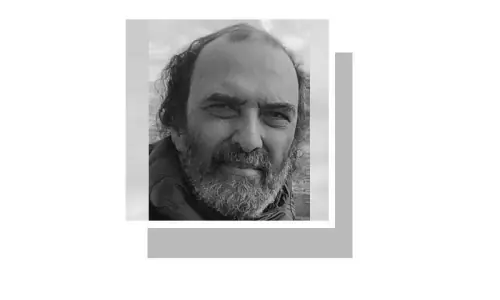
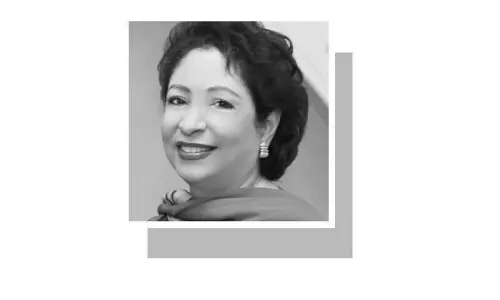
KARACHI, June 8: “It’s time India and Pakistan started treating each other like human beings and stop suspecting one another’s intent.” This was the gist of an animated speech delivered by Kavita Srivastava, national secretary of the People’s Union for Civil Liberties (PUCL), and echoed by her colleague Neelabh Mishra, editor Outlook magazine, India, at the Karachi Press Club on Friday.
Ms Srivastava was instrumental in the release of Pakistani scientist Dr Khalil Chisthi who was detained in India for two decades for his alleged involvement in a murder case. She is in Pakistan on Dr Chishti’s invitation.
She said it was her second trip to Pakistan. The first visit was in connection with Nirmala Deshpande’s death anniversary in 2009.
Informing the media about herself, she said her most important task was to work for the release of illegally detained prisoners. She sounded elated when she narrated that this time round she and her colleague acquired the Pakistani visa in no time and ascribed it to the garmahat (warmth) in the relationship between the two countries. She hoped that if things went on in that spirit, they would improve.
“I feel there’s a communication gap because of these otherwise long processes. A lot of people like me want to come to Pakistan in order to learn and understand.” She said there should be a relaxed visa regime, because when one had a reporting visa, one was required to go to the local police station and fulfil formalities. “Why monitor people’s movements?”
she asked. “We should be like other tourists of the world.” She also criticised the checking of baggage by security officials on both sides of the borders (the delegation has travelled to Pakistan by bus).
Ms Srivastava said prisoners should be treated in a dignified way, because even before you entered the jail you were addressed as “Khaleel Pakistani hazir ho.” She said that we should use this ‘moment of thaw’ in relationship and press on both the governments that instead of detaining people for overstaying their visas they could be heavily fined. She argued that in espionage or narcotics cases there should be fair and speedy trial. She supported her argument by apprising the media that in India there were fast-track courts for Dalits, children and women. She iterated that those who strayed across the border should have immediate consular access.
Outlook Hindi Editor Neelabh Mishra endorsed his colleague’s sentiments and said both countries must have friendly, peaceful relations. “The world had progressed a great deal, and South Asia must emulate it.” He said China’s growth rate had increased a fair bit but if South Asian countries joined hands their economies could also improve and might leave China behind. He lamented that Indian and Pakistani people knew very little about each other’s countries. In India some harboured the notion that all Pakistanis lived in gufa (caves), whereas coming to Karachi and looking at the city’s infrastructure would give them the real picture. “Karachi is like Mumbai,” he commented. He said the media on both sides of the divide had a responsibility in that regard. He hoped that the visa regime would soon be relaxed to facilitate the people.
During the question and answer session, Ms Srivastava agreed that the fishermen community too suffered the same injustices after inadvertently crossing international waters. Most of them simply strayed into the other side because of weather conditions (high-tide etc). The bureaucracies of both India and Pakistan must stop suspecting each other, she emphasised.
Replying to a question as to how, in a concrete way, ties between India and Pakistan could be bettered, Mr Mishra said during Gen Musharraf’s visit to India in 2004 there was buzz about making the borders ‘irrelevant’ but things didn’t work out. “We should take one step at a time and the first step matters a lot.”
He said a big number of people from Pakistan wanted to go to India because of medical reasons and in that context cited the example of a man from Sahiwal (his younger brother was suffering from an ailment whose treatment was possible in India).
When a journalist told the Indian guest how difficult it was for him to visit his ancestral town Jaisalmer (Rajasthan), Ms Srivastava (who herself is from Rajasthan) remarked it was ‘very sad’. “Our bureaucracies need to understand people’s emotions.”
On the question of American influence on India, Mr Mishra responded that India should see things with its own eyes.