ISLAMABAD, May 3: Expressing pessimism about the possibility of early solution to Siachen standoff, the foreign relations experts, former diplomats attached with the Pak-India dialogue and army officials stressed a wholesome negotiation on all the outstanding issues including Kashmir with India.
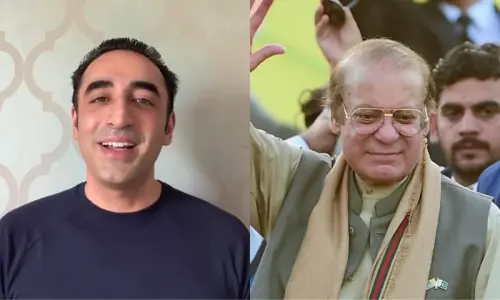
The panelists at a roundtable held at Institute of Regional Studies (IRS) on Thursday, were skeptical of the political leaders’ abilities as they lacked understanding of the problem and in this context PML-N chief Nawaz Sharif proposed unilateral withdrawal of Pakistani troops from Siachen.
However, later, he changed his stance budging to the tremendous pressure.
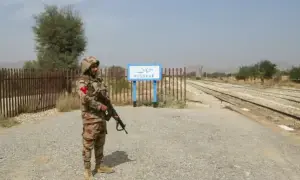
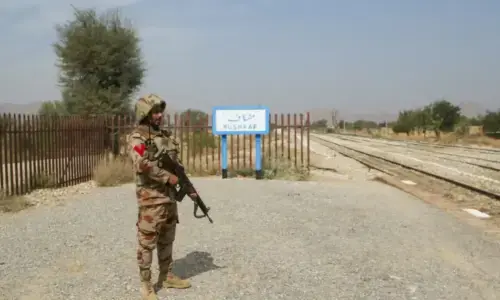
They were of the opinion that issue was not that simple which could be resolved in one or two meetings as Pakistan had shown a measure of flexibility against India which maintained its rigid stance in all the 12 rounds of talks on Siachen since 1984 when India in a surprise attack occupied the highest peak of Siachen forcing Pakistan to mount and maintain its forces there.
Pakistan, the experts said, was at the receiving end as far as India was concerned because it had been adamant and rigid always refusing to give in to find out a solution to various bilateral issues and Siachen was one of them.
“Though the deaths caused by avalanche were a great tragedy for the nation, no weak movement should dictate Pakistan to a strategic surrender,” said one participant.
They viewed the forthcoming Pakistan-India defence secretary-level talks next month as an exercise in futility if the other side continued to maintain its rigid stance demanding Pakistan to accept the Indian occupation as legitimate and agree on signing a document accordingly.
Former ambassador Asif Ezdi, former secretary foreign affairs Riaz Hussain Khokhar, former ambassador to India Aziz Ahmad Khan, former ambassador B.A. Malik, former corps commander of 10th corps Lt. Gen. (retired) Salim Haider, former director general Pakistan Meteorological Department (PMD) Qamar Zaman and some foreign diplomats discussed the issue threadbare at the roundtable.
The panelists were, however, against giving in to irrational Indian demand of authenticating the on ground situation which was result of its aggression and illegal occupation of the heights.
Riaz Khokhar said that the standoff could be resolved if both sides agreed to give up half of their demands. However, he suspected India would ever do so.
The panelists were seeing with concern that India was influencing Pakistani media to support its stand without knowing that any such retreat would also mean compromising on the Chinese strategic interests.
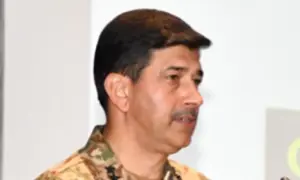
Lt Gen. (retired) Salim Haider said that one positive aspect of the Siachen tangle was that Pakistani forces which lacked the capability to fight and maintain positions on high altitudes had received vital training in the field.