0
0

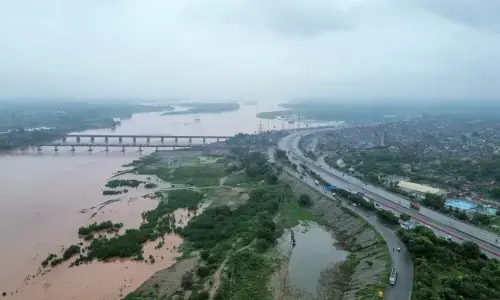
THE effects of 2010 floods have been devastating and the emergency is not yet over. In Sindh many areas are still under water or cut off. There is no adequate shelter, malnutrition rates are high, and displaced people do not have the means to return home. Despite such a dismal situation, the federal government recently turned down Sindh government’s request for assistance to continue relief work in the flood hit areas of the province.
The Sindh government had told Islamabad that hundreds of families were still in need of food, shelter and other essentials as many of the affected areas remain inundated and their inhabitants had no option but to stay in relief camps. Instead, the federal government has directed the provincial governments to lift the flood emergency and utilise the resources of local and international agencies and NGOs for the early rehabilitation of the affected population. The sudden discontinuation of emergency would have a negative impact on the recovery.
The disaster is far from over and its effects are yet to come. Malnutrition levels in Sindh which were chronic before the floods have further gone up. An estimated one million flood affected people have spent winter without adequate shelter. Their rehabilitation is the foremost concern. Building on the current humanitarian response, a nationally led pro-poor reconstruction and development programme must lead the way.
Unicef tells us that malnutrition situation in Sindh province is as critical as it is in Chad and Niger, with hundreds of thousands of children at risk. A survey conducted by the provincial government and the UN Children`s Fund recently revealed malnutrition rates of 23.1 per cent in northern Sindh and 21.2 per cent in the south. These rates are above the 15 per cent emergency threshold set by the World Health Organisation and are on a par with some of the poorest parts of sub-Saharan Africa. Northern Sindh also had a 6.1 per cent severe acute malnutrition rate and southern Sindh had 2.9 per cent, both far above the WHO thresholds.
At the beginning, a patchy international donor response with weak civilian disaster management capacity and a sluggish response to UN call contributed to an aid effort that was often poorly coordinated and slow to provide assistance to those who needed it. Consequently, millions of flood affected people waited for weeks or even months for emergency relief. There may be many who have yet to receive any kind of support from aid agencies. Concerns over lack of fairness in local aid distribution have also been widespread. Women and other marginal groups of society have experienced particular bias in obtaining assistance.
Several donor governments and institutions have acted relatively quickly and generously to help the needy with essential resources. However, international donor funding apparently substantial has been slow to arrive and remains inadequate to meet people’s needs. Iinitially, many focused on Khyber Pakhtunkwa, where several NGOs had already been assisting conflict-affected communities.
In Sindh, many areas including homesteads and agricultural land remain under water. The floods have further exposed the under-development of rural Sindh which suffers from high incidence of poverty, poor infrastructure and development devoid of infrastructure. Some NGOs are of the opinion that Sindh government should hold a donors conference to mobilise support for reconstruction and rehabilitation phase.
A major method of ensuring accountability and building trust is the involvement of civil society in the reconstruction effort. This is not the first disaster that Pakistan has experienced and it may not be the last. Re-building plans must also address the underlying social inequities, which have increased people’s vulnerability to disasters.
As the global climate changes, the intensity of annual monsoon flooding can be expected to increase. Efforts to rehabilitate the naturally protective environment and adapt to the changing climate need to be accelerated, with reforestation and appropriate water management being key factors. Various harmful practices such as deforestation, expansion of agricultural lands to river flood plains, poor maintenance of embankments, limited investment in irrigation systems, and ineffective early warning systems, exacerbated the flood disaster in 2010 and hence must be addressed.
napanhwar@gmail.com