0
0
CHITRAL, Feb 9: The Chitral River has great potential to boost local economy and change the fate of dwellers of the valley, says Dr Inayatullah Faizi, the former project manager of International Union for Conservation of Nature.
Though he agrees with other residents of the district that no significant benefit has been taken from the river, yet he claims that it can change the destiny of people, if utilised properly.
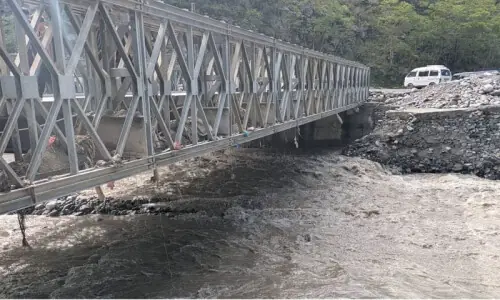
The Chitral River traverses a distance of more than 350 kilometres longitudinally through the valley before entering Afghanistan at Arandu.
Dr Faizi says that Chiantar glacier, situated at Baroghil area in the extreme north, is the origin of the river while it is also joined by many tributaries in different areas in Mastuj, Kuragh, Gankorini Singoor and Sheshi Drosh.
He says that people of the valley are not benefited from the river as they don't use it for irrigation, power generation, drinking and even fishing.
“Due to topography of Chitral it is impossible to construct water channels from the river to the lands situated in the plateaus at higher altitudes. The constraint of resource is the main obstacle,” he adds.
He says that Chitral is a mountainous region with hardly four per cent of cultivable area and half of it remains barren for want of water. He adds that shortage of irrigation water is the main obstacle to promotion of agriculture in the valley while the river goes unutilised.
Mr Faizi says that a network of irrigation channels can change the fate of the people but huge resources are required for the purpose.Regarding power shortage in the valley, Mohammad Qadir Shah, a former union council nazim, says that about 100 different sites have been identified by an NGO where micro hydro-power stations can be established using the river water.
He regrets that huge potential of power production goes unutilised and Chitral faces acute shortage of electricity. No government has ever earnestly considered the issue, he alleges.
He says that the water of the river is unfit for consumption due to high concentration of silts.
“The river is also not used for water sport to promote tourism,” says Dinar Azam, a tour operator. He adds that water sports are popular in some other tourist resorts.
The people of Chitral are unfamiliar with boating and swimming, which can attract tourists in the summer season.
Zaman Khan, a biodiversity specialist, says that there are nine species of indigenous fish with a fair population density but the contaminated nature of the river is the main hurdle to fishing.
He says if properly managed, the river can provide opportunities to hundreds of people to adopt fishing as a profession.