0
0

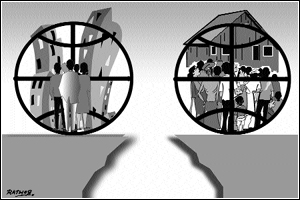 The next 50 years could see a fourfold increase in the size of the global economy and significant reductions in poverty, provided governments act to avert a growing risk of severe damage to the environment and profound social unrest, according to a latest World Development Report, 2003 published by the World Bank.
In nearly 50 years, the world could have a gross domestic product of $140 trillion and a total population of nine billion which will be increased from six billion of today. Without better policies, social and environmental strains may derail development progress, leading to higher poverty levels and a decline in the quality of life.
Developing countries need to promote participation and substantive democracy, inclusiveness, and transparency as they build the institutions needed to manage their resources. Rich countries need to increase aid, cut poor country debts, open their markets to developing country exporters, and help transfer technologies needed to prevent diseases, increase energy efficiency, and bolster agricultural productivity.
The report stresses that the burden of guaranteeing sustainable development must be shared locally, nationally, and globally:
Miss-guided policies and weak governance in past decades have contributed to environmental disasters, income inequality, and social upheavals in some countries, often resulting in deep deprivation, riots, or refugees fleeing famine or civil wars. Today, many poor people depend on fragile natural resources to survive. Similarly, trust between individuals, which can be eroded or destroyed by civic unrest, is a social asset with important economic benefits, since it enables people to make agreements and undertake transactions that would otherwise not be possible.
The report says that the next few years offer the opportunity to shape investment patterns to make more efficient use of natural resources, to protect the environment, and to bring deep reductions in poverty. The World Bank is urging world leaders to take advantage of the spirit behind such recent milestones as the Monterrey consensus, the compact adopted by the United Nations at the March 2002 International Conference on Financing for Development, and the New Partnership for Africa’s Development, an initiative taken by African leaders to establish a global unity for attaining sustainable development. “The world must act to help its poorest people manage their own resources and build their productivity and incomes now, to empower these communities and help them prepare for the demands of the decades ahead,” said Nicholas Stern, World Bank Chief Economist and Senior Vice President. “Rich countries can take such a step by opening their markets to developing world exports and by abandoning agricultural subsidies and other barriers to trade that depress prices and limit market opportunities for the very goods that poor people produce most competitively.”
The report estimates that the global population will reach nine billion by 2050 and by the end of the century will reach by 10 billion or less. By mid-century, two-thirds of the world’s population will live in cities. The demands for energy, water, housing, and education will be enormous. Yet these trends also offer windows of opportunity.
Most of the capital stock, apartments, shops, factories, and roads that will be needed by the growing population in coming decades do not yet exist. Better standards, increased efficiency, and new, more inclusive means of decision-making could mean that this new capital stock could be built in ways that puts fewer strains on society and the environment.
Similarly, as population growth slows, economic growth will translate more readily into lower poverty and higher incomes per capita - provided that economic and population growth over the next few decades has been handled in a way that does not destroy the natural resources that underpin growth or erode critical social values, such as trust.
“The $140 trillion world of five decades time simply cannot be sustained on current production and consumption patterns,” Stern said. “A major transformation beginning in the rich countries will be needed to ensure that poor people have an opportunity to participate, and that the environment is not damaged in a way that undermines their opportunities for the future.”
The challenges are daunting. The average income in the richest 20 countries is already 37 times that in the poorest 20 nations. Globally, 1.3 billion people live on fragile lands, arid zones, slopes, wetlands, and forests that cannot sustain them. Both the gap between rich and poor countries and the number of people living on fragile lands have doubled in the past 40 years.
Around half of the world’s wetlands disappeared in the last century. Water use is expected to jump 50 percent over the next 30 years, and yet pollution and climate changes are already threatening water supplies, particularly in Africa, the Middle East, and South Asia. By 2025, it is likely that three quarters of the world’s population will live within 100 kilometres of the sea, placing huge strains on coastal ecosystems. Since the 1950s, nearly two million hectares of land worldwide representing 23 percent of all crop-land, pastures, forest, and woodland have been degraded, and tropical forests are disappearing at the rate of 5 per cent per decade.
The 2003 report describes promising innovations around the globe that address these problems. It argues for rich and developing countries to build upon these efforts to make sustainable development a reality and enable poor people to participate in economic growth.
“In the next 50 years, the world’s population will begin to stabilize, and the majority of people will live in cities for the first time in history,” said Zmarak Shalizi, lead author of the World Development Report 2003. “By thinking long term and acting now, we can take advantage of these windows of opportunity to shift development to a more inclusive and sustainable path and achieve steep reductions in poverty in the decades ahead.”
The report suggests that sustainable development will require:
* Achieving substantial growth in income and productivity in developing countries.
* Managing the social, economic, and environmental transitions to a predominantly urban world.
* Attending to the needs of hundreds of millions of people living on environmentally fragile lands.
* Reaping the “demographic dividends” seen in declining dependency rates and slowing population growth,
* Avoiding the social and environmental stresses at local and global level likely to emerge on the path to a $140 trillion world economy.
Across the developing world, new rules, organizations, and other institutional innovations are already leading to better environmental outcomes. Air pollution is declining in Mexico City and in some Chinese cities. All but a handful of countries have eliminated lead from gasoline. In the past 10 years, the percentage of people in low-and middle-income countries with access to sanitation has climbed to 52 percent, from 44 percent.
Countries as different as China, Morocco, and Cameroon are experimenting with new institutional approaches to these problems, often involving increased participation of the private sector and civil society. In Brazil, for example, the government has made it possible for poor people in some locales to secure title to their homes and land, so that even those with only the barest means of shelter feel confident they will not be evicted. With security of tenure, even poor people are able to invest to improve their homes or their businesses. Most importantly, poor people must have a greater say in the process that will shape their lives in the decades ahead. Decisions need to be taken in an inclusive and consultative manner that recognizes the views of poor people while also empowering them with greater control of their own resources.
Developing countries depend on their agricultural sectors for around one quarter of their total output. However, farmers in these regions are faced with many hurdles to boosting their living standards in the years ahead. Rich country subsidies depress agricultural prices and stifle opportunities for exporters in the poorest countries. Poor roads, a scarcity of finance, lack of access to new technologies, and growing environmental degradation also threaten the livelihoods of poor farmers in many parts of the world.
To help the poorest in the developing world to rapidly boost their incomes, the World Bank is urging rich countries to stop spending $1 billion a day on agricultural subsidies, to accelerate the transfer of new technologies, and to provide more aid, particularly to Sub-Saharan Africa, which is struggling to raise agricultural productivity in the face of rapid population growth.