Kohat killings

Published April 20, 2010

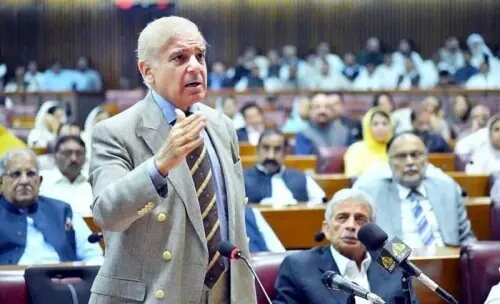
The thought of killing refugees, attacking hospitals and exploding bombs in busy bazaars can occur only to those who have lost all touch with humanity. —AFP Photo
AS targets go they don't come any softer. More than 40 people died near Kohat on Saturday when two suicide bombers blew themselves up among a crowd of internally displaced persons queuing up for food rations. Think for a moment about the barbarity of this attack. War-scarred IDPs, many of whom live in makeshift shelters and lead a life of abject deprivation, somehow found themselves on the hit list of the Lashkar-i-Jhangvi, a banned terrorist organisation which had also claimed responsibility for Friday's suicide attack on a hospital in Quetta. To maximise casualties, the second bomber waited until a crowd had gathered to help those injured by the first explosion. In Quetta too the suicide bomber struck when the body of a prominent Shia man who was shot dead earlier in the day was brought to a hospital where mourners were present in large numbers. A similar pattern was seen in Karachi in February this year when a bus carrying passengers to a Shia procession was hit first and then another explosion took place in the hospital where the wounded were being treated. On Sunday, at least seven civilians were killed in Kohat in another suicide attack which the Tehrik-i-Taliban claimed was aimed at security personnel. Among other things, the recent attacks are further proof of the fact that the Taliban and militants from Punjab share a common cause.

Taking on the army may be seen by some as a fair fight. But the thought of killing refugees, attacking hospitals and exploding bombs in busy bazaars can occur only to those who have lost all touch with humanity. Such tactics also betray the current desperation of the Taliban and their cohorts. They are still a fighting force but the myth of invincibility that once surrounded the militants has dissipated since the armed forces confronted them head-on in May 2009. Since September last year, the Lashkar-i-Islam in Khyber Agency has twice asked the government to strike a peace deal. Hitting soft targets and offers of negotiation are signs of weakness and on no account should the militants be accommodated in any way until they lay down arms.


Opinion

Editorial

Collective wisdom
05 Mar, 2026

Collective wisdom

IN times like these, when war is raging in the neighbourhood, it is important for the state to bring on board all...
Economic impact
Updated 05 Mar, 2026

Economic impact

The Iran-linked instability highlights the fact that Pakistan’s macroeconomic resilience remains fragile.
Shrouds of innocence
05 Mar, 2026

Shrouds of innocence

TWO-and-a-half years of relentless slaughtering of Palestinian children, with complete impunity and in the most...
Regional climbdown
04 Mar, 2026

Regional climbdown

WITH the region in flames, Pakistan must calibrate its foreign policy accordingly; it has to deal with some ...
Burning questions
Updated 04 Mar, 2026

Burning questions

A credible, independent, and time-bound inquiry is now necessary after the US Consulate protest ended in gruesome bloodshed.
Governance failure
04 Mar, 2026

Governance failure

BENEATH Lahore’s signal-free corridors and road infrastructure lies a darker truth: crumbling sewerage lines,...