0
0
ISLAMABAD Pakistans eight-month-old civilian government has disbanded the political wing of the Inter-Services Intelligence (ISI) agency to concentrate its focus on counter-terrorism, Reuters reported.
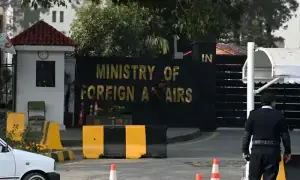
While speaking to the press on Sunday, Foreign Minister Shah Mehmood Qureshi said the ISIs political wing had been disbanded, and described it as a positive development.
ISI is a precious national institution and it wants to focus fully on counter-terrorism activities, the state-run Associated Press of Pakistan quoted him as saying.
The report did not say when the decision was taken.
The ISI is generally regarded as one of the foremost intelligence agencies in the world. However, critics call it a state within a state and Pakistans civilian leaders have regularly accused its political wing of involvement in the overthrow of their governments.
Recently elected President Asif Ali Zardari, and Prime Minister Yousaf Raza Gilani signalled their intention to exert more control over the ISI in July, but backtracked from an attempt to bring it under the ambit of the Interior Ministry in July 2008.
Senior officials say army chief General Ashfaq Kayani, who himself served as ISI head, has been supportive of Pakistans return to civilian-led democracy while insisting that the army must look after its own affairs.
Since becoming army chief in November last year, Kayani has taken several steps to take the army out of politics, including ordering all officers out of civilian posts and barring them from meeting politicians.
He appointed a new ISI chief in September and replaced several senior officers.
The political wing was established by Prime Minister Zulfikar Ali Bhutto in the 1970s. Since then, his daughter Benazir Bhutto - who was assassinated in December 2007 - also accused ISI officials of conspiring to destabilise her two governments during the 1990s.
The involvement of ISI in politics has been a major controversy in Pakistan. This decision will help it in earning respect in the eyes of people of Pakistan, particularly at a time when it is facing the major challenge of terrorism, former army general-turned-analyst Talat Masood said.