0
0
HYDERABAD, Sept 29: University of Sindh Vice Chancellor Mazharul Haq Siddiqui has stressed the need for using wind and solar energy. He was speaking at a two-day national workshop on "Wire line logging" , organized by the university's department of geology.
The vice-chancellor said educational institutes, especially engineering universities, should focus on development of technologies that could prove instrumental in the use of wind and solar energy, which were less expensive.
Delivering a lecture on "The toil for oil - a global scenario", the senior manager, exploration, Pakistan Petroleum Limited, Nusrat K. Siddiqui, said the demand for natural gas would be overtaken by LNG (liquefied natural gas) in the next 20 years.
He said oil and gas discoveries all over the world were not encouraging and added that in future the use of coal energy would increase. He said consumption of oil and gas had increased while the production was on the decline, adding that hydrocarbon was the hottest commodity in the industrialized world.
About global reserves, Mr Siddiqui said proven reserves as in the year 2001 stood at 1,028.5 billion barrels of oil, 5,350 trillion cubic feet of gas and one trillion tons of coal.
Referring to current production, he said production of oil per annum was around 26 to 27 billion barrels, of gas, 83 to 84 trillion cubic feet, and of coal, five billion tons.
The others who spoke at the workshop included Prof Asif Ali Kazi, dean of the faculty of natural sciences, and Dr Parveen Usmani, chairperson of the department of geology.
The workshop was attended by students of the University of Karachi, Federal Urdu University, Karachi, Mehran University of Engineering and Technology, Jamshoro, teachers and staff members of the PPL.
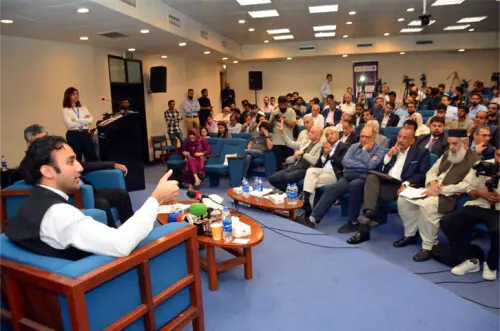
WORKSHOP: The former additional secretary of the National Assembly, Jonaid Iqbal, gave two presentations on 'Rules of procedure' and 'Legislative process of the Sindh Assembly' at an orientation workshop, organized under a project 'Strengthening national and provincial legislative governance of Pakistan' at a hotel here on Tuesday.
The US Agency for International Development is funding the project. The session was chaired by Justice (Rtd) Dr Ghaus Mohammad, director-general of the Sindh Judicial Academy.
A question and answer session followed the presentations by Mr Iqbal. The participants included representatives of civil society organizations of Hyderabad and other districts of interior of Sindh, women's organizations, farmers' associations, academia, intelligencia, researchers and lawyers.
They shared their views on the active involvement of civil society organizations in the legislative process and working of standing committees and assemblies. The workshop was followed by a "training needs assessment" session to assess capacity building needs of the participating organizations in the field of legislative government.