0
0

LAHORE, July 7: The labour inspections law is not repealed but has been suspended by an executive order of the provincial government.
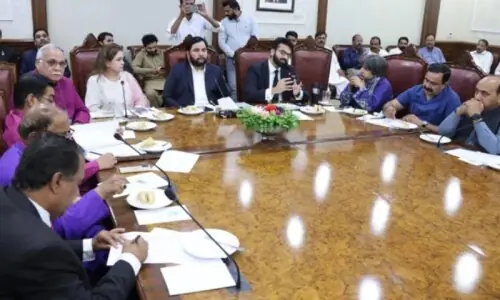
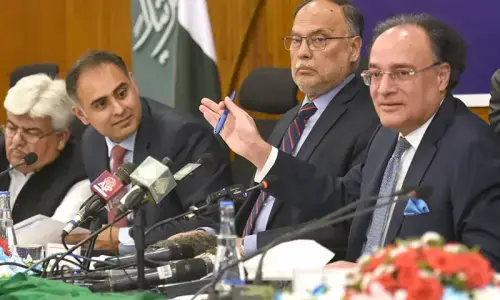
This was stated by Punjab Labour secretary Maj Shahnawaz Badar (retired) while speaking at the concluding session of a two-day workshop on Labour Laws and Conventions organized by the Working Women Organization here on Wednesday.
He said the provincial government had stopped inspections of the industrial units for verification of implementation of the labour laws and allowed the managements to file declarations in this regard instead.
Mr Badar said the response to the government policy of replacing labour inspections with declarations had not been encouraging as managements of only 232 out of over 11,000 industrial units had filed declarations.
However, he said that recoveries of social security contributions had exceeded the target after discontinuation of inspections. He said there was corruption in the labour inspections system as the industrial units in operation in the province could not be inspected properly due to limited number of staff.
Tripartism was the only solution to the problem of non-implementation of labour laws. Workers, he said, were compelled to compromise with the excesses of the employers and accept less than the prescribed minimum wages owing to large-scale unemployment. Only the private sector could solve the unemployment problem by setting up new industries.
All Pakistan Federation of Trade Unions secretary-general Gulzar Ahmed Chaudhry said the Pakistan government had ratified 38 Conventions of the International Labour Organization but implemented none. The workers had now been deprived of their fundamental trade union rights and job security.
Working Women Organization chairperson Rubina Jamil and information secretary Aima Mahmood said that gender discrimination, sexual harassment, job insecurity, denial of minimum wages and compulsion to work for over eight hours a day were the major problems being faced by the working women.
She said that married women also faced the problem of lack of day-care facilities for the children. They could not afford to pay the exorbitant charges of centres run by the social welfare department. Women in garment industry were compelled to stand for hours at workplaces lacking proper ventilation and lighting arrangements, she added.