0
0

WASHINGTON, Dec 2: Indian Foreign Secretary Shivshankar Menon has arrived in Washington to a receptive audience which not only accepts India’s position on the Mumbai terror attacks and backs it in forcing Pakistan to meet its demands.
“Pakistan … needs to give its full, complete and transparent cooperation with the investigation into the Mumbai attacks and to follow leads wherever they may go,” State Department’s deputy spokes Robert Wood told a briefing on Tuesday. At the White House, spokeswoman Dana Perino stressed the importance of Secretary of State Condoleezza Rice’s visit to South Asia to resolve the crisis.
“Let her try to work on that and see what she gets out of it,” said Ms Perino when asked to describe the agenda for Ms Rice, who arrives in New Delhi on Wednesday and then flies to Islamabad the day after. “I don’t (want to) get in front of anything she’s working on.”
Meanwhile, US intelligence officials, while talking to the US media, confirmed India’s claim that Lashkar-i-Tayyaba was involved in the Mumbai attacks.
They said that British intelligence agents had recorded conversations between the attackers and their backers in Pakistan.
In an editorial on Tuesday, The Washington Post also backed India’s claim that the LeT was behind the attack.
“The best way to salvage Pakistani democracy, and to prevent a slide toward war between two nuclear powers, is for Islamabad to shut down LeT and similar organisations swiftly, permanently and verifiably,” the Post wrote.
Also, a Post columnist, Robert Kagan, who is a senior associate at the Carnegie Endowment, Washington, suggested placing the tribal belt and the areas where terrorist groups allegedly had their bases under international control.
He suggested forming an international force to invade those areas and destroy the bases. Mr Kagan urged the US to convince China and Russia not to oppose the creation of such a force if and when the proposal goes to the United States.
He acknowledged that forming such a force to invade Pakistani territories would violate the country’s sovereignty but argued that “Pakistan and other states that harbour terrorists should not take their sovereignty for granted. In the 21st century, sovereign rights need to be earned.”
At the State Department, deputy spokesman Robert Wood said: “We’re going to continue to work with India and Pakistan … and to see what we can do to prevent these types of attacks from taking place and, of course, to get to the bottom of who carried out these attacks and bring those culprits to justice.”
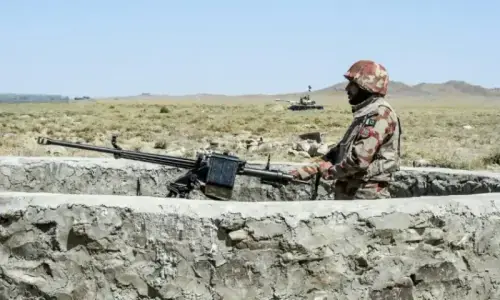
Asked if the US saw statements from Pakistan that it might withdraw troops from the Afghan border as a threat, Mr Wood said: “Look, Pakistan will have to make decisions based on what it feels is in its best interest.’’