0
0

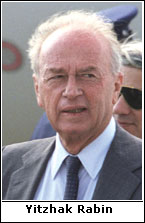 JERUSALEM: The assassin of prime minister Yitzhak Rabin has said in telephone interviews from prison that he was influenced by Israeli military leaders who had criticised Rabin’s land-for-peace deal with the Palestinians.
Two Israeli commercial networks aired portions of the interviews with Yigal Amir on Thursday but cancelled plans to air longer versions on Friday evening after a public uproar. Amir, a Jewish Israeli activist, shot Rabin at close range at a rally in 1995.
In one interview, Amir spoke about how he formed his plan to kill the prime minister. Amir said he attended a wedding at which Rabin was also a guest and realised that the prime minister was protected by only one bodyguard. “I wandered around with a pistol. I was just next to him. I saw that it was so easy – if I were to shake his hand, I could have easily shot him,” Amir said.
He said he was moved to kill Rabin by “all those who understand the military,” naming former general Ariel Sharon, who would later become prime minister; Rafael Eitan, a former Israel Defense Forces chief; and Rehavam Zeevi, a former general who advocated the removal of Palestinians from the Israeli-occupied territories. Zeevi was killed by Palestinian assassins in 2001.
”All the military experts said that the Oslo accords were a disaster,” Amir said, referring to the 1993 deal between Israel and the Palestinians that was signed by Palestinian leader Yasser Arafat and Rabin on the White House lawn.
Amir enjoys the support of a small group of Israeli hard-liners and has succeeded in improving his prison conditions by petitioning the courts. In 2003, he was moved to a prison in the Tel Aviv area, which is more convenient for his family. He has won the removal of the cameras used to monitor him in his cell and was allowed to marry Larissa Trembovler. The two were granted a conjugal visit, and last year she gave birth to their son, who was circumcised in prison on Nov 4, 2007, the anniversary of the assassination.
Prison Authority spokesman Yaron Zamir said such privileges are not accorded to Palestinian security prisoners. “All these rights have been given to him through the courts, and we have opposed them,” Zamir said. Amir also succeeded in a legal battle to have the right to speak over the phone. He conducted the interviews by calling his wife, who handed her phone to a journalist.
As punishment for the unauthorised interview, Amir was transferred on Thursday night to another high-security prison in southern Israel, which houses hundreds of Palestinian prisoners.—LA Times-Washington Post News Service