UNITED NATIONS, June 18: Saying that it was against the enlargement of the “coterie of the powerful and privileged”, Pakistan has called for a broad agreement on the expansion of the UN Security Council which envisages creation of mostly non-permanent seats and a few extended ones.
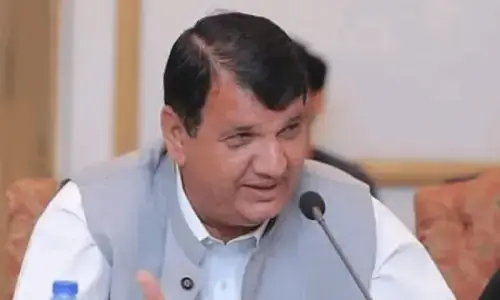
Speaking during the UN General Assembly’s debate on the expansion of the powerful 15-member Security Council, Pakistan’s Ambassador to the United Nations Munir Akram observed: “The only two realistic and achievable options are either the creation of only non-permanent seats or the creation of mostly non-permanent seats and a few so-called extended seats.”
He said Pakistan believed that a majority of seats ought to be non-permanent ones for allocation to the small- and medium-size states with only a few extended seats, if agreed, to cater to the desire of larger states for more frequent or longer representation on the Security Council.
“It is neither for one or more major powers to determine representation in the Security Council nor can some countries select themselves. Indeed, equitable geographical distribution will make little sense if a seat allocated to a region is to be occupied permanently by one country.”
The ambassador called for a “solemn agreement” for ending unilateral moves for seeking votes and decisions proposed by some states while the process of consultation and subsequent negotiations was under way.
Mr Akram, who is credited for frustrating attempts at a lopsided enlargement of the council, was obviously referring to a draft resolution informally circulated by India — and previously by other contenders for an enhanced status — seeking expansion of the council in both the permanent and non-permanent categories.
Although the previous texts containing similar elements failed to muster the necessary support in the 192-member assembly, the new Indian draft sought veto power for the additional permanent members. This new element was seen as an attempt to secure the support of African countries that insist on veto power for the two African permanent seats envisaged in the reforms package.
Practically, all member states agree on enlarging the membership of the council, but they are sharply divided over the category in which the expansion should take place, as also over other details.