0
0

ISLAMABAD, Feb 1: The government has been warned that the country’s power generation capacity that is heavily tilting towards expensive thermal generation compared with hydel resources.
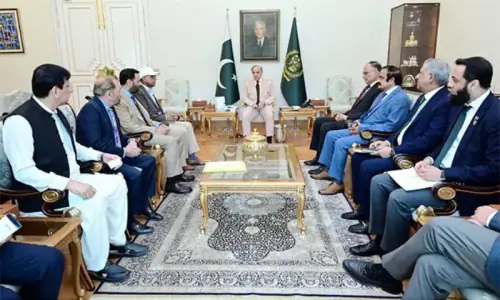
The Planning Commission and the National Electric Power Regulatory Authority (Nepra) have told the president and the prime minister that the public concern about shortages would soon turn into a question of unbearable increase in cost of production and affordability, sources told Dawn.
The sources said the ratio of hydroelectric power generation capacity would decline to less than 20 per cent by 2010 from the current 28 per cent because of an increasing number of contracts being signed for thermal power generation.
They said the government had been advised to be careful in increasing generation capacity through the short-term solution of thermal power generation at exorbitant tariffs and strive for maintaining a ratio of 70:30 between thermal and hydel power generation.
While the generation in winter would remain more or less at the current level in the next few years, the power supply from thermal plants will increase substantially as new projects come on line by 2010.
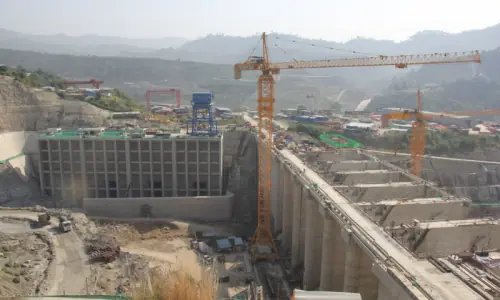
Hydel power generation during the current winter fluctuates in 1,500-2,000MW against total supplies of 11,000-12,000MW, mostly coming from high-cost oil-based thermal projects. Fuel cost accounts for more than two-third of thermal tariff that keeps rising with international prices and currently averages beyond 10 cents (Rs7) per unit. The aggregate hydel power tariff from Tarbela, Mangla and Ghazi Barotha comes to less than 30 paisa per unit.
The president and the prime minister were shocked to know that hydel power generation had dropped to 13 per cent in recent days against its capacity of about 28 per cent because of lower availability of water, the sources said.
While the Wapda Vision 2025 and energy security plan 2030 envisaged improving hydel generation to 35 per cent and the power policies announced by the government called for a bar on thermal projects, most of the agreements signed for power production over the past five years were in the thermal sector, they were told.
The sources said Nepra had declined to approve wind power tariff of more than 10.5 cents it had offered to six power producers with a total capacity of about 300MW. It informed the government that wind-based power tariff in India was 7-8 cents per unit.
None of the wind power producers had been able to achieve financial close as required under the law although they had been given upfront tariffs early last year, the sources said.
Nepra informed the government that the sponsors of the projects had not been able to lock in their contracts with manufacturers by making down payment and said the cost of their non-professional attitude should not be passed on to the consumers.
The president and the prime minister were also convinced after several presentations by Nepra and the Planning Commission that coal-based power projects at Thar could not be offered a rate of 7.8 cents per unit and it should be adopted as reference tariff for international bidding to produce 20,000MW by 2019.