0
0

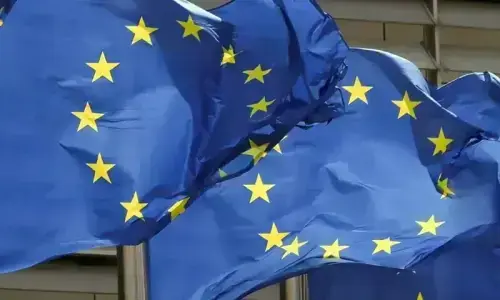
LISBON: Only a slim strip of sea separates Europe and Africa but the world’s biggest economic bloc and its poor neighbour seem to be oceans apart over how to improve human rights and build trade ties.
A weekend summit in Lisbon brought together 70 European and African heads of state, but despite lofty proclamations of the “spirit of Lisbon” and a post-colonial “partnership of equals”, the unwieldy conclave showed little meeting of minds.
German Chancellor Angela Merkel scolded the Africans about the situation in Zimbabwe, where President Robert Mugabe is accused by the West of crushing opponents and wrecking the economy.
But the former Marxist guerrilla chief, viewed as an anti-colonial independence hero by many Africans, strutted with a steely smile through the summit in the absence of British Prime Minister Gordon Brown, who stayed away in protest.
Asked for his message to the West, Mugabe, 83, was happy to raise a combative fist for the cameras.
European Union officials soothingly assured the Africans that new liberalising trade deals – which Brussels insists be signed before a World Trade Organisation waiver on preferential terms expires on Dec 31 – would be good for them in the end.
But many African heads of state, led by Senegal’s octogenarian president Abdoulaye Wade, opposed the EU economic partnership agreements or any interim substitutes, saying their imposition smacked of divisive colonial paternalism.
Wade warned “slow, bureaucratic” Europe that it risked being left behind by China and India in the race for investments in Africa.
Virtually the only African leader to talk to the media in Lisbon, Wade ensured his irate public “No” to the trade deals dominated the final day of the meeting, overshadowing the hurried closing session, which lacked several prominent leaders.
The Lisbon Declaration at the end of the first EU-Africa summit in seven years promised another meeting in 2010.
But human rights and anti-poverty campaigners bemoaned a wasted opportunity to agree concrete assistance for the millions of African poor, or to move decisively to solve festering African conflicts like the one in Sudan’s Darfur.
“Political leaders declared this a meeting of equals. They bear equal responsibility for its failure,” said El-Khidir Daloum, Advocacy Manager for Save the Children in East Africa.
Summit hosts Portugal, who could claim a small diplomatic victory for ensuring the summit survived a pre-meeting row over Mugabe’s attendance, tried to play down the visible divisions.
“The very fact that the summit was held at all was a result,” said Prime Minister Jose Socrates in his closing comments.
The disconnect on human rights seemed complete when Wade, responding to Merkel’s intervention on Zimbabwe, said she was “badly informed”. Who could say, he asked, that rights were abused more there than elsewhere in Africa?
“That’s embarrassing,” said Human Rights Watch’s Reed Brody, who also chided South African leader Thabo Mbeki, arguably Africa’s most powerful leader and a mediator for Zimbabwe, for maintaining public silence in Lisbon over Mugabe.“Mbeki’s silence was like a thumb in the eye of public opinion,” Brody said.
Some analysts question the West’s obsession with Zimbabwe. Other African leaders accused of abuses or dubious democratic credentials, such as Equatorial Guinea’s Teodoro Obiang Nguema Mbasogo or Gabon’s Omar Bongo, Africa’s longest serving leader with 40 years in power, seem to enjoy far more indulgent treatment while western companies develop their oil reserves.
Libyan leader Muammar Gaddafi brought his eccentric showmanship to the summit, pitching his Bedouin tent in a 16th century fortress on the Tagus riverbank and deploying his khaki-uniformed and black booted female bodyguards in the chambers of Lisbon University while he spoke there.
Adding to the sense of estrangement, a Portuguese passer-by was asked by a TV station whether he had heard of Darfur, whose name was posted up by advocacy groups in big letters outside the summit: “Darfur? Isn’t that a supermarket chain?,” he asked.—Reuters