BEIRUT: The call by an elite US panel for Washington to talk to Damascus has left Beirut's anti-Syrian leaders wondering if their US ally will permit Syria to reassert itself in Lebanon in exchange for help over Iraq.The Iraq Study Group, led by former US Secretary of State James Baker, has proposed that the United States abandon its policy of shunning both Syria and Iran, accused of fomenting Iraq violence, to prevent “a slide towards chaos” there.
It is not clear if all the panel’s ideas will be adopted by US President George W. Bush, who holds up Lebanon as a model of democracy and denounces Syria as a safe haven for terrorists.
Bush on Thursday again gave strong backing to Lebanese prime minister, Fouad Siniora, and said Syria was trying to destabilise the government in Beirut.
But the public support might gave way to private concessions to Syria, some Lebanese fear, as Washington casts around for ways to extricate itself from vicious conflict in Iraq
Syria would want the US to concede it has a role in Lebanon where it held greater sway until Western pressure helped force out its troops last year.
“The need for Syria to help pacify Iraq will give the Syrians the chance to assert their influence in Lebanon,” said Hilal Khashan, a political scientist at the American University of Beirut.
“It wouldn’t surprise me if trying to improve the situation in Iraq would imply making certain concessions in Lebanon.”
Lebanon's fate seems already to have been bargained away, wrote prominent commentator Talal Salman in his As-Safir daily, referring to the Iraq report. “Lebanese leaders must take note that the deal has almost been done above their heads.”
The anti-Syrian coalition in government, known as the March 14 movement, came to office after the Syrian withdrawal. With the support of Washington and Paris, it has made combating Syrian influence a priority.
The anti-Syrian leaders are trying to push on with plans for an international tribunal to try suspects in the assassination of Rafik al-Hariri -- the former premier whose slaying in February 2005 they blame on Damascus. Syria denies involvement.
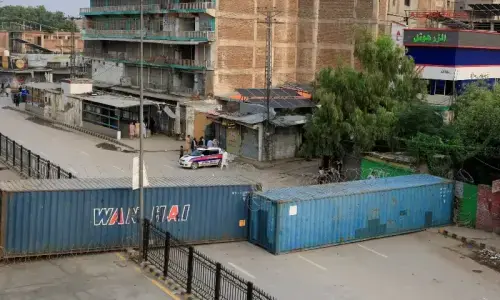
But the March 14 coalition is facing a fierce challenge by the opposition led by Hezbollah, a group backed by both Syria and Iran, which has paralysed the heart of Beirut for the past week to push its demand for a power of veto in government.
Hezbollah, anti-Syrian leaders say, aims to restore Syrian control in Lebanon and to derail the international tribunal.—Reuters