Thousands rally in Antalya to demand climate justice as COP31 talks hit midpoint
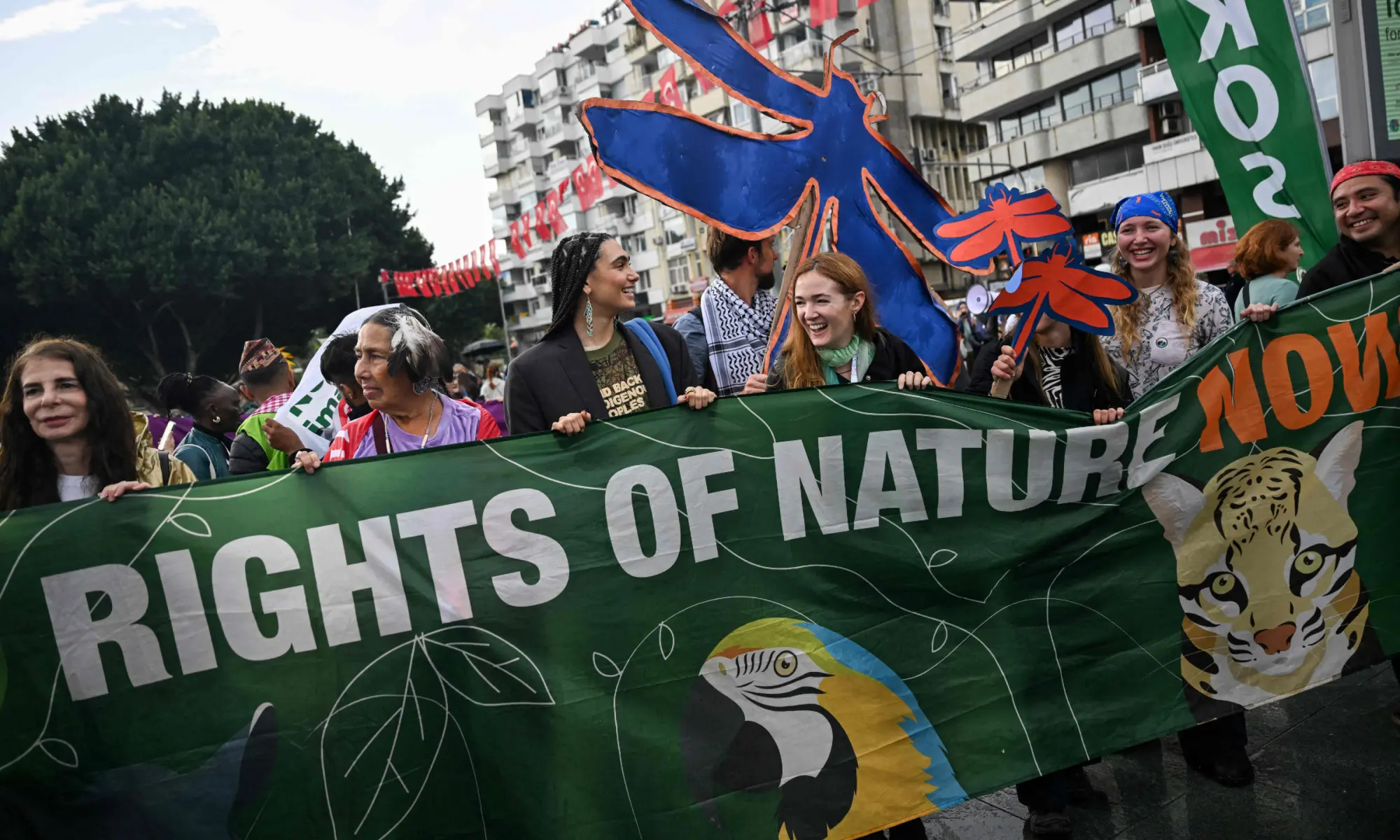
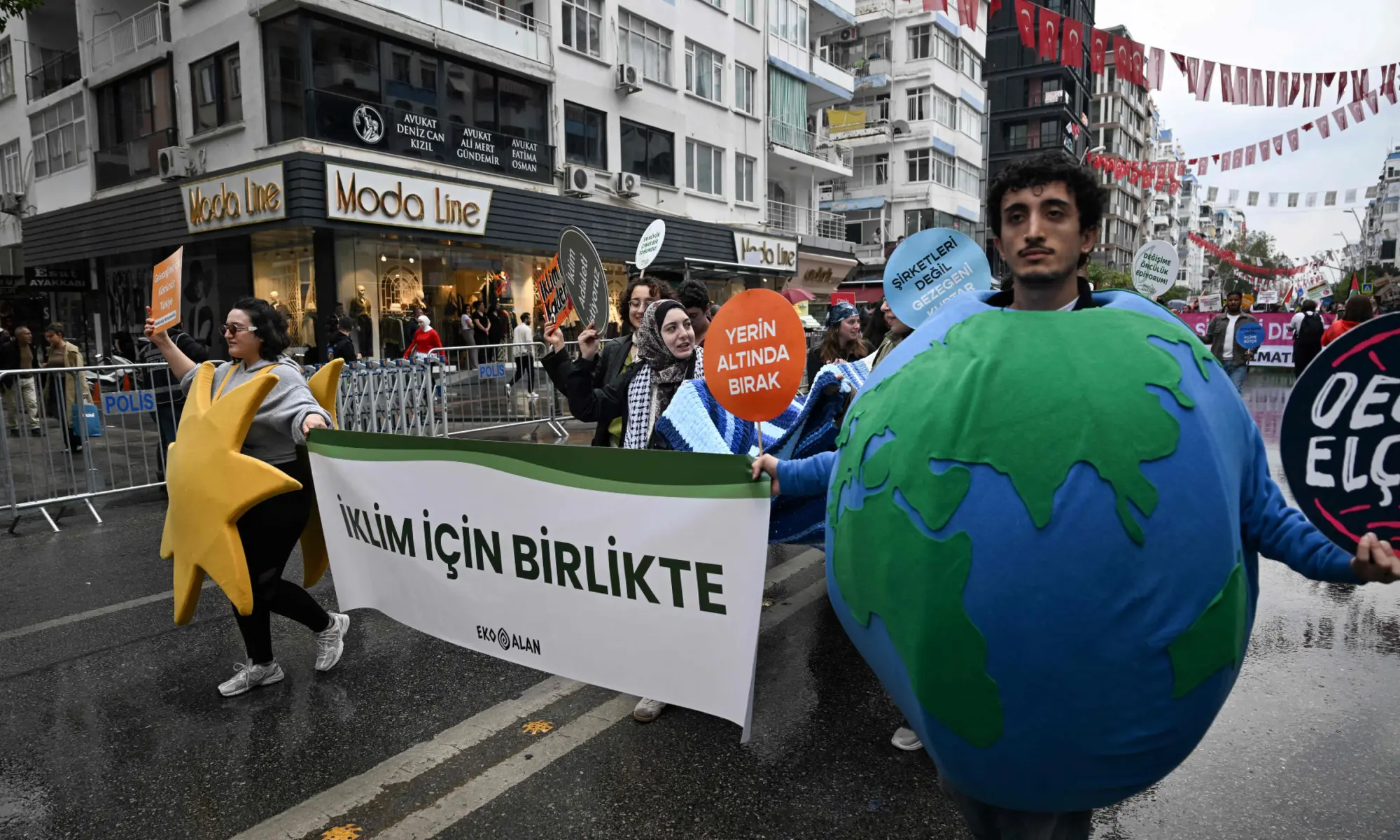
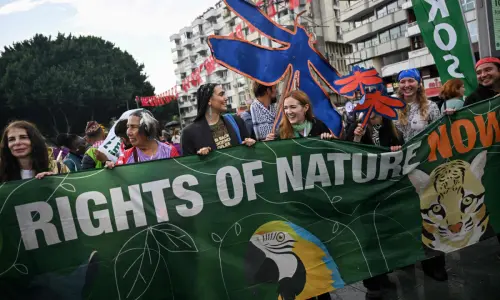
Thousands of protesters on Saturday took to the streets in the Turkish city hosting COP31 to accuse the climate summit of failing those bearing the brunt of environmental destruction.
The show of dissent comes as negotiators approach the crunch final week of global climate talks in Antalya, with nearly 200 nations scrambling to strike a deal by Friday.
The summit is not expected to produce a major breakthrough, frustrating activists demanding tougher curbs on planet-warming fossil fuels and fresh pledges to help poorer countries adapt to climate impacts.
In downtown Antalya, under rainy skies, thousands of protesters dressed in costumes and shouting slogans marched under close police supervision in the largest demonstration since COP31 began on Monday.
“We are suffering the consequences of climate injustice, yet our voices are never heard at the COP,” said Halime Saman from the People’s Climate Summit platform, one of the groups behind the rally.
“Turkiye is the co-chair of COP31 but still has no roadmap for phasing out fossil fuels. New power stations and coal mines are being opened,” she told AFP.
Yasar Gokoglu, a 78-year-old demonstrator, travelled nearly 600 kilometres from Adana in southern Turkiye to denounce what he called “a masquerade sponsored by monopolies”.
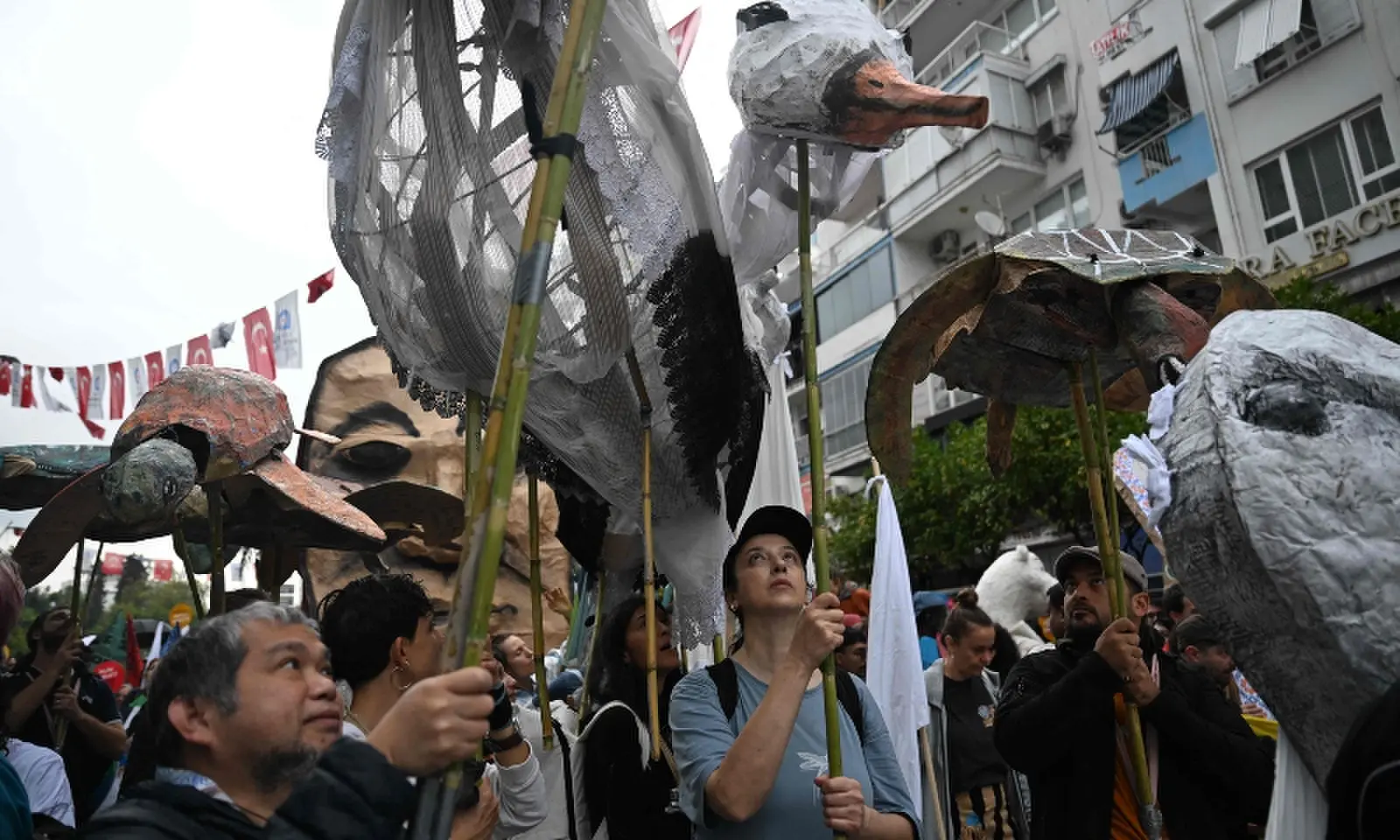
Police estimated that more than 7,000 people attended the protest, which was organised by environmental groups, trade unions and rights organisations, and proceeded without any major incident.
Civil society activists had raised safety concerns ahead of COP31 after Turkiye embarked on a crackdown on the LGBT community in September. Some LGBT protesters waving rainbow flags participated in the march.
Demonstrators were only allowed to join the rally after being searched by police.
‘No quick fix’
Much smaller demonstrations inside the COP31 venue this week, including one attended by Swedish activist Greta Thunberg, have been mounting pressure on political leaders to act faster on the climate crisis.
The negotiations hit the halfway point Saturday, but countries remain far apart on contentious issues including financing adaptation measures in developing nations, defending climate science, and shifting from fossil fuels to clean energy.
Australia’s climate minister, Chris Bowen, who is chairing the formal negotiations, said there had been “really good and positive conversations” but some issues required more time.
Outside the negotiations, Turkiye is urging countries to join a voluntary pledge to raise the share of global final energy demand met by electricity.
The summit, which closes on Nov 20, takes place against a difficult backdrop, with a conflict-driven energy crisis and geopolitical tensions tempering expectations.
“There’s no climate quick fix. No single COP can magic this crisis away, but each must drive progress,” UN climate chief Simon Stiell told reporters on Saturday.
MNA presents five parliamentary recommendations
At the Pakistan Pavilion at COP31, Parliamentary Secretary for Information and Broadcasting Barrister Danyal Chaudhry addressed a high-level dialogue and stressed that the world needs to acknowledge the economic cost of climate inaction, according to a press release.
At the dialogue, titled ‘Adapting Under Austerity: Delivering Paris Commitments in Debt-Stressed, Climate-Vulnerable Economies’, he stated that Pakistan’s core needs to ensure that the pursuit of fiscal sustainability does not compromise Islamabad’s capacity to protect people from severe climate impacts.
“He noted that past policies introduced in the name of fiscal consolidation increased taxation and discouraged climate-resilient development — an approach the Government of Pakistan believes directly undermined its climate objectives,” the press release said.
Chaudhry emphasised that the world must “function as one global village and one global family”. The secretary further noted that addressing the climate crisis requires collective action on a shared planet and there cannot be separate standards for wealthy and developing nations.
He presented five key parliamentary recommendations for climate-vulnerable and debt-stressed nations.
“First, he called for climate-proofing fiscal and taxation policies by mandating climate impact assessments for major financial decisions so they do not drive up the cost of sustainable development,” the statement said.
Second, he stressed the need to safeguard the transition to renewable energy through stable, predictable policies that do not penalise households or businesses investing in clean energy.
Chaudhry also called on governments and lenders to treat adaptation as an investment rather than an expense, stressing that investing in climate-resilient agriculture, water management, early warning systems, and disaster-resistant infrastructure reduces future recovery costs.
Next, he advocated for reforming global debt architecture through debt-for-climate swaps, climate-contingent clauses, concessional financing and extended repayment schedules, so disaster-prone countries are not forced to “sacrifice essential development”.
Chaudhry went on to call for strengthening parliamentary oversight of climate financing by requiring annual reports on climate-related taxes, subsidies, budget allocations and measurable adaptation outcomes, the press release said. He added that national fiscal frameworks must remain fully aligned with Pakistan’s Nationally Determined Contributions (NDCs) and National Adaptation Plan.