Govt unveils LPG policy as power costs set to rise
• Directs four SOEs to re-enter LPG import business
• Plans subsidised LPG at Rs300-350 per kg for BISP-eligible consumers
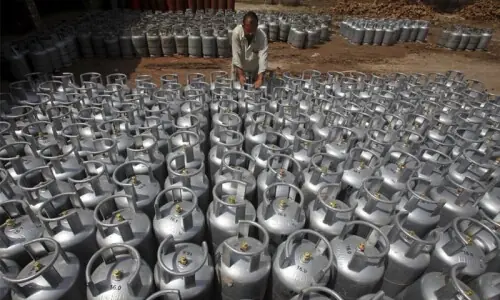
ISLAMABAD: The government on Tuesday directed four state-owned enterprises (SOEs) to re-enter the liquefied petroleum gas (LPG) import business to ease severe supply constraints and soaring prices, while the power division sought an estimated Rs2-4 per unit increase in electricity purchase costs for the next calendar year.
Speaking at a news conference at PTV headquarters, Petroleum Minister Ali Pervaiz Malik said the federal cabinet had approved a broad-based LPG policy aimed at creating competition and supplies through procurement by four SOEs under government-to-government (G2G) and business-to-business (B2B) arrangements.
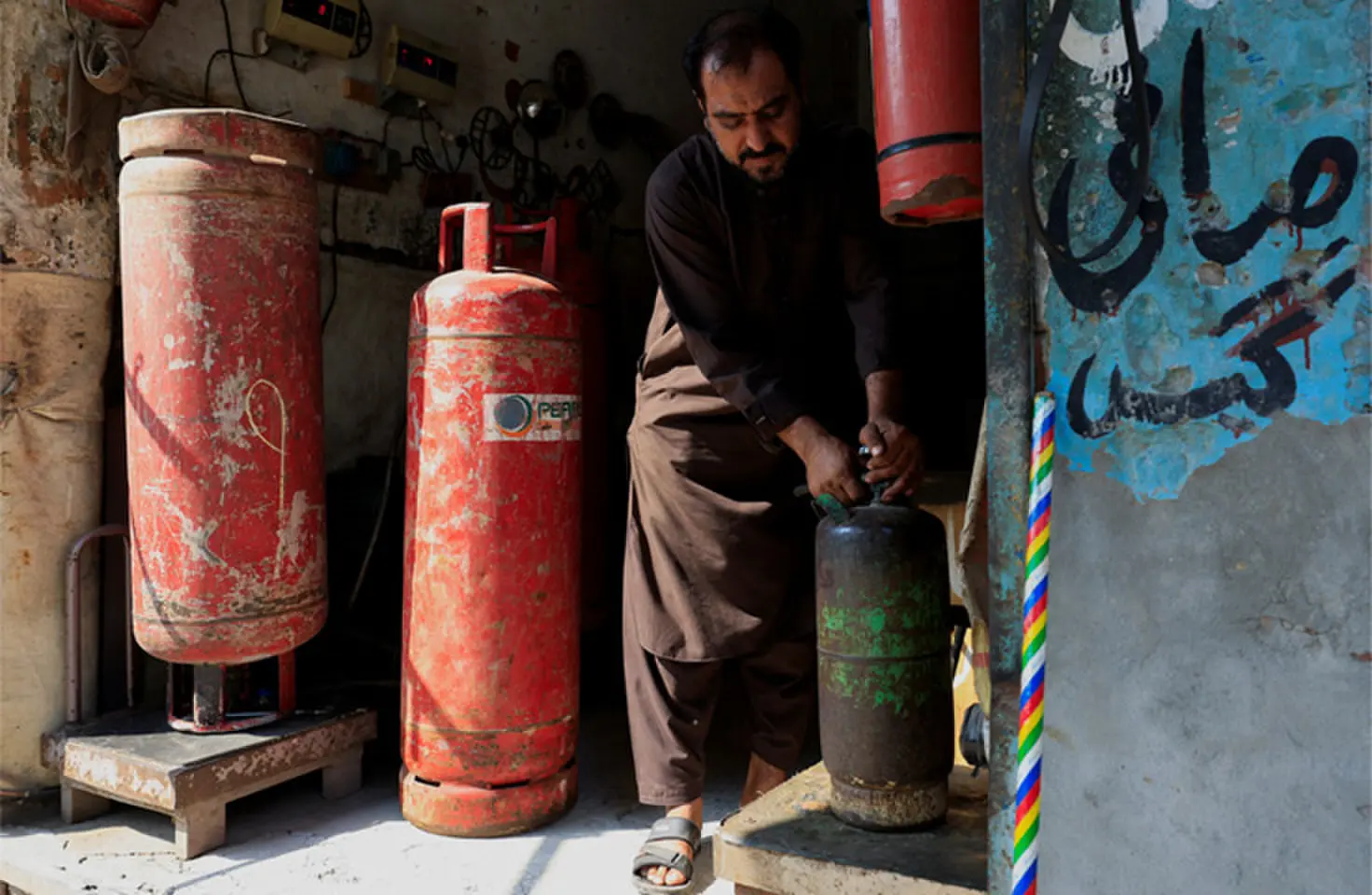
He acknowledged that LPG, often described as the poor man’s fuel, was in short supply even before the onset of winter because of disruptions along the western borders.
As a result, unscrupulous elements were selling LPG at Rs700-800 per kg, depending on the area, against the maximum price of Rs295 per kg notified by the Oil and Gas Regulatory Authority (Ogra) for November, he said.
“Looking at the Saudi CP (Contract Price) rate and prevailing premiums, its local price in the market would be Rs450-500 per kg” once supplies from SOEs began, the minister said.
He added that private-sector importers would remain free to arrange supplies at lower rates to compete.
Mr Malik said the prime minister had directed that LPG be provided to deserving and vulnerable consumers at Rs300-350 per kg, using the eligibility criteria of the Benazir Income Support Programme (BISP).
The subsidy would be financed through a new account funded by the difference between the LPG import parity price and proceeds from auctions of locally produced LPG supplied by refineries and exploration and production companies, under a clawback mechanism.
The minister told Dawn that the four SOEs — Pakistan State Oil, Pakistan LNG Ltd, Sui Southern Gas-LPG and Parco-LPG — had already received offers for LPG supplies from Saudi Arabia and Oman.
However, even the proposed subsidised price of Rs300-350 per kg for BISP-eligible consumers would exceed Ogra’s current notified maximum price of Rs294.08 per kg.
Power purchase costs
Separately, a power division team presented six scenarios for rebasing the power purchase price (PPP) for January-December 2027 at a public hearing conducted by the National Electric Power Regulatory Authority (Nepra).
Industrial consumers criticised the government for creating additional entities and hiring staff at exorbitant salaries, arguing that these costs were contributing to higher electricity tariffs.
Central Power Purchasing Agency CEO Rehan Akhtar and Power Planning and Monitoring Company CFO Naveed Qaiser presented the projections, all of which put next year’s power purchase price, excluding taxes and other charges, above this year’s Rs25.32 per unit.
None of the scenarios assumed that the US-Iran war would continue into 2027. Under the base-case scenario, the power purchase price was projected at Rs27.31 per unit, an increase of Rs1.99. The ideal scenario, which officials acknowledged was unlikely to materialise, projected Rs25.883 per unit, up Rs0.563.
The two worst-case scenarios put the price at Rs28.84 and Rs29.26 per unit, representing increases of Rs3.52 and Rs3.94, respectively. Two other scenarios, involving changes in electricity demand and greater LNG and natural gas availability, projected increases of Rs2.25 and Rs1.12 per unit.
Nepra reserved its decision and will issue its determination after examining the record and submissions. The projected annual power purchase cost ranges from Rs3.4 trillion to Rs3.8tr. Explaining the new LPG policy, Mr Malik said the Competition Commission of Pakistan, the National Explosives and Petroleum Safety Agency and Ogra had been tasked with addressing collusive practices, quality standards and price monitoring in coordination with district administrations.
He said the quota system benefiting influential groups would be abolished, while local producers would auction LPG in lots of five to 10 tonnes through a competitive process monitored by Ogra and the petroleum division. Under the new arrangement, SOEs would import LPG in bulk and publish the base price, linked to the Saudi Aramco Contract Price.
These would be disclosed on their websites as the monthly average landed cost. Ogra would cease issuing price notifications for locally produced and imported LPG. Local producers would receive the producer price determined through auctions, while the difference between the producer price and the SOE-linked base price would be deposited in a fund to subsidise LPG for BISP-eligible consumers.
Published in Dawn, November 4th, 2026