School in Sindh's Kandhkot village set to open after years of lawlessness
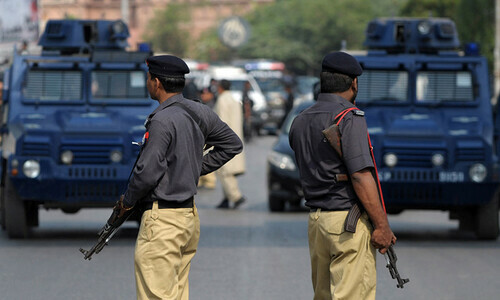
KARACHI/LARKANA: A government primary school is set to be made functional in Kandhkot after years-long lawlessness that had badly affected all educational, development, commercial and business activities in the areas adjacent to the gang-infested riverine areas of Ghotki and Kandhkot-Kashmore districts.
The school is situated in Haji Khan Chachar village, next to the Kandhkot-Ghotki Bridge — a facility of high economic, logistic and commercial importance for the people of the two districts.
Over the last few months, ruthless actions had been taken against criminals, mainly ringleaders and members of dacoit gangs, in these areas in order to restore peace and people’s trust in law-enforcers.
The Sindh police, supported by paramilitary forces and intelligence agencies, have been continuing intelligence-based actions against criminals in upper Sindh districts. Scores of ringleaders and members of their gangs, besides other criminals, have been killed and wounded. Many others have been arrested or forced to give up criminal activities under the ‘surrender policy’ introduced by the Sindh government.
Police attribute restoration of peace to successful anti-dacoit operations, ‘surrender policy’ offered to criminals
Until recently, the areas around the Kandhkot-Ghotki Bridge had also remained under virtual control of dacoit gangs with rampant incidents of murder, kidnapping for ransom and attacks on commuters, homes and pedestrians for long. The gangs, operating in the nearby riverine areas, had made this part of Kandhkot a ‘no-go area’ for the engineers, workers and labourers who had to complete the remaining work on the bridge. Other people also would not dare to pass through the site of the bridge.
However, no such incident has been reported from these areas over the last few months due to the success of the anti-criminal actions taken under the ‘Nijat-i-Mehran’ operation.
Satisfied with the achievement of peace, the Kandhkot-Kashmore district government and provincial education department decided to open the primary school in the village, which falls within the limits of the Ghora Ghat police station of Kandhkot. “Opening of the school is an important step towards providing education to children of local communities in a peaceful atmosphere and ensuring their bright future,’’ senior divisional and district officials said on Tuesday.
Larkana Commissioner Dr Rasheed Masood Khan chaired a meeting of senior government officials in the office of the Kandhkot-Kashmore deputy commissioner to discuss the socio-economic development of the riverine areas.
Larkana DIG Shiraz Nazir, the Kandhkot-Kashmore SSP and other senior officials of different departments, as well as the MNAs and MPAs from the area, attended the meeting.
They also visited the school and reviewed the educational facilities made available to students.
Speaking on the occasion, DIG Shiraz said that peace had been restored in the riverine areas as a result of the Sindh government’s ‘surrender policy’ for criminals and the joint efforts made by all law enforcement agencies. He acknowledged that police officers and personnel had made countless sacrifices to achieve the peace. Their sacrifices would always be remembered, he said.
He hoped that students would also be provided equal educational opportunities so that they could become luminaries and earn pride for the country and the nation.
The DIG said that conditions in the riverine areas are steadily improving with public cooperation. The government’s priority is to maintain law and order in these areas while also providing education, healthcare and other basic facilities to the people. Education is fundamental requirement for development, prosperity and social stability. All relevant institutions must work together to achieve this goal, he added.
The meeting participants held a detailed discussion on the current law and order in the riverine areas, state of education and health facilities, basic infrastructure, road construction, clean drinking water, employment opportunities and various measures to improve the socio-economic status of local residents.
It was resolved that the peace established through the Nijat-i-Mehran operation would be made lasting, and that effective steps would be taken, with the cooperation of all relevant institutions, to bring the riverine areas into the national mainstream of development.
They noted that after the marked improvement in the law and order situation in the riverine areas of Kandhkot-Kashmore district, provision of basic facilities to people had begun.
Published in Dawn, November 4th, 2026