Herder’s lens brings elusive snow leopards closer to world
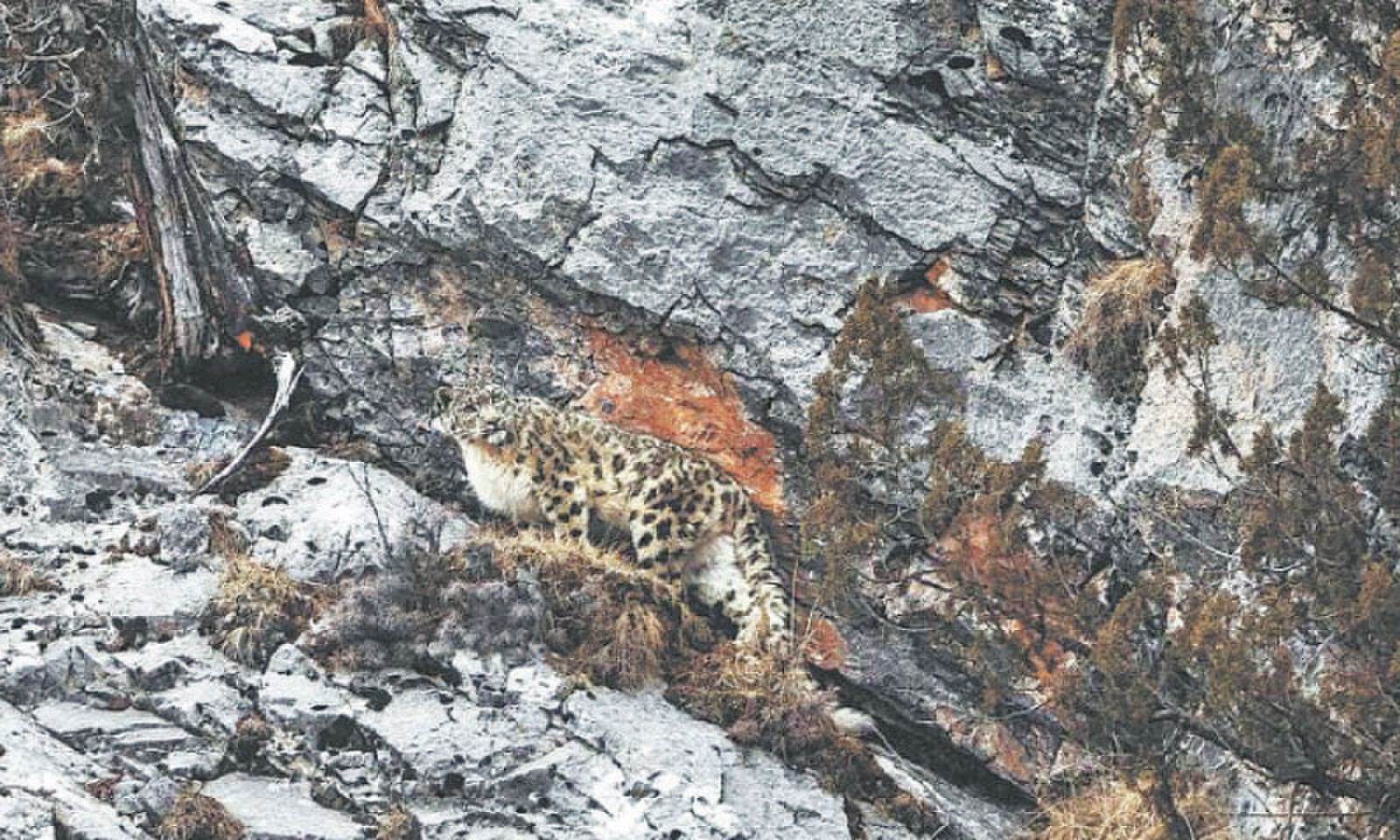
XINING: Perched on a craggy outcrop overlooking a vast canyon in Northwest China’s Qinghai province, Sangdrup raises his camera and scans the rugged cliffs for signs of wildlife.
White-lipped deer, blue-eared pheasants and blue sheep occasionally emerge from the forests flanking the gorge, offering subjects for his lens. The autumn air carries the scent of grass and trees as the Lancang River rushes through the canyon below.
The 32-year-old Tibetan is among a growing number of herders in Sanjiangyuan National Park who have taken up photography, as well as the roles of wildlife photographers, grassroots guardians and caretakers of injured animals.
Established five years ago as part of China’s first batch of national parks, Sanjiangyuan is the largest and highest. Covering 190,700 square kilometres in the heart of the Qinghai-Tibet Plateau, it guards the headwaters of the Yangtze, Yellow and Lancang rivers at an average elevation of more than 4,700 metres.
During his daily patrols, Sangdrup has made a habit of photographing wildflowers and animals, documenting his rounds while creating a precious record for future generations. Yet one animal remains at the top of his wish list: the snow leopard, often called the “king of the snow mountains”.
Born and raised on the grasslands, Sangdrup first heard about snow leopards from his family as a child. “All I knew was that they were beautiful and mysterious, like a big cat, but none of my pals around had ever seen one,” he recalls.
His first encounter came in 2018. While patrolling at dawn, he saw a grayish-white animal dart across the slope in front of him. He immediately recognised it as a snow leopard.
Published in Dawn, November 2nd, 2026