FORT LAUDERDALE: Soaring prices for gas, medicine and other cost of living essentials are preoccupying Americans as they start to cast their ballots ahead of next week’s midterm elections.
A whopping 84 per cent of voters who have cast their ballots early listed the economy as their biggest concern this election cycle, according to a recent Pew Research Centre survey.
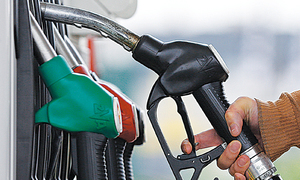
Kyler Daugherty, a 43-year-old health care worker, summed up the sentiment as he filled up his gas tank in Fort Lauderdale, Florida.
“It’s ridiculous. I mean, everything’s gone up, from food to transportation to gas prices,” he said.
Fuel costs have skyrocketed around the world since the United States and Israel launched strikes on Iran in February.
Fuel prices in the United States rose 9.1 per cent last month alone, a headache for residents in a state like Florida, where most people rely on cars to get around.
“It affects transportation, it affects goods, it affects everything,” Matthew Moore, a 63-year-old attorney, said after he cast his ballot early.
“We transport a lot by truck. Air prices have gone up. My tickets home for Christmas have doubled since last year,” he said.
Broken promises
President Donald Trump won re-election in 2024 in part because of his campaign promise to lower prices, which had also increased during the term of his predecessor Joe Biden.
“I didn’t believe that promise then and I probably won’t continue to believe (it),” said Melissa Reer, a 49-year-old social worker worried by her car and home insurance costs.
“But I think there’s a lot more changes have to happen before prices can go down,” she said.
William Galston, a senior fellow at the Brookings Institution think tank, said two of Trump’s decisions this term have directly contributed to cost pressures: launching the war on Iran and slapping tariffs on trade partners.
“It’s within the president’s power to remove most of the tariffs that he’s imposed. It’s within the president’s power to end the war that he began,” Galston said. For some voters, however, it’s too late.
“My vote was cast based upon my feelings about how they’ve handled the stewardship that the voters have given them,” said Michael Childs, 62.
Basic expenses
But millions of households across the United States find it harder than ever to make ends meet. “The financial hardship is creeping up in America, particularly for the middle class,” said Symeria Hudson, the CEO of United Way Miami, a non-profit fundraising organisation.
United Way’s ALICE metric -- which stands for an Asset Limited, Income Constrained, Employed person -- measures working people whose income does not cover basic expenses, such as food, housing and health care. Nearly 41pc of the 132 million households in the United States fall below the threshold.
“We continue to encourage those policymakers to really understand the data,” Hudson said.
Many US voters are running out of ways to cut spending.
“I’m literally cutting back on certain meds because I’m like, ‘I can’t afford them’. I don’t know what to do next,” Daugherty said.
Published in Dawn, October 31st, 2026