Mideast problems solvable without US help: Pezeshkian
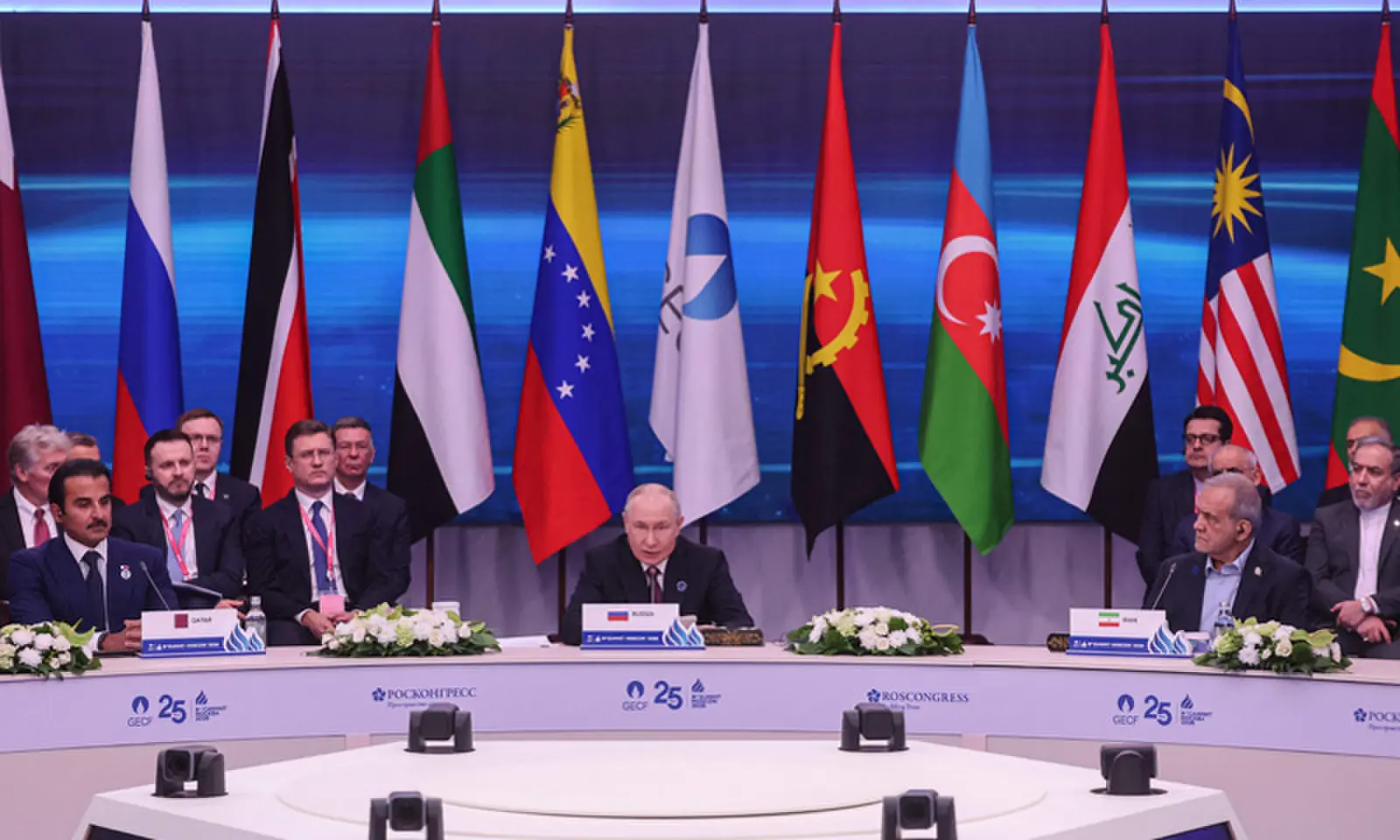
• Putin, Qatari emir and Iranian president discuss war, Hormuz in Moscow
• Doha insists ball in Tehran’s court, urges it to show ‘good faith’
• Saudi crown prince reviews Tehran talks with cabinet
• Iran’s supreme leader discusses regional situation with security chief
MOSCOW / RIYADH: Iranian President Masoud Pezeshkian told his Russian counterpart Vladimir Putin on Tuesday that the Middle East can solve its problems without the involvement of the United States.
“I believe we are capable of resolving our problems in the region without relying on the United States,” Pezeshkian said at a meeting with Putin on the sidelines of a summit of the Gas Exporting Countries Forum in Moscow.
“Our trade is expanding and growing day by day. US actions in the region make it easier for us to move towards greater multilateralism and strengthen our cooperation with you and other countries subject to unilateral US sanctions,” he told Putin.
Putin said he discussed the war with Pezeshkian, expressing hope that the situation would improve.
“We spoke earlier, one-on-one, about the situation in the region -- a situation that, undoubtedly, cannot help but cause concern,” he said, adding that he hoped it would “evolve in a positive direction”.
Pezeshkian said he was confident the will existed on both sides to expand cooperation in science, industry, culture, security and military affairs.
Meanwhile, Qatar’s emir and the Iranian president also discussed the Middle East war and the blockaded Strait of Hormuz during a meeting in Moscow on Tuesday, the emir’s office said.
Emir Sheikh Tamim bin Hamad Al Thani and Iranian President Masoud Pezeshkian met on the sidelines of a summit of the Gas Exporting Countries Forum.
According to Iranian state television, the two leaders reviewed relations between Tehran and Doha and emphasised the importance of deepening political and economic ties and strengthening bilateral cooperation.
Qatar and Pakistan have been at the forefront of efforts to secure a lasting agreement between the United States and Iran, but Moscow has also been looking to help end the Middle East war.
On Tuesday, Qatari foreign ministry official Ibrahim Al-Hashmi called for a new regional security framework to prevent further violence. “The ball is now in Iran’s court to commit to these principles and demonstrate good faith,” he said.
“We have heard positive statements from the Iranian side... but they still need to demonstrate good faith, stop threatening countries of the region, and reopen the Strait of Hormuz so that all those efforts can go towards having a safe and prosperous region,” he added.
Meanwhile, Saudi Crown Prince Mohammed bin Salman chaired a cabinet meeting in Riyadh on Tuesday, during which ministers reviewed talks held in Tehran a day earlier between members of the Makkah defence alliance and senior Iranian officials, state media reported.
“The council reviewed the substance of the talks held between the countries party to the Makkah Common Defence Agreement and senior officials of the Islamic Republic of Iran, reaffirming Saudi Arabia’s commitment to establishing security and stability,” read a statement released by state media.
Senior officials from Saudi Arabia, Turkiye and Pakistan held talks with Iranian leaders in Tehran on Monday over the Middle East war, with Iran’s security chief Mohsen Rezaei later describing the discussions as “very good”.
Monday’s talks in Tehran included Saudi Defence Minister Khalid bin Salman, Pakistan’s army chief Field Marshal Asim Munir and Turkiye’s intelligence chief Ibrahim Kalin.
They followed warnings by the United States, Iran and Israel that hostilities could restart in the eight-month war, which saw Tehran strike US allies in the region including Qatar.
Mojtaba meets security chief
In a separate development, Iran’s supreme leader Ayatollah Mojtaba Khamenei, who has yet to appear publicly since taking office in March, has met security chief Mohsen Rezaei to discuss regional security and the Strait of Hormuz, his office said on Tuesday.
During the meeting, the first publicly announced encounter between the two, they discussed “strengthening bilateral relations with neighbouring countries” and “safeguarding national and regional security through the management of the Strait of Hormuz”, according to a statement from Khamenei’s office.
The supreme leader “emphasised the need to safeguard the rights and interests of the Iranian nation and the resistance front by adhering to the conditions set by the country’s authorities, with the aim of ending the war and the state of neither war nor peace”, the statement added.
Neither the date nor the location of the meeting was disclosed.
Published in Dawn, October 28th, 2026