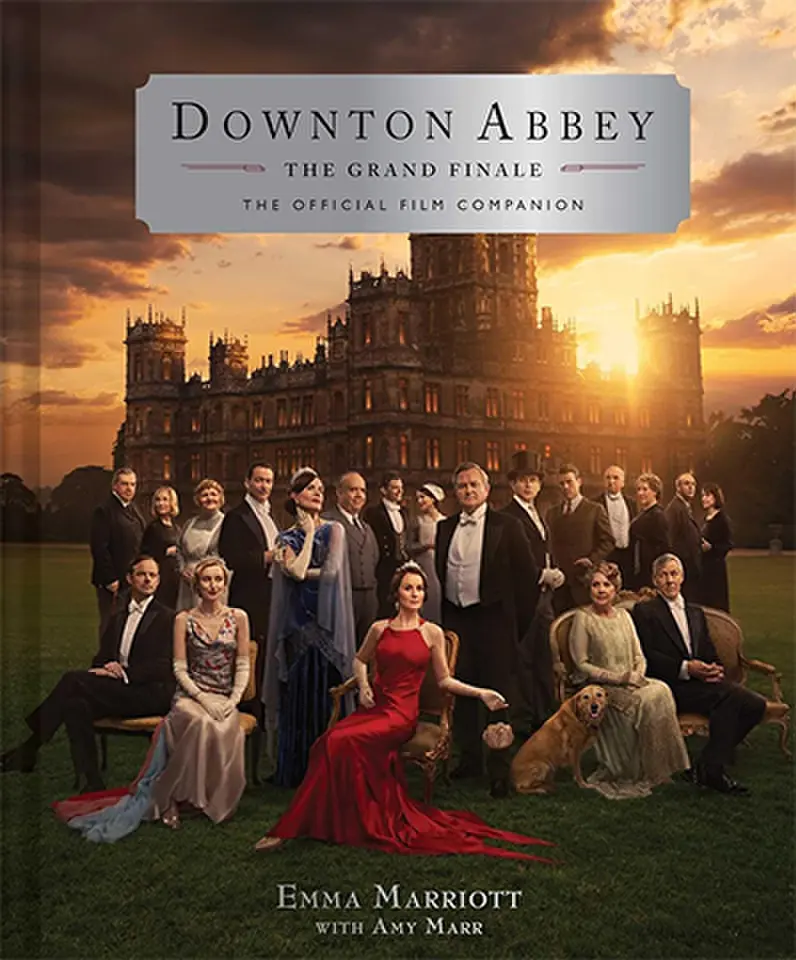
Downton Abbey: The Grand Finale,
The Official Film Companion
By Emma Marriott with Amy Moore
Weldon Owen
ISBN: 979-8886743067
224pp.
I tried watching Downton Abbey two or three times after it first aired in 2010 and, each time, I found it rather tedious and serious, as it begins on the day the Titanic sank. Then, perhaps in the right frame of mind, I gave it another try.
By that time, all six seasons had been released and, for some reason, this time round I found it so addictive that I promptly purchased all the DVDs and binge-watched the entire show. Since then, I have bought the beautifully packaged DVD box set from Amazon — it looks almost like an album — and watched the series at least 10 times and bought at least 10 books about it.
For the uninitiated, Downton Abbey was a hugely popular period drama that ran from 2010 to 2015, following the Crawley family and their servants at the fictional Yorkshire estate of Downton Abbey (Highclere Castle in real life). At its centre are Robert Crawley, the Earl of Grantham, his American-born wife, Cora, their three daughters, Mary, Edith and Sybil, and their household staff. And let’s not forget Robert’s mother, the Dowager Countess, Lady Violet played by Dame Maggie Smith.
It was created and written by Julian Fellowes, who won an Academy Award for his screenplay for Gosford Park and went on to win two Emmys for Downton Abbey and has also created The Gilded Age. After the show ended in 2015, three films were released: Downton Abbey (2019), Downton Abbey: A New Era (2022) and, last year, Downton Abbey: The Grand Finale, sadly the final film — for now — which was possibly the best of the three.
The official companion to the final film of Downton Abbey celebrates a beloved series — and makes parting with its characters a little easier
However, this means the world of Downton is over for good, which is why, when I found out there was a companion book for the last movie — Downton Abbey: The Grand Finale, The Official Film Companion — I promptly got my hands on it via some relatives abroad. Needless to say, it was a pleasure to read.
In a nutshell, change is at the heart of the finale. “We see in The Grand Finale a handing off of the baton from older to younger generations,” writes author Emma Marriott. Lord Grantham finally gives the reins to the newly divorced Lady Mary; Andy and Daisy take over from Mr Carson and Mrs Patmore as butler and cook respectively. And, as Julian Fellowes explains in the book, “Every generation reinvents how these great houses are lived in.”
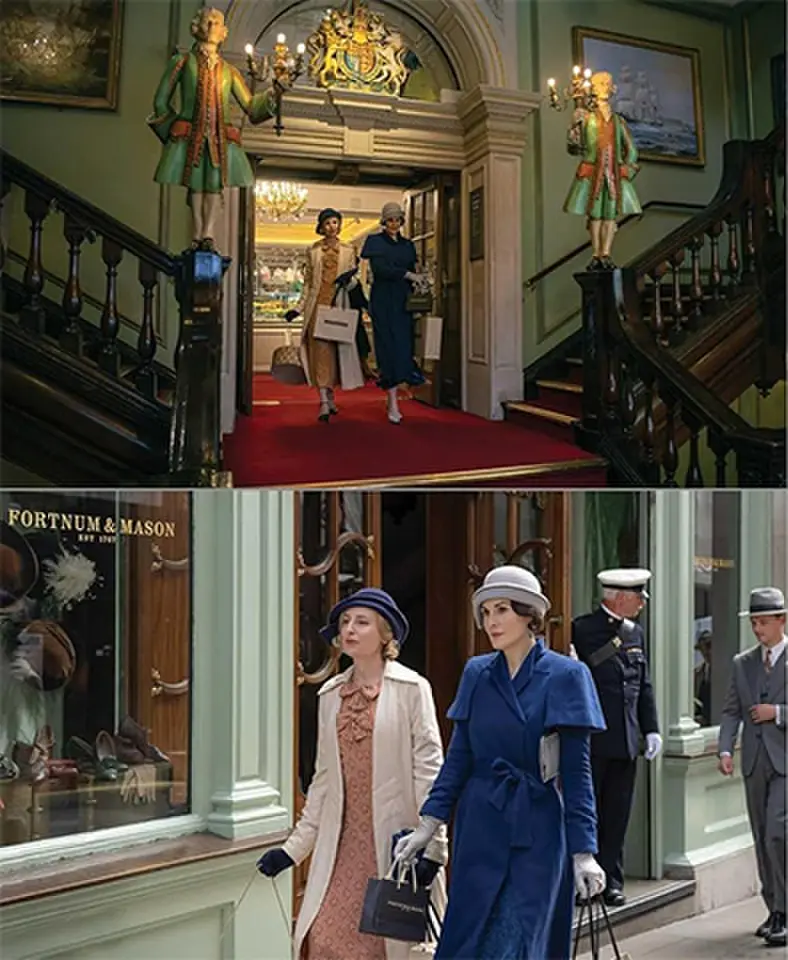
The first section, ‘Bright Lights’, takes us into the heart of London, amid the bright lights of the city’s Theatreland. It is 1930, and the Downton household has gone to London to be part of the ‘Season’. It is also where Lady Mary’s divorce becomes a very public scandal, and she is asked to leave a party because royal guests are arriving and a divorced woman is considered unsuitable. The storyline gives the film an interesting glimpse into the changing times, and the deeply restrictive, attitudes towards divorce.
The Great Crash of 1929 is also used in the plot, with its repercussions felt by the Crawleys. The family considers downsizing from their London house to an apartment, as the economic realities of the Depression begin to emerge. Robert is comically bewildered by the idea of living in a “layer cake of strangers” in the movie.
The book provides considerable historical details about the state of divorced women, the Crash and its aftermath, and other plot-related events, giving readers a sense of what was actually happening at the time. This is one of the companion’s real strengths: it offers a historical perspective viewers may not otherwise know.
For example, it offers a fascinating account of London’s disappearing palaces, including Devonshire House, home to the Dukes of Devonshire, which the film mentions as having been demolished in 1924. Photographs of its grand ballroom and other historical images illuminate details that the film leaves unsaid.
There is a particularly enjoyable section on Noël Coward (who appears in the film) and his play Private Lives (1930), which was one of Coward’s most successful plays and concerned a divorced couple (in the film, Coward takes inspiration for the play from Lady Mary). The book includes photographs of Coward, images from the play’s productions, and even an image of the indomitable Maggie Smith performing in Private Lives in 1972. The juxtaposition is as wonderful as it is informative.
The book also character biographies, analyses of the movies and show, and plenty of behind-the-scenes material, with team members explaining how particular scenes, sets and costumes were created. The photographs offer views of sets we never see on screen.
The epilogue, ‘Memories of Downton’, becomes increasingly emotional as the team looks back at their time together. Michelle Dockery (Mary) talks about Laura Carmichael (Edith) and how they have spent so much time together that saying goodbye does not feel like saying goodbye. They were both in their 20s when the series began. “We’re like family,” she says.
Elizabeth McGovern (Cora) says the DNA of Downton is now in the cast’s bones, in Julian Fellowes’ imagination, and in the audiences’ as well. It is difficult to disagree. After six seasons and three films, these characters have become part of their viewers’ lives. There is a section after the epilogue that is a tribute to the late Maggie Smith, who was at the heart of Downton Abbey and for whom Fellowes wrote the role of Violet.
I felt one character’s absence particularly keenly: Sybil (Jessica Brown Findlay), who dies in Season 3. I wish the book had included more photographs of her as well as quotes by Findlay. Of course, Sybil wasn’t really part of The Grand Finale, so there was a limit to how much space she could be given. But because this book also celebrates Downton’s journey, I think she deserved more space.
The book includes snippets and quotes from cast and production members, which the publisher has advertised as “interviews”, rather than substantial conversations. I would have liked more personal reflections from the cast, Julian Fellowes and production members — they would have been an added dimension to what is, after all, the grand finale and culmination of a 15-year journey. Those reservations aside, the book is impressive. The photography is superb, though it would have benefited greatly from more captions, ideally detailed ones; the material is fascinating, and the historical background gives the film greater depth.
Emma Marriott is well suited to the task: she is a Sunday Times bestselling author of more than 15 history and non-fiction books and wrote the official companions to the first two Downton films, as well as The Costumes of Downton Abbey. The book is priced a little high ($40) but, for a Downton devotee, it’s simply a must-have because, after all these years, it’s difficult to say goodbye and the book makes it a tad easier.
The writer is a member of staff. He can be reached at mamun.adil@gmail.com
Published in Dawn, Books & Authors, October 25th, 2026