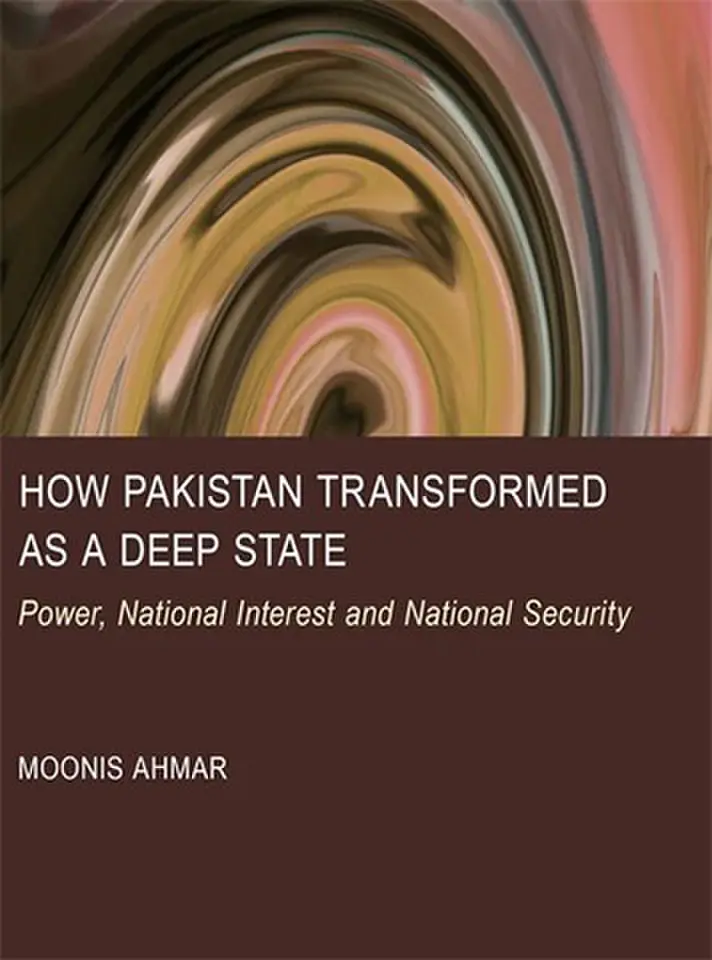
How Pakistan Transformed As A Deep State: Power, National Interest and National Security By Moonis Ahmar
Ethics Press
ISBN: 978-1-83711-892-2
196pp.
Pakistan’s political history has long been a topic of interest for historians, political scientists, scholars in international relations and journalists. Each expert has sought to analyse how a country that was created as a homeland for the Muslims of British India lost its anchor, went astray from the secular and democratic vision of its founders just a few years after its inception, and splintered in less than a quarter century.
From 1958 onwards, the army seized power four times and ruled for 33 years. In How Pakistan Transformed As A Deep State, academic Moonis Ahmar finds that, as early as 1954, at a meeting held in London with fellow generals, Gen Ayub Khan, then commander-in-chief of the army, stated that civilians were unfit to govern. In 1958, he seized power, declaring himself president, elevating himself to field marshal and ruling through a diluted system called ‘Basic Democracies’.
After 2008, the army did not explicitly govern the country. Instead, it governed from behind the scenes, by co-opting the bureaucracy and political elites. It also entered the economic hemisphere and created several organisations governed by retired or serving generals, admirals and air marshals, leading several analysts to call it ‘a praetorian state.’
Ahmar nails it on the head when he says that the army “made at least three bids to shape the political system to its satisfaction and bring forward a co-opted political leadership to create a civilian front for its continued political domination.” As a result, he says that “Pakistan’s security problems are no longer India-specific. State security is threatened from within by economic and social collapse.”
A recent book explains how military dominance, political instability and entrenched elites shaped Pakistan’s evolution — and what it would take to reclaim a democratic future
How did it do all of that? He says that the army created an unholy alliance of the clergy, tribal and feudal lords, rich industrialists and the bureaucracy. Such an alliance allowed it to suppress the voice of the people and to give more weight to military security than to human security, which consists of social, economic and political development.
Ahmar correctly concludes that the emergence of a ‘deep state’ — where unelected state and non-state actors covertly shape national policy — cannot just be laid at the door of the army. Maybe the founder’s vision was idealistic. He quotes Stephen Cohen, America’s leading scholar on South Asian politics, who says “Pakistan was unstable from the outset. Jinnah’s vision of a liberal Pakistan lacked roots.”
Ahmar nails it on the head when he says that the army “made at least three bids to shape the political system to its satisfaction and bring forward a co-opted political leadership to create a civilian front for its continued political domination.” As a result, he says that “Pakistan’s security problems are no longer India-specific. State security is threatened from within by economic and social collapse.”
The founders failed to understand the ethos of the nation and died too early to create the type of democratic institutions that India did. Political ineptitude and infighting led to frequent changes of government in the first 11 years of Independence, paving the way for the army to seize power. The public initially welcomed the change, because it brought stability and economic growth. The army claimed it was the only institution that could save the country from collapsing from within and from the wars with India over Kashmir. Even after the country broke up on the army’s watch, it retained its status as the saviour of the nation and, in just six years, seized power once again.
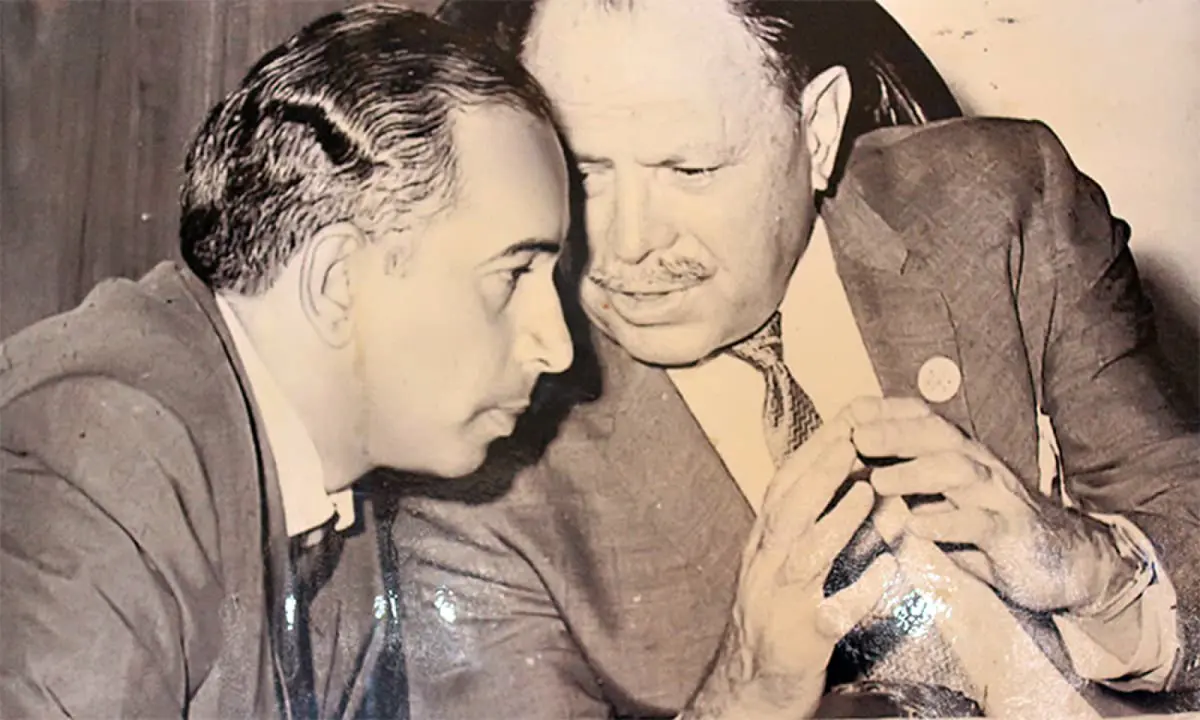
Ahmar’s book is unique in that it provides an exhaustive review of the literature on the subject. Widely known as well as more esoteric works are cited, including books, scholarly articles and newspaper articles written by Pakistani and non-Pakistani experts across a variety of disciplines.
The book introduces the notion of the ‘deep state’ and illustrates it by drawing upon case studies of Egypt, Russia, Turkey (where the term seems to have been first used), and the US. These set the stage for taking a deep dive into Pakistan’s political evolution. The book doesn’t just analyse the last 79 years of Pakistan. It ventures into the future, by laying out alternative scenarios for 2047, when Pakistan will complete its first century.
It lays out several conditions which could extricate Pakistan from the deep state paradigm. These include a strengthening of the political process, upholding the Constitution by revoking all amendments that institutionalise the army’s role in governance, creating an independent judiciary and respecting the rule of law, eradicating a culture of sycophancy, greed and lust for power, eradicating corruption and nepotism and upholding of merit, ensuring freedom of expression, and focusing on human and social development and vibrancy of the economy rather than defence spending. This is a very tall order.
This book is not the only one laying out a rosy future for Pakistan. One recently argued that Pakistan could become an Asian Tiger by 2050. Another suggested that, once institutions were reformed, Pakistan could become a model in the Global South. Even Goldman Sachs argued that Pakistan could become one of the world’s top economies by 2075.
Unfortunately, nepotism and bribery are sewn into the social fabric. From peon to chairman, everyone expects to either pay a bribe or take a bribe to get the simplest things done. In the middle, if there is someone who neither takes a bribe nor offers a bribe, he or she is frowned upon by people under him or her and by the people over him or her.
If Pakistan could not change its strategic culture in 79 years, why will it do so in the next 21 years? The author concedes that point. He states that progress will only occur when the people rise and demand a viable democratic system with no curbs on media, the judiciary and civil society. Sadly, the people have arisen a few times to demand their human and social rights, but they have failed every time. They may well rise again? If they do, will the results be any different?
I also have a few minor issues with the book. The pivotal term, ‘deep state’, should have been defined on the first page, not until several pages later. There is also considerable repetition within the case studies of Egypt, Russia and Turkey. And not all references cited in the book appear in references at the end.
Even then, the book is a provocative read and should interest all students of the deep state phenomenon in the Global South.
The reviewer is the author of Rethinking the National Security of Pakistan: The Price of Strategic Myopia. X: @ahmadfaruqui
Published in Dawn, Books & Authors, October 25th, 2026