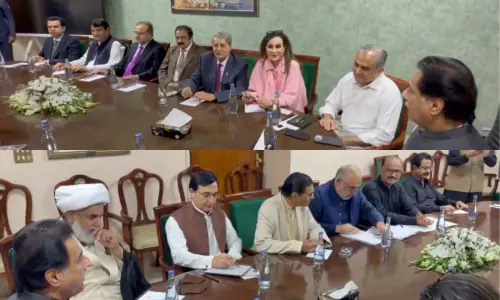
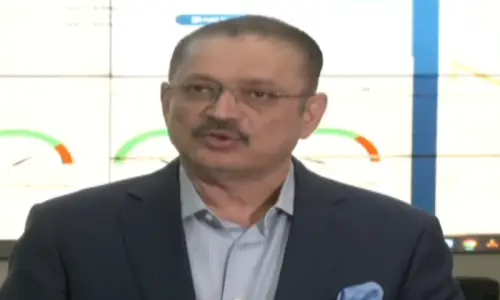
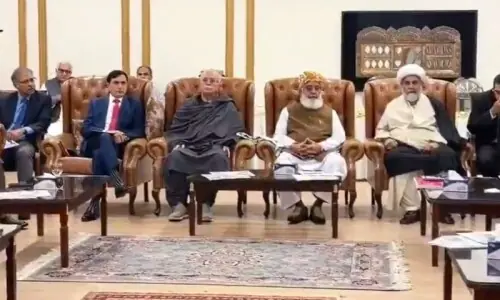
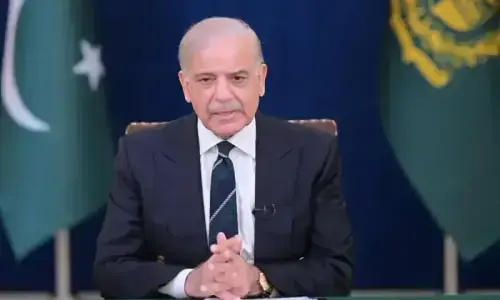
A WEEK after the federal government imposed governor’s rule and emergency in KP, PPP Chairperson Bilawal Bhutto-Zardari invited the opposition to engage ‘positively’ with the centre, saying this could lead to their reversal.
Mr Bhutto-Zardari, addressing reporters at a Sunday memorial for the 2007 Karsaz attack on his late mother Benazir Bhutto’s homecoming procession, spoke about the need for a national effort to address the growing economic crisis, resurgent terrorism, and Pakistan’s increasingly dysfunctional electoral system. But his offer, however well-meaning, stands little chance of leading to a political breakthrough in the current climate. Without concrete confidence-building measures initiated by the ruling parties, the opposition is unlikely to put much faith in mere assurances, given that the centre has crossed a major political red line by deposing an elected provincial government and supplanting it with a setup handpicked by Islamabad.
Mr Bhutto-Zardari seemed to be missing the point when he called the ‘non-functional’ KP chief minister a “coward” who was “not ready to defend his own land”. Whatever his failings, the people of KP had elected him, and the remedy lay with them, not with Islamabad. By forcing him aside, the centre has signalled that it does not need public consensus to do as it pleases. The centre’s dispute with KP, after all, was not about whether terrorism needed confronting, but how. KP had resisted the centre’s approach to fighting terrorism, and the resulting stand-off had stymied any progress. In dismissing the provincial government, the centre had signalled that security policies would be prescribed for the province rather than derived in consultation with it. That bridge has already been burnt.
It is commendable that the PPP chairperson is at least talking about a path back to normalcy, but the PPP is a partner in the very government that imposed governor’s rule. If it wants the decision reversed, it should convince its ally in Islamabad, not ask the opposition to be ‘positive’. It is hoped that the PML-N will also reconsider its position. The latter party would do well to recall that, in 2009, when its government in Punjab was dismissed and governor’s rule imposed, it had itself joined a ‘long march’ on Islamabad to press its demands.
It is unbecoming of that party to have denied its opponents the same right to protest now, when it is in power. It will not be easy to build bridges with the opposition, but the PML-N, more than any other party, has the power to concede some ground to show goodwill. It should take up the National Assembly opposition leader on his offer to engage the jailed PTI chief, and facilitate that effort if it is serious about national reconciliation and a unified response to Pakistan’s crises.
Published in Dawn, October 20th, 2026