SHC dismisses state appeal against Mahrang's 2025 acquittal in sedition case
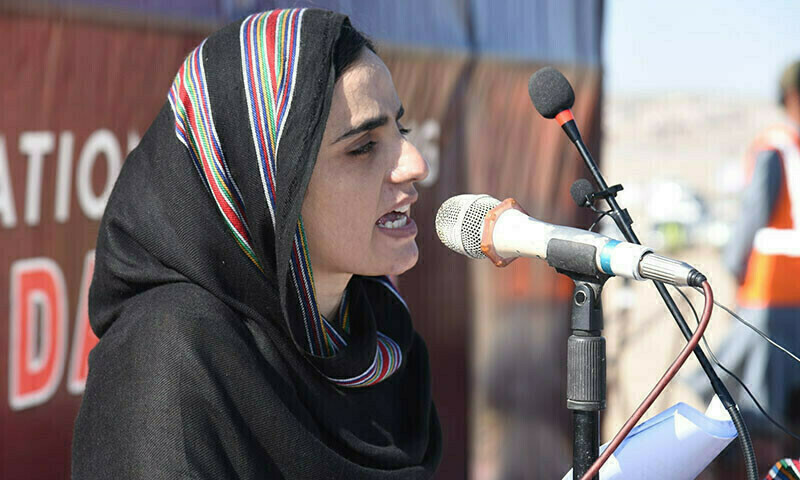
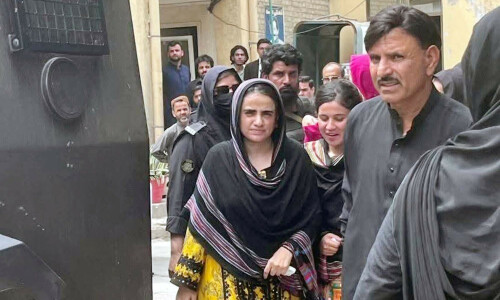
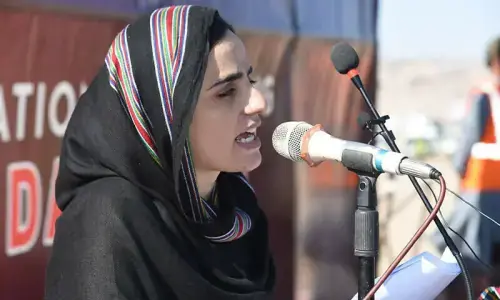
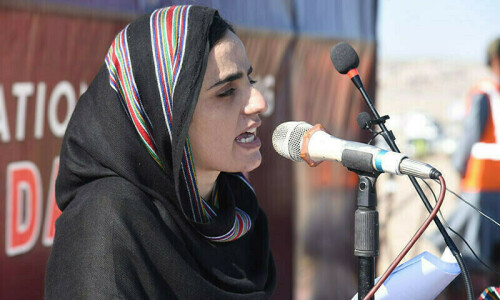
The Sindh High Court (SHC) on Monday dismissed an appeal filed by the provincial government through the prosecutor general against the acquittal of Baloch Yakjehti Committee (BYC) leader Mahrang Baloch in a sedition case, declaring it non-maintainable.
Mahrang had been booked on terrorism and sedition charges by Malir district’s Quaidabad police on Oct 11, 2024 for allegedly inciting people by levelling “allegations against security institutions”.
Over a year later, she was acquitted by a Karachi anti-terrorism court (ATC). Subsequently, acting prosecutor general Muntazir Mehdi, on behalf of the state, had challenged the acquittal before the SHC in December 2025.
On Monday, a two-judge SHC bench, headed by Justice Shamsuddin Abbasi and including Justice Miran Muhammad Shah, heard the appeal. Advocate Jibran Nasir appeared before the court to represent Mahrang and advanced his arguments.
The court observed that the complainant in the first information report (FIR) was a private individual and questioned how the prosecution could file an appeal against the acquittal instead of the complainant.
The prosecution claimed that the ATC had ignored facts while accepting Mahrang’s acquittal application. It highlighted that the public prosecutor had informed the ATC that there was clear evidence against Mahrang and that such evidence was supposed to be presented during trial.
The prosecution further argued that deciding the acquittal application before the framing of charges was inappropriate.
Mahrang, who is in Quetta prison in connection with other cases, had filed an acquittal application under Section 265-K of the Code of Criminal Procedure before ATC-V, which the court allowed.
The FIR was registered on the complaint of a resident named Asad Ali Shams, who claimed that Mahrang was inciting violence in his area.
The FIR invoked Section 7 (punishment for acts of terrorism) of the Anti-Terrorism Act (ATA) 1997 as well as sections 124-A (sedition), 148 (rioting, armed with deadly weapon), 149 (every member of unlawful assembly guilty of offence committed in prosecution of common object), 153-A (promotion of enmity between groups), 500 (punishment for defamation) and 505 (statement conducing to public mischief) of the Pakistan Penal Code.
In June, a Quetta ATC handed two life sentences to Mahrang and another BYC leader in a case involving the death of a security personnel during a 2024 protest in Gwadar. Mahrang’s challenge against her conviction is pending before the Balochistan High Court (BHC).