Last year, Pakistan embarked on a radical economic experiment with the approval of the National Tariff Policy 2025-30, and the manufacturing sector became the guinea pig. The policy seems heavily influenced by the World Bank’s 2022 Country Economic Memorandum on Pakistan: From Swimming in Sand to High and Sustainable Growth.
The report introduced the concept of “anti-export bias” and termed it the key contributor to Pakistan’s low export-to-GDP ratio compared with other countries. It ranked Pakistan second-highest for tariff cascading, after Egypt, and argued that this makes it profitable for firms to concentrate on high-margin domestic markets and ignore low-margin exports. It also made several references to “elite capture”, “influential groups”, and “protection-driven profitability.”
To make its point, the report gave the example of a 10 per cent import tariff on a $100 bike, which would push its price to $110 in the domestic market. Local manufacturers, it claimed, would raise their prices to match it, earning an extra $10 on top of their normal profit. That extra $10 would keep them focused on the domestic market rather than the export arena, where it cannot be earned.
This argument is too simplistic and does not apply to Pakistan. First, the cost of producing the bike here is more than $100 because the cost of utilities, finance and taxation is double that of other countries. Second, intense competition among domestic firms prevents profiteering and keeps prices reasonable. Finally, even with their best efforts, Pakistani manufacturers struggle to export because foreign buyers are unwilling to visit the country, given concerns about terrorism, the need for special transport arrangements and high travel insurance premiums.
Protectionism isn’t the factor behind stagnant exports; high cost of doing business plaguing the industry
This lack of easy access for foreign buyers, rather than any anti-export bias, is the primary reason for low exports. It also explains the low level of FDI, particularly in manufacturing, which is surprising considering Pakistan has the fifth-largest population in the world.
Besides geopolitics and security constraints, three other factors pin down exporters. First is the lack of strategic Free Trade Agreements with high-potential markets such as Africa, Central Asia and South America. Second is a genuine cost disadvantage in production. And finally, the government offers exporters no support through rebates or Drawback of Local Taxes and Levies (DLTL) incentives, unlike competing countries.
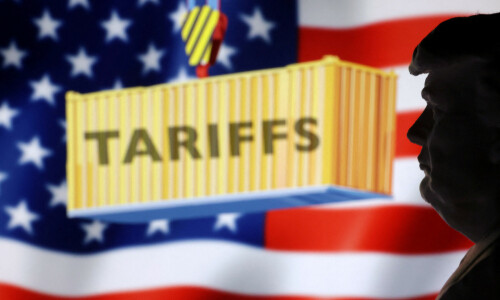
By 2030, Pakistan aims to cut its simple average tariff to 9.7pc, its weighted average tariff to under 6pc and cap peak tariffs at a mere 15pc. The premise rests on a classic academic theory: low tariffs dismantle anti-export bias and force domestic companies to compete globally. Lower duties on raw materials, proponents argue, will reduce input costs and make exports competitive. But this theory fundamentally misdiagnoses the problem afflicting our manufacturing sector.
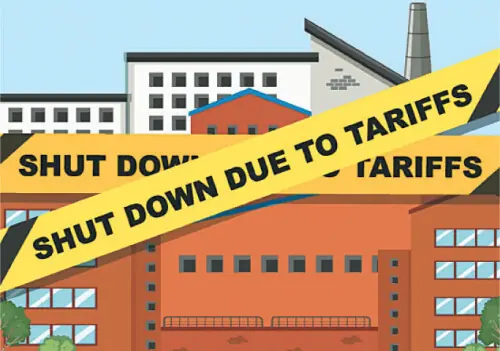
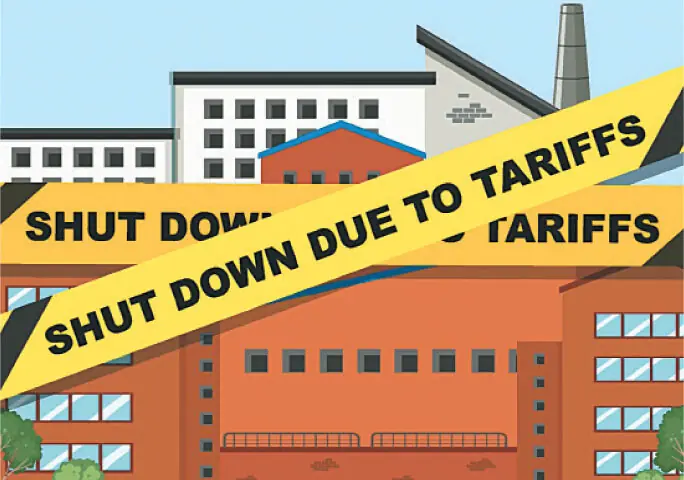
Manufacturing exports have stagnated for over a decade, but tariffs are not the reason. Textiles, leather, autos and surgical goods are not struggling because protectionism coddles them; the baseline cost of doing business here is suffocating, and Pakistan is not a preferred destination for foreign buyers. The consequences of this policy change will be felt acutely across major sectors because this radical shift will leave Pakistan with the most liberalised tariff regime in the region. Such an approach might suit a stable, structurally competitive nation like Turkiye, which enjoys seamless customs access to the European Union. For Pakistan, it is catastrophic and will cause mass unemployment across several sectors.
We must remember that industrial depth is a matter of national sovereignty. Look no further than Iran, which has built on decades of deep domestic industrialisation and self-reliance to withstand unprecedented external and existential pressures.
We are a nation of over 255 million people, 64pc of them under the age of 30 and nearly 45pc living below the poverty line. Lifting 115m people out of poverty must be our top priority.
A large domestic population is an invaluable asset. Peer nations like China, India and Indonesia fiercely guard their home markets to give local industries the scale to lower marginal costs. India’s trade-weighted average tariff sits at 12pc, double what our policymakers are targeting, and the auto sector is protected by tariffs exceeding 120pc.
If we give foreign companies easy access to our markets through a flat 15pc tariff cap, we strip our own manufacturers of the ability to create jobs, scale up and overcome their structural limitations. The logic is simple: fix the structural cost of doing business first, and only then open the door to global competition. Reverse that sequence, and Pakistan will end up exporting its jobs rather than its goods.
The writer is a former chairman of the Pakistan Association of Automotive Parts and Accessories Manufacturers
Published in Dawn, The Business and Finance Weekly, October 19th, 2026