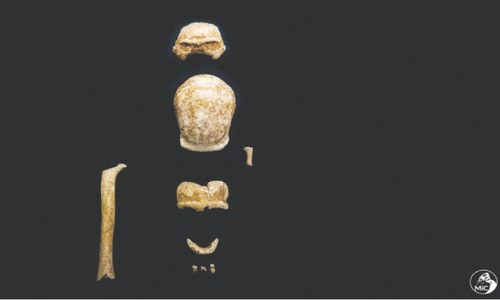
Bones from Iraqi cave hint at violence and compassion in Neanderthals
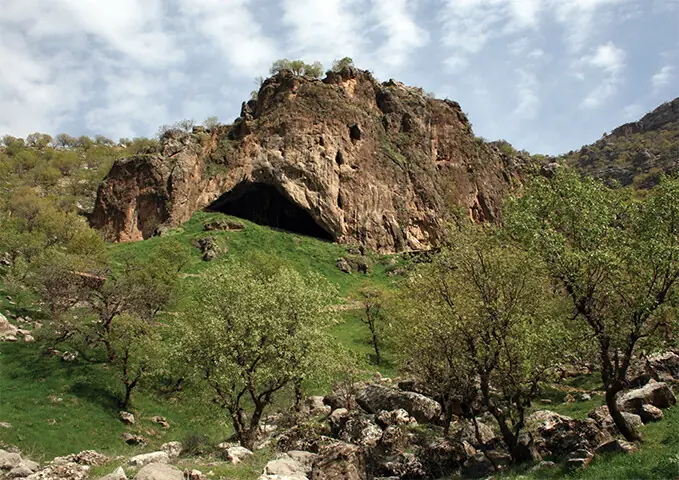
The bones of a Neanderthal from a cave in Iraq’s Kurdistan region are offering evidence of both violence and compassion in the closest evolutionary cousins of our species, exhibiting a wound apparently from a fatal spear attack as well as signs of an earlier nonfatal injury that may have elicited kindly care.
Researchers have discovered at Shanidar Cave in the Zagros Mountains of northern Iraq a partial skeleton of a Neanderthal, aged in the mid-40s, that included a left shoulder blade, or scapula, with a circular hole six-tenths of an inch wide indicative of a deeply penetrating stab.
The bones of this individual, who they call Shanidar A, were unearthed from under about 25 feet of rocks and sediment inside the cave and date to about 75,000 years ago. The researchers were unable to determine Shanidar A’s sex.
The researchers said the injury’s shape suggests it was caused by a forceful thrust using a sharpened wooden spear, a type of weapon Neanderthals are known to have used, rather than a spear with a stone tip. It was a weapon employed in hunting large mammals that were an important food source.
“The spear would have gone through the skin and major muscles, especially the pectoralis, as well as the ribcage and muscles between the ribs, and the lung,” said biological anthropologist Emma Pomeroy of the University of Cambridge in England, lead author of the study published on Thursday in the journal Scientific Reports.
“The location could be like the kind of ‘heart shot’ hunters use to kill animals quickly by puncturing the heart, but that is a bit speculative.”
Published in Dawn, October 16th, 2026