THIS is with reference to the article ‘KPT expressway’ (Aug 25) which rightly raised valid questions about the proposed elevated corridor for commercial vehicles, pointing out that developed countries have stopped building elevated expressways and, in some cases, have even demolished those already constructed, replacing them with recreational and public spaces.
While people often lament the lack of development and infrastructure projects in the city, there is another factor that needs serious consideration; unchecked urbanisation, which has transformed what was once a beautiful city into an ugly concrete jungle. The proposed corridor, linking the Karachi Port Trust (KPT) through Shahrah-i-Bhutto, is a case in point.
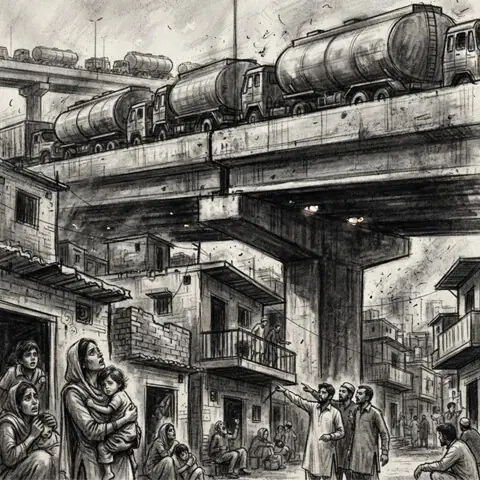
In addition to the many valid points raised in the said article, one can easily imagine the dangers posed by the constant movement of large commercial vehicles carrying oil, hazardous chemicals, heavy machinery and other materials. These vehicles would effectively become bombs on wheels moving across densely populated areas.
The authorities can mount a rescue operation in the event of an accident on a conventional road, but how would a rescue operation be conducted in the event of a major accident or mishap on an elevated strip many feet above the ground, surrounded by high-rise residential and commercial buildings?
Apart from posing a serious threat to human life, the project would also be environmentally unsustainable. Instead of improving the city, it would be a constant threat to people living in the vicinity while contributing to air and noise pollution.
Why is Port Qasim not expanded to a level that could eventually reduce the burden of cargo-handling at KPT? Port Qasim, after all, has a better and more natural linkage with the industrial areas of Landhi and Korangi, as well as with routes leading to upcountry destinations.
Not every type of cargo needs to be handled at KPT. If the volume of cargo at KPT is increasing, it should be effectively categorised and professionally prioritised.
Urban infrastructure cannot be developed on the sole basis of the wishes of those in authority. Should we continue creating ugly and intrusive infrastructure without considering aesthetics, sustain-ability and the long-term benefits to the city? Should projects of such magnitude proceed without taking all the relevant stakeholders into confidence?
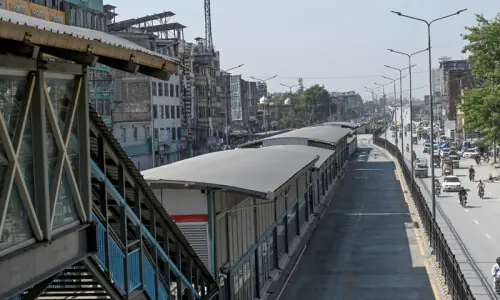
There are already projects underway that have raised serious questions about their environmental, social, economic and technical suitability for Karachi. These include the Bus Rapid Transit (BRT) scheme. This inevitably raises questions about their long-term viability.
What, then, is the justification for spending enormous sums on such ‘projects’ — projects that could ultimately amount to urban devastation, especially when they are being financed through massive borrowing? Karachi needs thoughtful, integrated and sustainable urban planning, not expensive infrastructure imposed on the city without adequate consideration of its people, environment and the future.
Asad Ali Sheikh
Karachi
Published in Dawn, October 13th, 2026