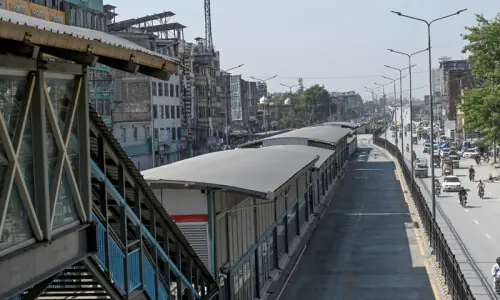
FINANCE Minister Muhammad Aurangzeb has once more reviewed the latest incentive scheme to bring retailers into the tax net — and again, the meeting last week took place against disappointing results. Mr Aurangzeb says that the retailers’ tax scheme should not be seen as a one-year arrangement. That is an admission in itself. A simplified route, offered on easy terms, has not persuaded the sector to join, and the government is now preparing for a long wait. This is not the first attempt. Tajir Dost drew only about 58,000 registrations, according to reports, and was said to be falling short of its revenue target of Rs50bn. Before it came fixed-tax regimes, amnesties and reduced rates. Each ended with a new scheme being drawn up. Clearly, traders and wholesalers will not enter the system voluntarily, when staying out costs nothing. Incentives work when the alternative is a penalty. Instead, retail, real estate, and agriculture are the three major sectors the state has never taxed in proportion to their size. Retail has shutter-down power: the threat of a strike that closes markets has made governments retreat from documentation attempts.
The numbers show who pays. In FY26, the salaried class paid Rs633bn in income tax, far more than real estate and retailers put together. Salaried people are taxed at source and cannot hide; a retailer dealing in cash can. The organised corporate sector, which carries the super tax and high advance taxes, is in the same position. The burden falls on the documented, because they are the easiest to reach. A narrow base keeps rates high for those inside it, discouraging formal employment and investment. It starves the budget of money for social spending, so the gap is filled by borrowing and squeezing health, education, and infrastructure. Slower growth, fewer jobs, and more poverty follow; these, in turn, shrink the base. The government cannot keep financing itself in this manner. The way out is not another scheme. Instead, retailers and wholesalers should be treated like other taxpayers. That means compulsory registration, integration of point-of-sale systems with the FBR, and the use of electricity connections, bank transactions, and rent and property data to identify the unregistered. A tax system that exempts the powerful and burdens the compliant cannot support growth and cannot be defended as fair. Every kind of income must be taxed equitably.
Published in Dawn, October 13th, 2026