Hundreds march to SC to protest against Indian election chief
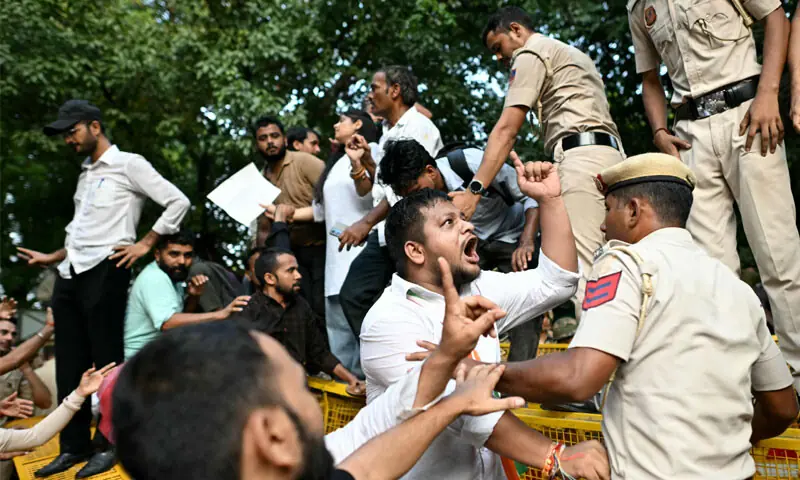
• Police close six metro stations, restrict traffic on major roads, deploy anti-riot units across central Delhi
• Rahul Gandhi moves top court after chief justice refuses to meet opposition
• Cockroach Janta Party gives police 24 hours to approve fresh protest
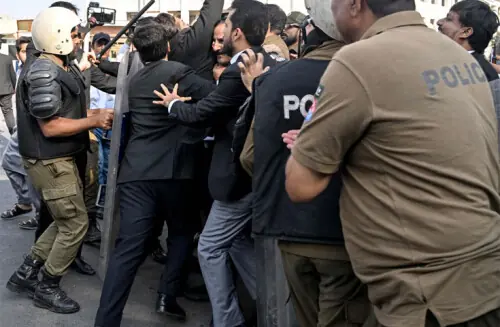
NEW DELHI: Hundreds of youth activists and opposition demonstrators marched to India’s Supreme Court on Monday to demand the resignation of the country’s election chief, as authorities shut down metro stations and restricted traffic across Delhi.
The procession, led by Rahul Gandhi of the main opposition Congress party and youth-led Cockroach Janta Party (CJP), culminated in a formal legal challenge. Waving a copy of the constitution as crowds cheered, Gandhi filed a writ petition in the court challenging a massive voter revision exercise.
The opposition had initially planned to submit a memorandum directly to the Chief Justice of India, but the request was declined. Chief Justice Surya Kant told reporters he communicated to the opposition that he could not meet them.
In a letter to Gandhi, Kant said the issues raised were already being heard by the court, adding that discussing pending cases would violate judicial ethics and propriety. He suggested the opposition file a petition instead.
“You can see how big the crowd is,” demonstrator Abhay Aryan, 28, said as protesters marched toward the Supreme Court, chanting slogans and waving placards. “The government has to listen to the voice of the people.”
Opposition parties and supporters of CJP have taken to the streets almost daily this month.
They are demanding the resignation of Chief Election Commissioner Gyanesh Kumar over a revision exercise that critics say benefits Prime Minister Narendra Modi’s ruling Hindu nationalist Bharatiya Janata Party (BJP).
The change, which started last year, led to over 130 million names being struck from voter lists — a figure larger than the population of Japan. This includes 28m who had died, 63m who relocated, and 30m who could not be traced.
Opposition parties allege Muslim voters and other minorities are disproportionately affected by the deletions. Both the poll panel and the BJP reject these charges. The Election Commission denied favouring any party, stating that wrongly deleted voters can re-enrol.
The BJP accused its rivals of attempting to undermine the country’s democracy by wrongly questioning legitimate electoral processes.
“By discrediting constitutional institutions, spreading chaos and riots on the streets, and attacking people in the name of politics, all it seeks is a return to power,” Agriculture Minister Shivraj Singh Chouhan told reporters.
The protests escalated after reports last month revealed that Kumar’s two deputies had internally raised concerns about the voter list revisions and digital systems. The youth movement has emerged as one of the biggest political challenges to Modi in his 12 years in power.
To thwart Monday’s march, authorities closed six metro stations for 10 hours, citing security reasons, and restricted traffic along more than 20 major stretches.
Hundreds of security personnel in anti-riot gear were deployed in central Delhi, with key roads barricaded by yellow metal structures and water cannons placed on standby.
This follows a chaotic weekend where police detained thousands of protesters, including three top leaders of the cockroach movement who have since been released. Opposition figures accused authorities of suppressing dissent through mass detentions.
Parliamentarian John Brittas of the Communist Party of India (Marxist) alleged police “manhandled, dragged, and assaulted” him during Sunday’s demonstrations.
“This is not merely an assault on an MP. It is an assault on democratic freedoms and the rule of law,” Brittas said.
Several journalists also reported being detained or assaulted despite displaying press cards.
Furthermore, Delhi Police announced that Jantar Mantar, a historic observatory and well-known protest site for decades, was no longer designated as an official protest venue.
“If Modi thinks taking away Jantar Mantar will put an end to protests, he is mistaken,” CJP founder Abhijeet Dipke said on social media.
CJP leaders have given police a 24-hour ultimatum to authorise a new date for peaceful protests.
Published in Dawn, October 13th, 2026