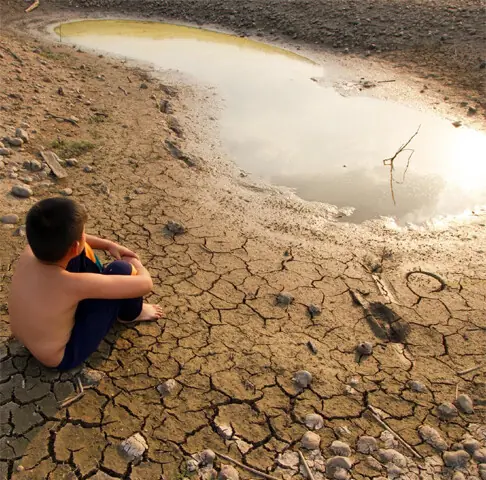
THE availability of water has become an explosive issue that may trigger wars. India has already announced the cancellation of the Indus Waters Treaty (IWT). If this Indian madness leads to the blockage or diversion of river water flowing towards Pakistan, should we starve or fight? Should we wait for that day or prepare ourselves for the inevitable? These are critical questions.
While it is true that international policies and geopolitics cannot be steered by Pakistan alone, we can surely start thinking and working towards a consensus on what we can do to ensure that water is stored and preserved to meet our national needs.
An engineer who was involved in the Khanpur Dam project, in a recent podcast on the Soan Dam, drew the attention of Pakistanis to a project that has remained in the files since 1955. A dam proposed on the Soan River in the Potohar region, with a storage capacity of 38 million acre-feet (MAF) and a power-generation capacity of 5,240 megawatts (MW), has the potential to address water scarcity, flood control and harvesting, the energy crisis, and may, thus, contribute to the national economy.
Similarly, converting the currently dried-up riverbeds of Punjab and Sindh into freshwater lakes by storing flood- water that otherwise causes havoc and flows unused into the Arabian Sea could bring us major advantages. This could be achieved by constructing numerous dams along the way.
The Kalabagh Dam has long become a political sore point for several reasons. Perhaps the project could become acceptable to the so-called ‘nationalists’ of Khyber Pakhtunkhwa (KP) if the provincial boundary is redefined to include the dam’s spillway in KP, while an informed discussion is initiated to address the concerns of downstream farmers in Sindh who fear that the ingress of seawater may bring ecological changes to their precious farmlands.
A possible solution is to construct a check dam across the Indus as close to the sea as possible, about 60-70km downstream of Thatta. The dam should have a weir with a spillway level about half-a-metre above the highest tide level of the sea. The check dam would maintain a certain static water level upstream. The freshwater lake created by this check dam could save thousands of acres of land from seawater intrusion, facilitate the development of fisheries, and transform the Indus Delta into an attractive tourist destination.
Irshad Ghani
Karachi
Published in Dawn, October 9th, 2026