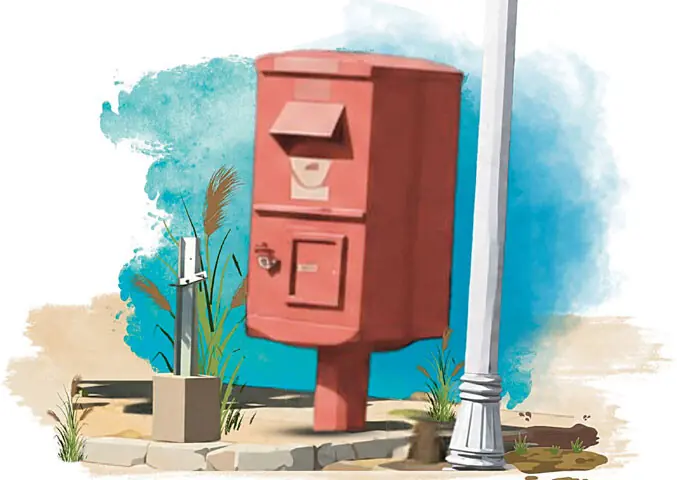
I was in my school van, going through the old city area, when something caught my eye. It was a red metal box that looked like a robot from an old sci-fi movie, with a rounded cap on top.
Then I saw something written on it: “Post Box, Pakistan Post”, in Urdu and English, with a code below. There was a small slit, roughly 10 inches long, and a small door below it, secured with a lock.
We drove away, but the next day I asked my teacher about it. She told me it was a letterbox: you put your letter through the slit, and the postman collects it and takes it to the post office, from where it begins its journey to the person you have written to.
The letterbox carried letters, notes, documents or any information a person wanted to share with another. These handwritten letters could be about your day, asking the receiver about theirs, sharing your routine, discussing issues, or even sharing news of weddings, Eid greetings and other occasions. But it took considerable time for a letter to reach its intended address.
A letterbox might seem like an ordinary object on an old city street, but it tells the story of how people once sent their words across the world
This made me wonder: did people really wait weeks for letters? Did it really work? What was the point of all that waiting?
My teacher explained it so beautifully that I was surprised by how much meaning this simple red box carried. And I was convinced that it should not disappear and that the legacy of letter writing should continue.
The wait was part of it
Today, waiting for a reply takes a few seconds or minutes. We send a text and can see when someone has received it, or sometimes even when they are typing a reply. And if we make a mistake, we can delete or edit the message.
With a letter, there was no such option. Once you dropped it into the letterbox, it was out of your hands. It took several days or weeks to reach its destination, and the reply took just as long to come back. During this time, people waited and wondered what the reply would say. When the reply finally came, it felt like a gift. People often read the letter slowly, sometimes out loud to the whole family, and then read it again alone later.
From horse rides to postmen
In earlier days, there were people assigned to carry messages on horseback to places that were too far away. More than two thousand years ago, the Persian Empire had riders stationed along its roads. To cut delivery time, one rider could carry a message to the next station, where another rider would take the letter and continue the journey. This system made it possible to cover long distances in a shorter time, without relying on a single traveller to make the entire journey.
When letters became affordable
In Britain, sending a letter was quite expensive, so naturally common people could not afford it. Sometimes, the person on the receiving end had to pay for it too.
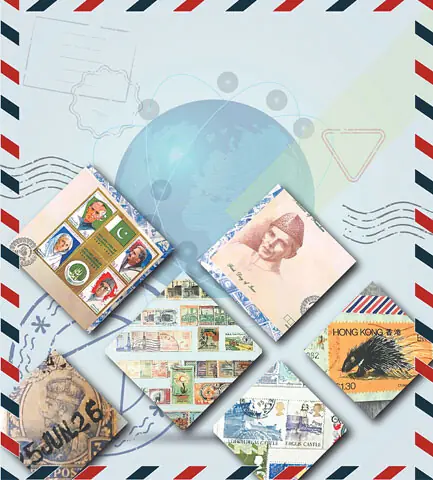
But things changed in 1840 when Rowland Hill introduced the Uniform Penny Post. It meant that a letter weighing up to half an ounce could be sent anywhere in Britain for one penny. Once the famous Penny Black stamp, with Queen Victoria’s face on it, went on sale, sending letters became cheaper, and more people could write and use the postal service. This also meant there was a need for more places where people could easily post their letters.
The origin of the letterbox
Anthony Trollope, a British post office official, suggested a simple idea of installing collection boxes on British streets in 1852. The idea was welcomed, and soon pillar boxes were installed in the streets.
The designs changed from country to country. Some boxes were tall and round, some were square and others were built into walls. But their purpose remained the same: to give people a place to drop a letter without having to walk all the way to a post office.
Over the next hundred years, letterboxes spread worldwide. In a way, a letterbox became a small part of a city’s streetscape.
Once the technological revolution occurred, phones, email and messaging apps changed everything. Handwritten letters became less common, and many postal systems began handling far more parcels and fewer letters. In some places, old street letterboxes have disappeared as fewer people use them.
While letterboxes have nearly disappeared from our lives, people still use postal services to send important documents, forms, applications and official correspondence. Some types of mail can also provide a physical record that a digital message cannot.
And this historical account has brought me back to that red metal box. I don’t think I will see it in quite the same way again. It is no longer just a vintage-looking box with a slit in it. It is a leftover from a time when a message had to make a physical journey before it could reach another person.
With this in mind, I am quite convinced that I will write a letter to my relatives living abroad, drop it into that red box and wait. I will wait for its slow journey to reach them and for the reply to make its way back to me.
Published in Dawn, Young World, October 10th, 2026