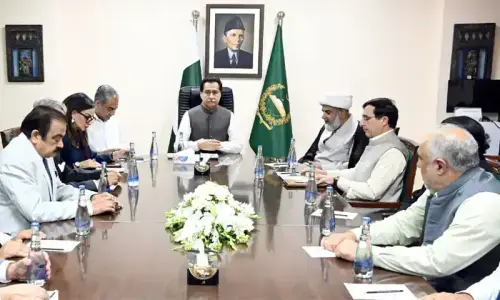
Pakistan must make environmental, social and governance rules enforceable, incentive-driven, says Sherry


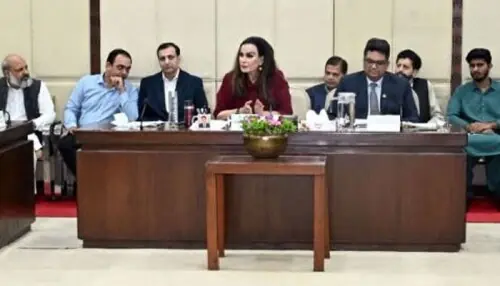
ISLAMABAD: Pakistan must move beyond voluntary Environmental, Social and Governance (ESG) reporting and establish an enforceable, transparent and incentive-based framework that delivers measurable improvements in corporate environmental and social performance, Senator Sherry Rehman said on Monday.
Addressing the launch of the Pakistan ESG Policy Report 2026, Ms Rehman said ESG could no longer be treated as a corporate branding exercise or a narrow reporting requirement. Instead, it needed to be integrated with Pakistan’s climate, legal, political and economic frameworks.
“We have to talk about ESG not in isolation, but in terms of climate, political and legal frameworks,” she said, calling for closer coordination among policymakers, regulators, businesses and technical experts.
Ms Rehman said the key question was no longer whether Pakistan needed ESG, but what kind of framework it wanted and how compliance would be enforced. She said legislation was particularly important as Pakistan’s regulatory system increasingly had to interact with international markets and stakeholders.
Environmental, Social and Governance Policy Report 2026 launched
Highlighting the gap between awareness and implementation, the PPP senator noted that around 537 companies were listed on the Pakistan Stock Exchange, yet only a limited number provide detailed and verifiable information on their carbon footprints, resource consumption, circularity and environmental impacts.
The issue is becoming more urgent for export-oriented businesses as international markets introduce stricter climate-related trade rules, particularly the EU’s Carbon Border Adjustment Mechanism.
She questioned the value of ESG reports if the information contained in them was neither independently verified nor linked to actual performance. She asked who verifies corporate disclosures, who inspects companies and what consequences should follow when reported performance does not match conditions on the ground.
“The biggest polluters are often the ones producing the biggest ESG reports,” she said, warning that sustainability reporting could otherwise become another paperwork exercise driven by reputation management and green branding.
However, Ms Rehman cautioned against imposing another punitive regulatory burden on Pakistan’s already heavily taxed private sector. Instead, she advocated a system combining mandatory disclosures with incentives and a clearly defined pathway towards compliance.
“There should be a regime of incentives which are open to immediate realisation,” she said, while also calling for credible penalties where companies deliberately fail to meet required standards.
Pakistan Green Taxonomy
A central component of the proposed ESG architecture, she said, should be the Pakistan Green Taxonomy, being developed through collaboration involving the State Bank of Pakistan, the Ministry of Climate Change and international partners, including the World Bank.
She described the taxonomy as a common language for businesses, financial institutions and regulators, enabling them to identify and finance genuinely sustainable economic activities.
“What we need is almost a dictionary for sustainability,” she said, arguing that businesses should be able to align their operations, supply chains and financial decisions with climate-resilient standards.
She also stressed that Pakistan must make cleaner production economically viable. Industries such as cement manufacturing, she said, would need incentives to invest in cleaner technologies, energy efficiency, waste management and lower-emission production systems.
“If we want companies to reduce emissions, we have to give them a pathway to do so,” she said.
She urged businesses and technical experts to engage with Parliament before legislation was enacted rather than resisting regulations after the fact.
She called on industry groups to submit practical alternatives, measurable performance indicators and transparent verification mechanisms.
“Resilience comes from people, not governments,” she said, adding that government could provide the framework, parliament the law, regulators the standards, and businesses the innovation and investment.
Without collective ownership, she warned, ESG would remain “a report rather than a reality”.
Published in Dawn, October 6th, 2026