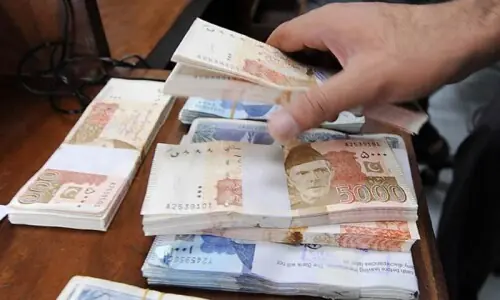
HYDERABAD: Wheat prices, and with them flour prices, are rising even though the release of government wheat stocks is not due to begin for another 15 days and imported wheat will not arrive until the end of October. Retailers say the Hyderabad district administration, unable to rein in grain prices in the open market, has instead taken to fining retail flour sellers.
Wheat was selling in the open market at Rs12,500 per 100kg bag, or Rs125 per kg, in the absence of government releases. Flour producers say they must add Rs38 per kg in overheads after buying at that rate, taking the retail price of flour to Rs163 per kg.
Even if we add Rs34 per kg in overheads, flour will still cost Rs159 per kg, which is expensive for consumers compared with Rs110 per kg in March and Rs140 per kg in May. Flour had stood at Rs155 to Rs160 per kg until the end of August.
The administration last fixed a price of Rs141 per kg, effective until Aug 31. That rate was not circulated as an official price; the administration shared it only on social media for public awareness. Retailers complained that they were being penalised for not selling flour at Rs141 per kg.
They said officials had fined them without accounting for the fact that they were supplied flour at a different rate and added only the allowable profit margin and the cost of a shopping bag. One retailer said an official fined him Rs20,000 even though he produced the bill for flour supplied at the open-market rate, which was higher than the administration’s price.
In Karachi, wheat was traded at Rs12,800 per 100kg on Saturday, against Rs12,500 four days earlier, according to Junaid Aziz, president of the All Pakistan Flour Mills Association South Zone. He said flour prices in Karachi often varied from neighbourhood to neighbourhood.
Consumers prefer flour made by grinding whole wheat at chakkis, which is why it costs a little more than roller-mill flour. Roller mills also produce superfine and granulated wheat flour, which is mostly consumed in hotels, restaurants and at weddings.
On price fixing, chakki owners said the district administration does not accept an overhead cost of Rs38 per kg, or even Rs34 per kg, although in 2022 it had accepted Rs24 per kg when wheat sold for Rs102 per kg.
The Sindh cabinet decided on Thursday to begin releasing wheat held by the food department from Oct 20, but the release price has not yet been set. It is unclear whether chakki and roller-mill owners will buy from the department, as the quality of its stocks is often questioned on health grounds. Stocks reportedly include wheat procured in 2022-23 and wheat damaged by rain.
With national wheat production falling short, the federal government has decided to import 550,000 tonnes initially for provinces including Sindh, Punjab and Khyber Pakhtunkhwa. Sindh will receive 300,000 tonnes to stabilise prices and is also getting about 200,000 tonnes from the Pakistan Agricultural Storage and Services Corporation (Passco) amid the flour crisis.
The Sindh government had earlier decided to import 500,000 tonnes but revised the figure downwards. The imports are meant to ensure food security: the food department holds only 200,000 tonnes after missing last season’s target of procuring one million tonnes.
A government official said 115,000 tonnes of the 300,000 would be supplied to Sindh in the first phase, followed by a second consignment. Tendering for 111,500 tonnes has been completed, and that quantity will arrive by the end of October.
Sowing for the 2026-27 season has begun, in lower Sindh as early as the last week of September and early October. The crop there is expected to be ready for harvest by February 2027.
Published in Dawn, October 6th, 2026