PAKISTAN has lived with conflict for much of its existence. Its security concerns are real, and its armed forces have repeatedly demonstrated courage. Yet conflict also teaches one that enduring security depends not only on responding to challenges, but on creating conditions in which they do not arise again.
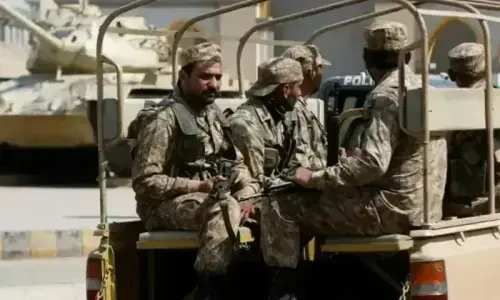
This is worth keeping in mind as Pakistan develops new traditions of commemorating military achievements. On May 10 this year, the country observed the first anniversary of Marka-i-Haq, commemorating Operation Bunyanum Marsoos. The government has announced that May 10 will be observed annually as Marka-i-Haq Day. The anniversary was marked by official ceremonies and patriotic events. Transforming a short, dangerous military confrontation into an annual celebration may not necessarily serve Pakistan’s long-term interests.
In nuclearised South Asia, perhaps victory is best accompanied by humility. Any confrontation that ends without a decisive settlement reminds us how quickly events can move towards escalation. Preparedness is most valuable when accompanied by reflection, restraint and diplomacy. The purpose of national strength remains the preservation of peace.
Pakistan already has another strategic commemoration Youm-i-Takbeer that is observed on May 28 to mark the 1998 nuclear tests. The nuclear deterrent was of historic significance and altered Pakistan’s security calculus. Yet nuclear capability primarily serves deterrence, ensuring that nuclear weapons never have to be used. A nuclear state needs restraint, sound command and control and crisis management.
Perhaps observances could be brought together.
Then comes Defence Day on Sept 6, when the nation remembers the sacrifices of the 1965 war. Perhaps all these observances could be brought together, honouring sacrifices and victories on this single solemn occasion while remembering the human cost of conflict and the importance of peace.
This perspective also lends significance to the inauguration of Yadgar-i-Fatah in Islamabad on the eve of Independence Day. Memorials to fallen soldiers are a natural way for nations to remember sacrifice. But national symbols also acquire meaning from the occasions on which they are presented to the public. Independence Day provides an opportunity to look beyond the events that shaped our statehood and ask how successfully we have fulfilled its larger promise.
Our independence was born in great human suffering. Millions were displaced and hundreds of thousands lost their lives. Since then, Pakistan has experienced wars, political upheavals, economic crises, terrorism and institutional difficulties. Considerable ground remains to be covered. Aug 14 can therefore be more than a patriotic celebration. It can invite an assessment of national performance. What progress have we made in education, health, justice, governance and human development? Why do so many young Pakistanis continue to look overseas for opportunities? Such questions are not a departure from patriotism, they are expressions of it.
Security has several dimensions. Military preparedness remains essential, but sustainable national security also depends on economic strength, political stability, institutional resilience and diplomatic space. Pakistan faces debt, unemployment, inadequate public services and limited fiscal space. Defence is a national priority, but resources are finite and every expenditure carries an opportunity cost.
A confident nation can celebrate its soldiers while recognising its scientists, teachers, entrepreneurs, athletes, artists, doctors and civil servants. National pride can come not only from defending territory, but also from educating children, providing justice and building institutions.
The recent Shanghai Cooperation Organisation summit in Bishkek offered a reminder of the regional environment. Pakistan and India were represented by their prime ministers, but the encounter produced little visible thaw. Yet the SCO remains a forum for engagement on counterterrorism, trade and economic cooperation. Pakistan’s assumption of the SCO chair offers an opportunity to demonstrate that defending national interests and seeking regional stability need not be competing objectives.
Pakistan should honour its martyrs, remember military successes, maintain effective defence and preserve a credible deterrent. At the same time, the larger national aspiration must remain a Pakistan that is economically strong, politically stable, institutionally mature and diplomatically confident. We need neither forget our victories nor become defined by them. A nation can honour its soldiers without glorifying war, remember sacrifice without perpetuating confrontation, and maintain deterrence while pursuing the peace and prosperity that give national strength its deepest meaning.
The writer is a former IGP Punjab and a former Punjab caretaker home minister.
Published in Dawn, September 20th, 2026