State Bank in tight spot as inflation rises

KARACHI: Pakistan and other regional states are unable to adopt a clear position on economic and monetary policies due to the prolonged Gulf war, which has driven up fuel prices, according to researchers and analysts.
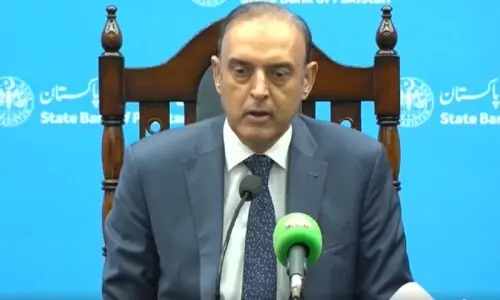
An increase in inflation in 2026-27 and a global trend of higher interest rates have also forced the State Bank of Pakistan to take cautious steps regarding the policy rate to be announced at the next meeting of the monetary committee on Monday.
The current interest rate is 11.5 per cent, but trade and industry think it is high compared to competitive markets.
Bankers anticipate a status quo, but some analysts believe the central bank will lift its policy rate by 50 basis points at the Monetary Policy Committee meeting.
Institutional traders expect 50bps rate hike; analysts see status quo
The SBP raised its policy rate to 11.5pc by 100bps on April 27 in response to rising global energy prices and supply chain risks.
As the war in the Gulf expands to the Red Sea, fuel prices have shot above $100 as constant attacks have made it impossible for oil tankers to cross the route.
Some analysts said the State Bank is in a difficult position on tightening its monetary policy stance amid rising inflation. However, the SBP is believed to prefer maintaining the status quo.
Inflation returned to double digits to 11.1pc in August after falling to 9.2pc in July.
A senior banker said the State Bank must consider long-term prospects and could decide to counter inflationary pressure with a slight interest-rate hike.
“Pakistan’s interest rate outlook may no longer be about Pakistan’s inflation.
It may be about everybody else’s inflation problem,” said Faisal Mamsa, CEO of Tresmark.
For instance, the global markets are going awry. Brent is above $105, the ECB (European Central Bank) has raised rates by 25bps, global bond yields have surged, and US inflation remains elevated around the 3.4pc mark. “None of these problems started in Pakistan, but the SBP may increasingly have to respond to them,” he said.
A poll conducted by Tresmark on Wednesday showed 20pc of institutional traders expecting a 50bps rate hike in Monday’s MPC. “Two weeks ago, we stated that the status quo was probably the best-case scenario for the September MPC. We still think it is,” said Mr Mamsa.
Bloomberg Economics and BMI have now moved to a similar view, expecting no change on Monday but growing upward pressure on rates going forward.
Published in Dawn, September 13th, 2026