Central bank increases policy rate by 100bps to 11.5pc
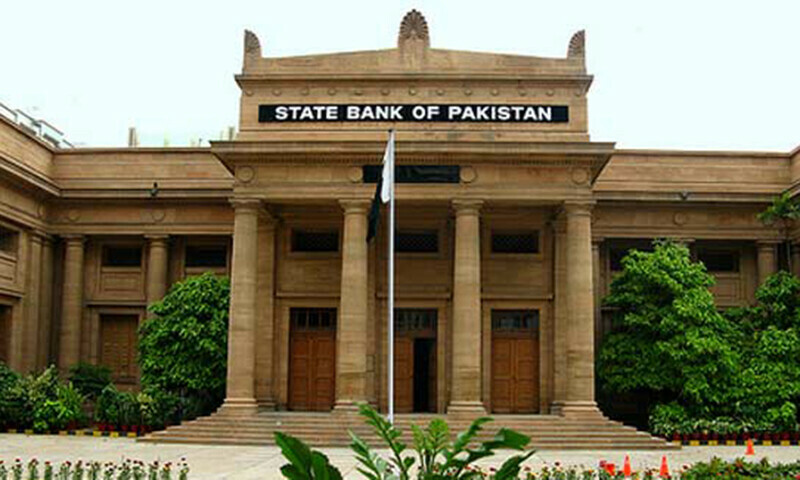
The State Bank of Pakistan (SBP) on Monday raised its key policy rate to 11.5 per cent.
In its meeting today, the Monetary Policy Committee (MPC) “decided to raise the policy rate by 100 basis points to 11.50pc” with effect from Tuesday, the SBP said in a statement.
The hike is the first in almost three years, as rising oil prices from the US-Israel war on Iran threaten to push inflation higher in the import-dependent nation.
In its detailed statement, the MPC noted that the “prolonging of the Middle East conflict has intensified risks to the macroeconomic outlook”.
“In particular, the global energy prices, freight charges and insurance premiums continue to remain significantly above pre-conflict levels,” it added.
The MPC highlighted that supply chain disruptions have contributed to the “prevailing uncertainty”.
“While the incoming data has been broadly in line with the MPC’s expectations so far, the impact of these global developments will be visible in key economic indicators going forward,” it forecasted.
Citing its assessment that inflation was “likely to increase and remain above the target range in the next few quarters”, the MPC “deemed it necessary to maintain a tighter policy stance to keep inflation expectations anchored and contain second-round effects of the current supply shock to bring inflation within the target range”.
It stressed that the move would be important to preserve macroeconomic stability, which is necessary for achieving sustainable economic growth.
A higher interest rate will yield more money for exporters and remitters but create serious problems for importers. It will also increase the debt burden of the government, which borrows heavily from banks and corporates to accumulate liquidity needed to run the government.
Key developments since last MPC meeting
The MPC also pointed out several “key developments” aside from the Middle East situation, including inflation rising to 7.3pc in March and core inflation inching up to 7.8pc.
The statement added that inflation expectations and confidence of consumers and businesses deteriorated in the latest surveys. Moreover, it noted, real GDP grew by 3.8pc in first half of FY26 as compared to 1.9pc in the same period last year.
The MPC also noted that the current account posted a “small surplus” during July-March FY26, and despite “significant debt repayments”, the SBP’s foreign exchange reserves were around $15.8 billion as of April 24.
Lastly, the MPC mentioned that a staff-level agreement was reached with the International Monetary Fund (IMF) on March 27, 2026.
“In light of the above developments and evolving risks, the MPC viewed today’s decision as important to achieve the objective of price stability over the medium term,” the committee statement read.
It reiterated the “important role of the continued build-up of external buffers and fiscal discipline”, asserting that these efforts have contributed to stronger initial economic conditions at the start of the ongoing geopolitical conflict as compared to similar shocks in the recent past.
The MPC also emphasised the importance of undertaking structural reforms to make the external account more resilient to the evolving global landscape and to ensure sustainable economic growth.
‘Supply shock may push inflation to double digits in coming months’
On the rise in the headline and core inflation, the MPC said inflation was projected to increase up to the upper bound of the target range before the start of the Middle East conflict, mainly due to the adverse base effect.
“Subsequently, the energy price shock has led to a surge in fuel prices, which have already begun to seep into core inflation via transport fares, though contained food inflation amidst ample supplies is likely to offset some of the impact on headline inflation,” the MPC explained.
It added: “Nonetheless, going forward, the MPC assessed that the current supply shock may push inflation to double digits in the coming months before it starts to ease subsequently.
“However, inflation is expected to stay above the upper bound of the target range of 5-7pc for most of FY27.”
The MPC noted that this outlook was subject to multiple risks, particularly the duration and intensity of the ongoing conflict, the extent of pass-through of changes in global energy prices to the domestic economy, and potential fiscal slippages.
Monday’s MPC decision was in line with market expectations that the interest rate was bound to see a rise today, albeit with differing opinions on the size of the hike.
Tresmark, a research-based currency tracker, had correctly predicted a 100bps hike. It said that this would not be because data compelled it, but as a pre-emptive move to protect hot money flows, counter inflation, and stay aligned with rising global bond yields.
“This is no longer just an oil story. Market relationships are breaking down. Oil, bonds, foreign exchange, and equities are all moving simultaneously, often in conflicting directions, with no clear anchor,” said Faisal Mamsa, the chief executive officer of Tresmark.
The SBP had maintained the policy rate at 10.5pc since Dec 2025. Until Monday, it had cut rates by a cumulative 1,150bps since June 2024, from a record high of 22pc.
It is worth mentioning that Pakistan also reached a staff-level agreement with the International Monetary Fund in March, which had previously cautioned against premature easing and urged the bank to maintain a positive real interest rate.