Pakhtunkhwa Milli Awami Party jirga seeks fresh elections, end to ‘imposed’ assemblies
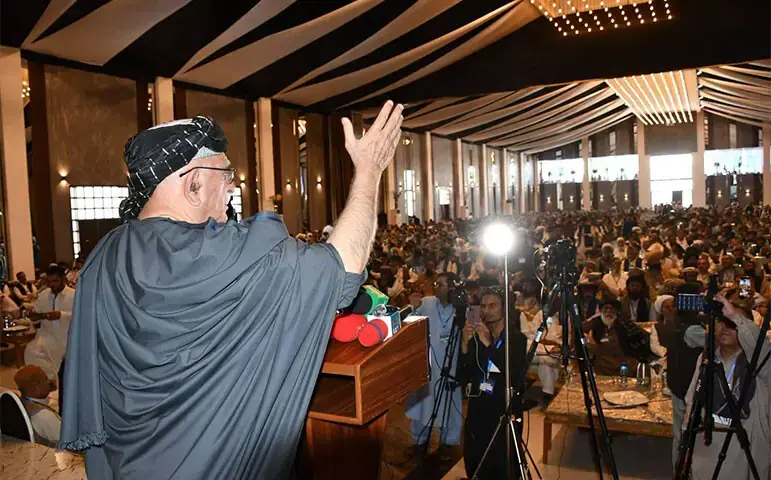
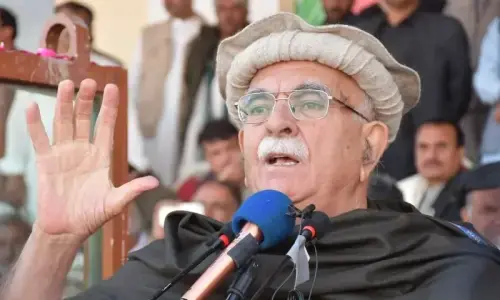
QUETTA: The three-day Pashtun jirga, which concluded here on Wednesday, expressed serious concern over the deteriorating economic, political, constitutional, democratic, security and law and order situation in southern Balochistan.
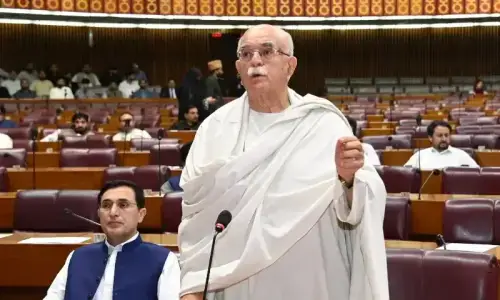
The jirga, presided over by Mehmood Khan Achakzai, chairman of the Pakhtunkhwa Milli Awami Party and opposition leader in the National Assembly, regarded the Feb 8, 2024, elections as the biggest electoral fraud in the history of the country and said that, in an extremely blatant manner, unelected and unrepresentative parliaments and assemblies had been imposed upon the country and the provinces, thereby perpetuating the authoritarian mode of governance of the past.
As a consequence, the jirga observed, Pakistan, particularly Balochistan and Khyber Pakhtunkhwa, had been exposed to terrorism, armed robbery, looting and grave insecurity on international, national and provincial highways. Civilian authority had effectively been abolished and, in Balochistan, all districts were being administered by FC colonels.
They held the government responsible for the entire situation and unequivocally declared that the unelected, imposed, incompetent and failed parliament and provincial assemblies must be dissolved and fresh, free, transparent and impartial elections held.
The jirga further considered the unconstitutional and undemocratic 26th and 27th amendments, passed through what it called a bogus parliament.
A 19-point declaration issued after the three-day jirga called for a national conference comprising all stakeholders to deliberate upon problems and formulate a way forward.
The jirga expressed deep concern over the deteriorating security situation and incidents of terrorism in southern Balochistan and termed the killings of civilians, traders and police personnel by armed groups in various districts under alleged official patronage, a deliberate state policy and a tactic aimed at forcing the people to surrender their fundamental political, democratic and economic rights.
The jirga also rejected the illegal allotment, in the name of minerals and mining, of millions of acres of the ancestral lands of the people of southern Balochistan to non-Pashtun individuals and firms. It described the amendments to the Mines Act as deliberate and demanded their immediate repeal.
The jirga demanded the immediate release of all political prisoners, including Imran Khan. It also demanded the recovery of all missing persons and an end to the policy of placing thousands of people on the Fourth Schedule for political reasons.
Published in Dawn, September 3rd, 2026