Opposition in Sindh Assembly presses for new administrative units, rejects province's division
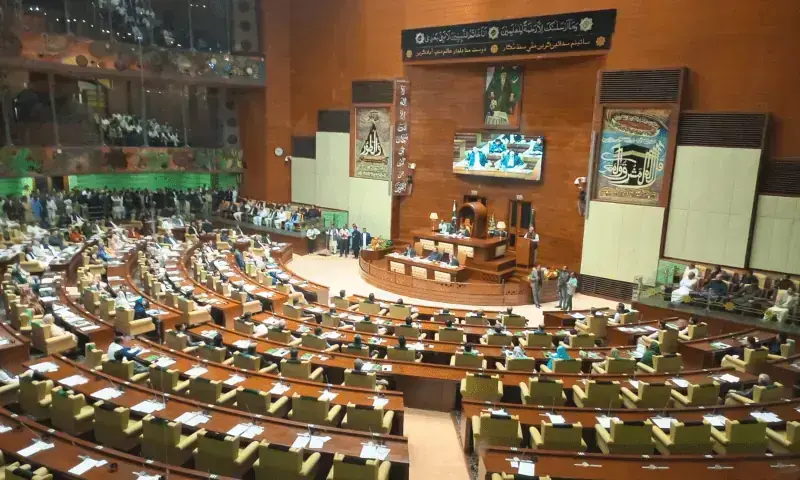
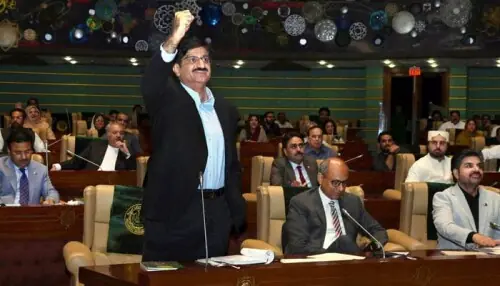
KARACHI: The Sindh Assembly on Wednesday continued its marathon debate on the creation of new provinces and administrative units, with 50 more members joining the discussion on the third day, taking the total number of speakers to 85.
During more than eight hours of proceedings, ruling Pakistan Peoples Party members unanimously rejected any division of Sindh, while opposition members belonging to the Muttahida Qaumi Movement-Pakistan (MQM-P), Pakistan Tehreek-i-Insaf (PTI) and Jamaat-i-Islami (JI) stressed the need for creating new administrative units, criticising the provincial government for “bad governance and corruption”.
The opposition members were of the view that Pakistan’s 250 million people could no longer be managed by four provinces and that administrative units were a need, not a division.
While all parties rejected the idea of breaking up the province, they remained sharply divided on the creation of new administrative units, as the opposition members accused the provincial government of raising the issue to hide corruption and failures and to avoid questions on service delivery, police jobs for locals and devolution of powers to city governments.
Muttahida, PTI and JI MPAs accuse provincial govt of using spectre of Sindh’s division to deflect attention from bad governance; PPP rejects any move towards new administrative units in province
MQM-P lawmaker Rashid Khan said that the real issue was bad governance. “No one in this house has said that Sindh should be divided,” he said, asking when they had said that the borders of the province should be changed.
“You just want to hide your failures by telling Sindhis that we want to divide Sindh,” he said. He added that the provincial government was either playing a double game or making commitments elsewhere and fooling the people.
Universities and Board Minister Ismail Rahu said it was unfortunate that the assembly was discussing Sindh’s division. “It is a matter of concern how some people dared to start a debate on this sensitive issue on TV,” he added.
Irrigation Minister Muhammad Bakhsh Mahar said that industrialists who evade taxes and leaders with limited popularity were raising the issue of new provinces. “Such statements are being made out of ignorance of Sindh’s history and the Constitution,” he added.
Industries Minister Jam Ikramullah Dharejo said that Karachi was an inseparable part of the province. “No one can separate Karachi from Sindh,” he added.
Aruba Rashid, PPP lawmaker, said she was proud to be Urdu-speaking. “Sindh is my land, Urdu is my language, and Sindh is my home. We do not want administrative units because they will create problems,” she added.
PPP MPA Heer Soho said that the assembly had already passed eight resolutions against division. “They say Sindh is our mother, yet some still talk of division,” she said.
Muhammad Farooq of JI said that the adjournment motion had actually been moved by the government, but hateful speeches also came from the treasury benches. “The opposition’s decision not to respond to the government’s hateful statements is commendable,” he added.
He said that tax was not just collected from Karachi, but the city generated it.
MQM-P member Farhan Ansari argued that the issue was about better administration and devolution, not breaking up Sindh. “We have never talked about breaking Sindh. We are as Sindhi and as Pakistani as anyone else in this house,” he added. Quratulain of MQM-P said that the party was talking about administrative units, not division. “Turkey, a Muslim country, has 80 provinces. The US has 50 states. Pakistan has a population of 250 million but only four provinces, she said, adding that administrative units were necessary to improve governance.
Later, the house was adjourned to Thursday.
Published in Dawn, September 3rd, 2026