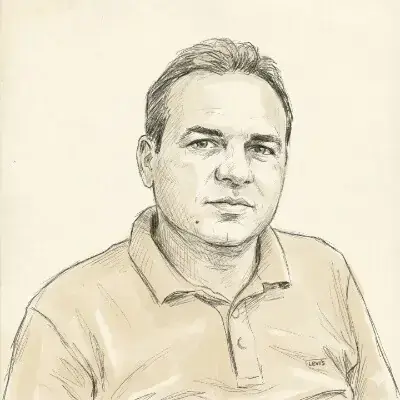
KARACHI: The Sindh High Court (SHC) on Wednesday dismissed a petition filed by the family of Mir Raza Ali seeking the formation of a joint investigation team (JIT) to probe his murder, observing that constituting such a body was the “prerogative of the government”.
On Monday, the SHC reserved its verdict on a plea seeking the formation of a JIT in the case. A two-member bench, headed by Justice Adnanul Karim and comprising Justice Muhammad Jaffer Raza, had heard the petition.
Ali’s family, which has raised questions about the case’s investigation and accused authorities of trying to bury the facts, had moved the SHC last week against a decision of the provincial government to form a judicial commission and sought the formation of a JIT instead.
In a verdict issued today, the court ruled out directing the government to form a JIT and also declined to interfere with or supervise the ongoing criminal investigation.
The verdict, authored by Justice Raza, framed three questions for determination. It asked whether the court’s constitutional jurisdiction under Article 199 could be invoked to direct the formation of a JIT. Whether the court could substitute, supervise or affect the statutory criminal investigation and the report under Section 173 of the CrPC through Article 199; and whether interference was warranted in the absence of a Gazette notification under the Sindh Tribunals of Inquiry Ordinance, 1969.
In his judgment, Justice Raza maintained that, at the time of the judgment, the first information report (FIR) did not contain any offence under the Anti-Terrorism Act (ATA), 1997.
“Even if the FIR had included offences under the ATA, 1997, constitution of a JIT under that provision would remain the prerogative of the government,” Justice Raza said.
The petitioners had also argued that Article 199 empowered the high court to monitor an investigation to ensure that it was fair, impartial and effective. The court disagreed, relying on a earlier Supreme Court judgment.
Justice Raza also quoted the SC’s ruling in Sughran Bibi vs the State as saying: “Such an approach sets up the courts as monitors or supervisors of the investigation, a role which the law forbids and the precedent loathes.”
“It is well settled that this court ought not to interfere with the ongoing investigation, and/or assume the role of an investigator,” the judgment said.
The court, however, maintained that the petitioners were at “liberty to avail all remedies available to them under the law to ensure that the investigation is carried out in a manner which is fair, impartial, efficient and transparent”.
Furthermore, the court deliberately refrained from recording the competing factual allegations made by the parties, noting that doing so could affect the ongoing investigation, the verdict said.
Justice Raza observed that the petitioner had not seriously contested the formation of a single-member commission to probe Mir Raza’s murder and had expressed confidence in it as ancillary relief.
“Even otherwise, we are not inclined to hinder or make any observation concerning proceedings pending before the Commission,” he asserted.
The case
The case has been mired in controversy since the beginning. While Ali’s family was convinced that he was kidnapped, tortured and murdered, police had initially built the case around the possibility that he died by suicide.
Days after the recovery of Ali’s body, Karachi Police Surgeon Dr Summaiya Syed had told Geo News that the post-mortem findings in the case had raised several questions, as some observations in the report did not appear to match the available photographs.
On August 6, a Karachi court took up an application by Ali’s father, allowed the exhumation of his body, ordered the formation of a medico-legal board for the purpose and directed that a second autopsy of Ali’s body be conducted.
The Sindh health department then constituted an eight-member board, with police surgeon Dr Sumaiyya Syed as the convener. However, in the early hours of August 7, the board was reconstituted through an order issued by the director general of the Sindh health department.
While Dr Syed remained the convener of the new five-member board, its members were changed.
But Ali’s family rejected the new board, which also resulted in the deferment of the planned exhumation on Friday. Meanwhile, the counsel for Ali’s family, Nasir accused the authorities of trying to bury the facts.
The Sindh government then restored the original medical board, following which Ali’s body was exhumed on August 8.
A day later, the Sindh inspector general of police’s (IG) office notified the reconstitution of the investigating team probing Ali’s death while Karachi Additional IG Azad Khan transferred the investigation into Ali’s murder to Zaman Town police station from Ferozabad Police Station, where the case was registered.
The order for the probe team’s reconstitution also showed that a murder charge had been added to the first information report.
The same day, the Sindh government decided to seek a judicial commission for the case’s investigation, only to defer the plan a day later after Ali’s family said they had made no such demand and had faith in the new investigation team.
On Aug 19, Ali’s parents, Mir Hussain and Mariam Hussain, wrote to Sindh Chief Minister Murad Ali Shah, seeking his “direct supervision of the murder investigation”. They also urged the chief minister to order an investigation and departmental inquiry into the previous investigation team and immediately suspend the officers involved.
The provincial government acknowledged the letter and announced the decision on Aug 23 to form a judicial commission to determine whether the investigation in the case was being conducted impartially and to investigate the circumstances surrounding Ali’s death.
However, soon after the announcement, the counsel for Ali’s family raised objections and later approached the SHC.
The petition was filed on August 24 in objection to the provincial government’s decision to form a judicial commission and sought the formation of an independent and multi-agency JIT “comprising officers who have had no previous involvement in the case” in place of the commission.
The commission held the first hearing on Friday, and has summoned medico-legal officer Osama Sheikh, who had performed Ali’s first autopsy. It also issued notices to the deceased’s family, their lawyer and a provincial government focal person.