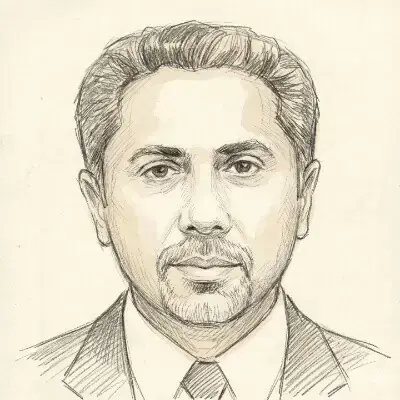
Police form new team to probe Mir Raza Ali's case; murder charge added to FIR
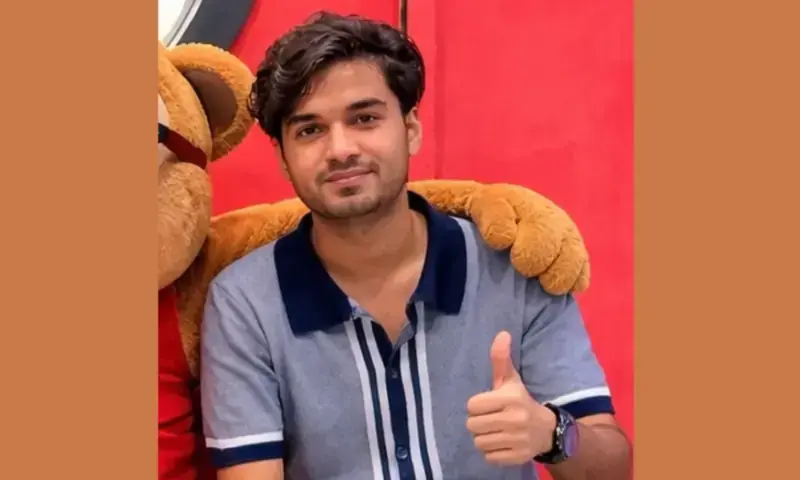


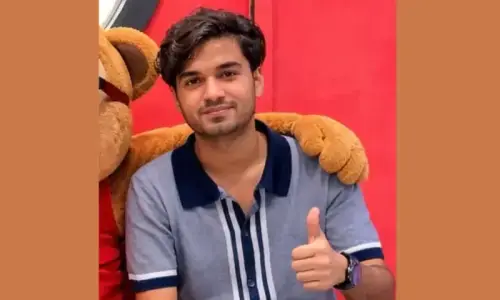
KARACHI: The investigation team probing the killing of 25-year-old businessman Mir Raza Ali has been reconstituted while the murder charge has been added to the case registered on his father’s complaint.
Ali’s body was found in Karachi’s Gulistan-i-Jauhar last month, a day after he went missing on July 28. While his family is convinced that he was kidnapped, tortured and murdered, police had previously been building the case around the possibility that he died by suicide.
However, an order released by the Sindh inspector general of police’s (IG) office on Sunday, notifying the reconstitution of the investigating team, showed that the murder charge had been added to the first information report.
The order, seen by Dawn, said the new investigating team was formed in light of Ali’s second postmortem report, which contradicted the one released after his first postmortem, to “supervise the investigation of FIR no. 795/2026 u/s 365/ 302/ 201 of the PPC”.
Initially, the first information report (FIR) was registered only under Section 365 of the Pakistan Penal Code (PPC), which pertains to kidnapping.
Of the newly added sections, 302 pertains to murder and 201 to hiding the evidence of an offence or giving false information to screen the offender.
The case would now be probed by a five-member team led by Sindh Deputy IG (Crime and Investigation) Amir Farooqui and comprising Alfalah SSP Syed Muhammad Ali Raza, Korangi SP (Investigation) Qais Khan, Central SP (Investigation) Anam Tajjamul and Zaman Town SIO Ch. Ghazanfar, the police order said.
It added: “The team shall undertake a comprehensive and impartial investigation into the case from all relevant angles. The team shall identify, collect, preserve and examine any new or additional evidence and shall thoroughly examine and analyse all physical, technical, circumstantial and forensic evidence collected during the investigation.
“The team shall make all out efforts to work out the case and submit a report to the court concerned within the stipulated period. The team may co-opt any officer to assist in the investigation. Progress shall be reported on a day-to-day basis.”
On Saturday, the lawyer for Ali’s family, Jibran Nasir, had demanded that the first investigation probing the case be replaced, after a fresh post-mortem examination conducted following the exhumation of Ali’s body found that he had been shot in the back — evidence that ruled out the possibility of suicide.
Speaking to the media, he reiterated the allegation that Ali had been tortured before being murdered.
“This was murder following torture — the murder of a happy, ambitious and educated young man from Karachi,” he alleged.
The family’s lawyer also criticised senior police officials, alleging that they “do not want to investigate, but rather humiliate, harass and exhaust the family”.
Advocate Nasir added that he and the family had “no faith” in the investigation team and that they wanted the entire team changed.
Controversy over autopsy
Raza, an Institute of Business Administration graduate and the owner of eatery Wafflix, had gone missing on July 28. The 25-year-old’s body was found a day later with a gunshot wound in bushes near Shahi Qila Ground in Gulistan-i-Jauhar.
The latest developments in his case follow a controversy between the Karachi police surgeon and investigators over alleged loopholes in the medico-legal report regarding Ali’s first post-mortem examination.
Karachi Police Surgeon Dr Summaiya Syed told a private news channel on Tuesday that the postmortem findings of Ali’s body had raised several questions, as some observations in the report did not appear to match the available photographs.
The police surgeon, whose assessment was based only on the post-mortem report and photographs as she had not examined the body herself back then, had said the reported entry wound, bullet trajectory and exit wound did not correspond with one another.
The police surgeon noted that entry wounds were typically smaller than exit wounds in firearm cases. She also said that gunshot residue, commonly found on the hands in suspected suicides, was not tested for in this case.
Her interview prompted the police authorities to issue a statement, terming such observations as having the potential to adversely affect the ongoing investigation.
The statement, however, said that exhumation of the dead body could be done on the medical board’s recommendation for further clarification by a committee of medico-legal experts with the court’s permission.
On Thursday, a judicial magistrate had allowed the exhumation of the body on an application filed by Raza’s father, Mir Hussain Ali, directing the police surgeon and the Sindh health secretary to constitute a medical board for the exhumation.
The Sindh health department then constituted an eight-member board, with Dr Syed as the convener. Prof Dr Naseem Ahmed of Dow University of Health Sciences, Dr Farah Waseem of Jinnah Sindh Medical University, Amir Hassan Khan of Citizens Police Liaison Committee, Additional Police Surgeon Dr Sirichand, Dr Kamran Khan and Dr Daniyal Mirza of Jinnah Postgraduate Medical Centre, and Dr Mohammed Yaseen, the admin in-charge of the police surgeon office, were the other members of the board.
However, in the early hours of Friday, the board was reconstituted through an order issued by the director general of the Sindh health department.
While Dr Syed remained the convener of the new five-member board, its members were changed to Prof Dr Zakiuddin from DUHS, Prof Dr Kazi Akbar and Prof Dr Abid Hussain Chang from Liaquat University of Medical and Health Sciences, and Hyderabad Police Surgeon Dr Waseem Khan.
On Friday morning, Raza’s family was present at the Tariq Road graveyard for the exhumation, which was deferred after they objected ti the new board. Standing alongside Raza’s father, Nasir had accused the authorities of trying to bury the facts and held the police, health department and the Sindh government responsible for the delay.
The Sindh government then restored the original medical board on Friday, following which Ali’s body was exhumed on Saturday.
After a second postmortem of the body, Dr Syed told Dawn, “We have collected samples for identification, chemical analysis and gunshot residue. The cause of death is reserved for laboratory reports.”
Regarding the autopsy, she said that multiple injuries were found on the head and face. “Fractured rib on the back, which is the entry wound of the gunshot [that] exited from the front,” she said.
She said the body bore “injuries in right flank and feet [and] congealed black substance present in mouth and throat”.