• Magistrate admits father’s plea for further investigation, X-rays, DNA, forensic and chemical examinations
• Police claim recovery of spent bullet casing from crime scene
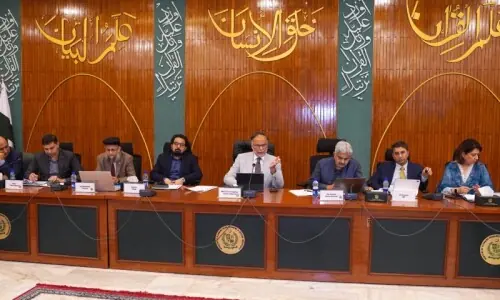
KARACHI: The Sindh health department on Thursday constituted an exhumation board under a court order for removing the dead body of Mir Raza Ali, buried in a graveyard, for a fresh and comprehensive post-mortem examination to ascertain facts regarding his kidnap and murder case.
The body would be exhumed from the cemetery adjacent to Rehmania Msajid, Tariq Road, on Friday (today), according to an official order.
The board’s convenor is Police Surgeon Dr Summaiya Syed and Prof Dr Naseem Ahmed of DUHS, Dr Farah Waseem of JSMU, Amir Hassan Khan of CPLC, Dr Sirichand Additional police surgeon, Dr. Kamran Khan of JPMC and Dr. Mohammed Yaseen, admin in-charge of the police surgeon office are its members.
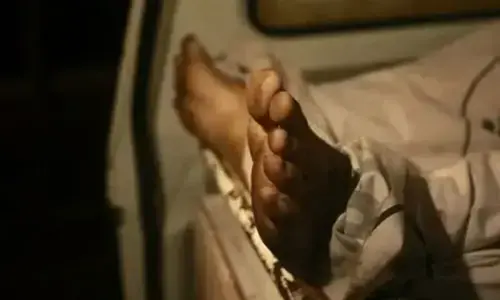
The aspiring businessman’s body, bearing particularly an entry and an exit wounds, made by a bullet, was recovered from bushes near two banquet halls opposite Karachi University in Gulistan-i-Jauhar a day after he left his home in PECHS on July 28.
Initially, on the complaint lodged by his father, a case was registered at the Ferozabad police station under Section 365 (kidnapping or abducting with intent secretly and wrongfully to confine a person) of the Pakistan Penal Code.
After his body was recovered, the deceased’s parents maintained that their son had been kidnapped, tortured and murdered. However, the police saw it as a suicide case.
The investigations took a turn when Police Surgeon Dr Summaiya Syed, in an interview with a private television channel, raised several questions about the post-mortem report.
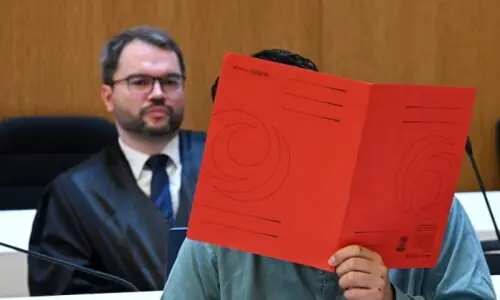
On Thursday, father of deceased Mir Hussain Ali Khan filed a plea through his counsel Jibran Nasir and Danial Muhammad Hussain before Judicial Magistrate (East) Hameedullah.
The plea sought exhumation of the body of the deceased and constitution of a medico-legal board comprising senior forensic experts and pathologist under the police surgeon to conduct a fresh and comprehensive medico-legal examination, post-mortem, X-rays, DNA, forensic and chemical examination of the body to ascertain facts and actual cause of death.
After hearing arguments from the counsel and prosecution, who did not raise any objection, the court allowed the plea and directed the police surgeon and secretary of health to “constitute medico-legal board under intimation to this court at earliest possible that for conducting exhumation of dead body of deceased Mir Raza Ali buried at graveyard adjacent to Rehmania Masjid Tariq Road”.
The court also directed to the SHO of Ferozabad to make arrangement along with investigating officer of the case for the exhumation.
Progress to be shared with media: IGP
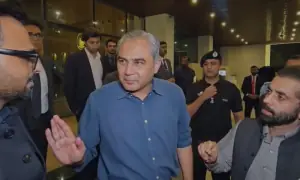
Speaking outside Karachi Bar Association office, Inspector General Sindh Javed Alam Odho claimed on Thursday that the police had worked diligently on the entire Mir Raza case.
He added that the police would soon share details of the investigation with the media.
Responding to questions about the opinion of the senior police surgeon, who had raised concerns over the findings of the post-mortem report, IGP Odho said that a confusion had been created because a medico-legal officer “who was not directly concerned with the case” had commented on the medical report.
Mr Odho said the police would proceed with the investigation on the basis of the findings of the medical board.
Recovery of spent bullet casing
In another development, the police on Thursday claimed to have recovered a spent bullet casing from the crime scene in Gulistan-i-Jauhar opposite University of Karachi, where the body Mir Raza was found.
SSP SIU Dr Samiullah Soomro, the head of the probe team, told Dawn that a bullet shell from the crime scene was recovered during a “meticulously planned search operation”.
A special search team comprising four SHOs assisted by 40 police constables equipped with metal detectors and other equipment scanned the area, he said.
The investigators described the recovery as a “critical piece of physical evidence” which could play a key role in forensic examination, ballistic analysis and reconstruction of the sequence of events surrounding the incident.
The officer termed it a “major breakthrough” in the case investigation.
Published in Dawn, August 7th, 2026