SBP mulls ending Rs10 note on rising costs
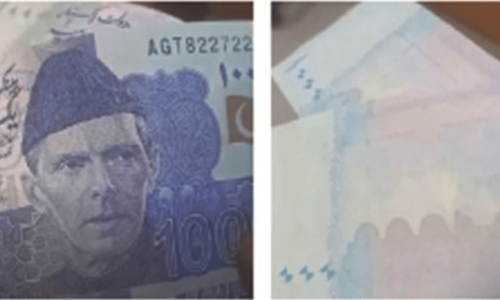
ISLAMABAD: The State Bank of Pakistan (SBP) is considering phasing out the Rs10 banknote due to rising printing costs, while a new design for the Rs5,000 note is being prepared to curb counterfeiting.
The disclosure came from Deputy Governor Dr Inayat Hussain, who briefed the Senate Standing Committee on Finance and Revenue.
He said the redesigned Rs5,000 note would help reduce the circulation of counterfeit currency.
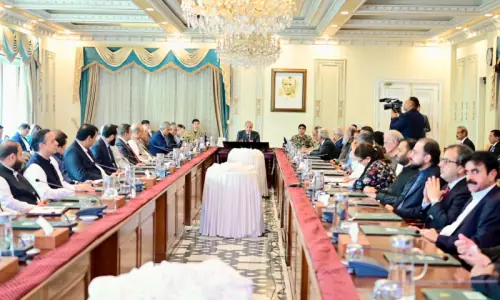
The committee meeting, chaired by Senator Saleem Mandviwalla, also discussed currency security, the Pakistan Remittance Initiative, protection of foreign investments and complaints about fraudulent practices by companies.
Plans new Rs5,000 note to curb counterfeiting
Dr Hussain said denomination changes could follow the introduction of new currency notes.
On counterfeit currency, Senator Mandviwalla told the deputy governor that he had submitted Rs5,000 notes to the SBP for verification nearly two years ago, but the bank’s response was still awaited.
Responding to the query, Dr Hussain said the existing Rs5,000 note was introduced in 2005 and advances in technology had made counterfeiting easier.
He said a tender had been floated under procurement rules for designing the new note.
“Four bidders participated in the process and the contract was awarded to a consultant firm, which is currently incorporating the required changes,” he said, adding that the design would subsequently require federal government approval.
Senator Mandviwalla directed the SBP to provide complete details of the bidding process for the redesigned Rs5,000 note, expressing concern over the circulation of counterfeit currency.
Dr Hussain informed the committee that it could take about a year to introduce the new notes into circulation. He added that printing a Rs5,000 note cost around Rs14.
During the meeting, Senator Anusha Rahman stressed the need to streamline the approval process for currency designs, warning against repeated referrals for minor amendments that caused unnecessary delays.
Earlier this year, the committee was told that new-design banknotes with enhanced security features had been finalised by the SBP and forwarded to the federal cabinet for approval.
Remittance initiative
The SBP also briefed the committee on the Pakistan Remittance Initiative (PRI), saying the government had initially provided subsidies to banks to facilitate remittances by overseas Pakistanis.
The committee was told that Rs120 billion had been provided as subsidy, which was curtailed during the previous year.
Due to fiscal constraints, the government was unable to continue the subsidy under the current budget.
Banks had therefore decided to bear the associated costs from their own resources to ensure continued facilitation of remittances.
The committee appreciated the initiative and decided to invite selected banks to its next meeting to brief members on their performance and contribution to the remittance sector.
Foreign investment protection
The committee also reviewed the F.E. Circular, 1999, concerning the protection of investments and deposits of foreign investors in Pakistan.
Dr Hussain informed the committee that instructions had been issued to concerned banks at the time to protect foreign investors’ funds and that, according to SBP records, no such case remained pending with the central bank.
However, the committee expressed concern over reports that some cases involving foreign investors were still pending and sought a detailed statement on such cases, if any, including their status and reasons for delay.
Senator Talha Mehmood expressed concern over companies operating in Pakistan that, despite reporting losses, may allegedly engage in fraudulent practices and mislead investors and shareholders about their financial position.
He said some companies could eventually collapse or leave the country, causing financial losses to shareholders and the public.
He urged the government and relevant regulators to scrutinise such companies and take timely action against fraudulent practices to safeguard public investments.
Senators Sherry Rehman, Muhammad Abdul Qadir, Amir Waliuddin Chishti and Shahzaib Durrani also attended the meeting.
Published in Dawn, August 26th, 2026